Poles and bollards0 / 302 models
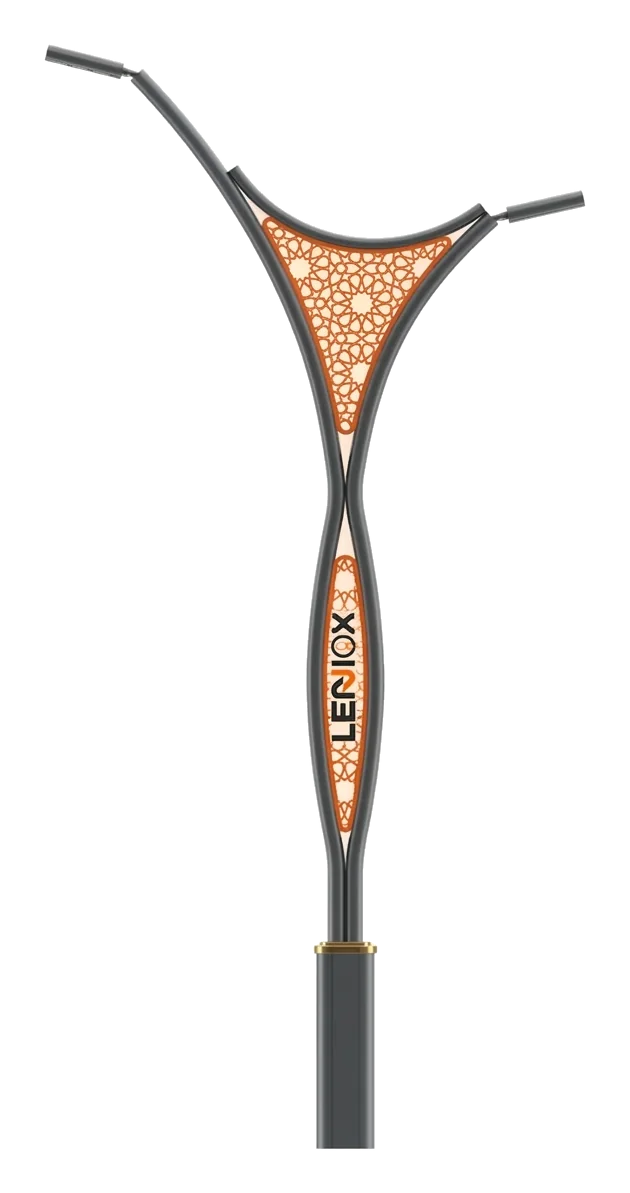
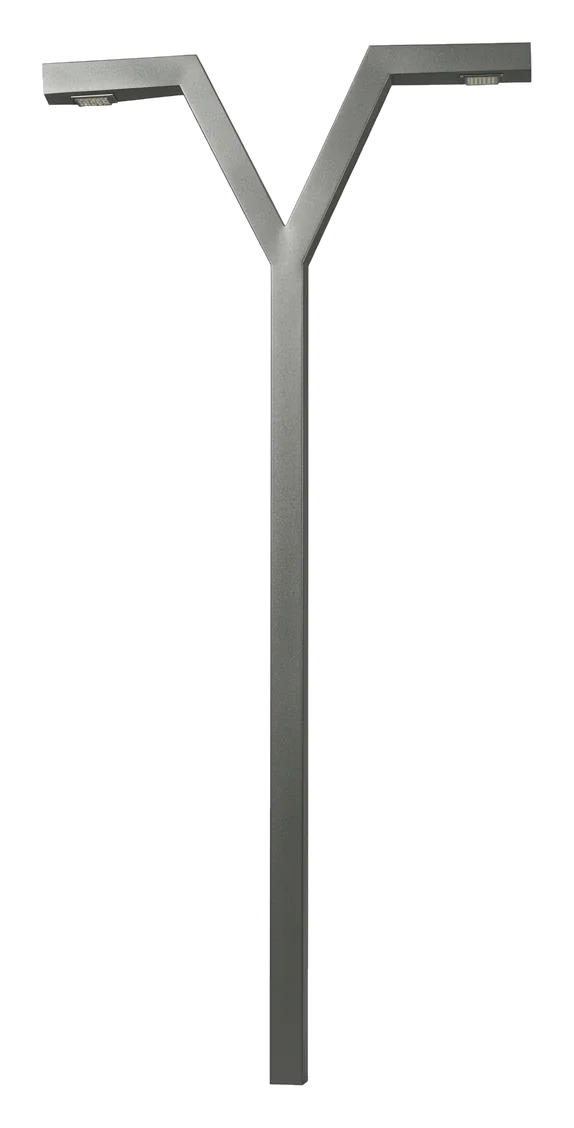
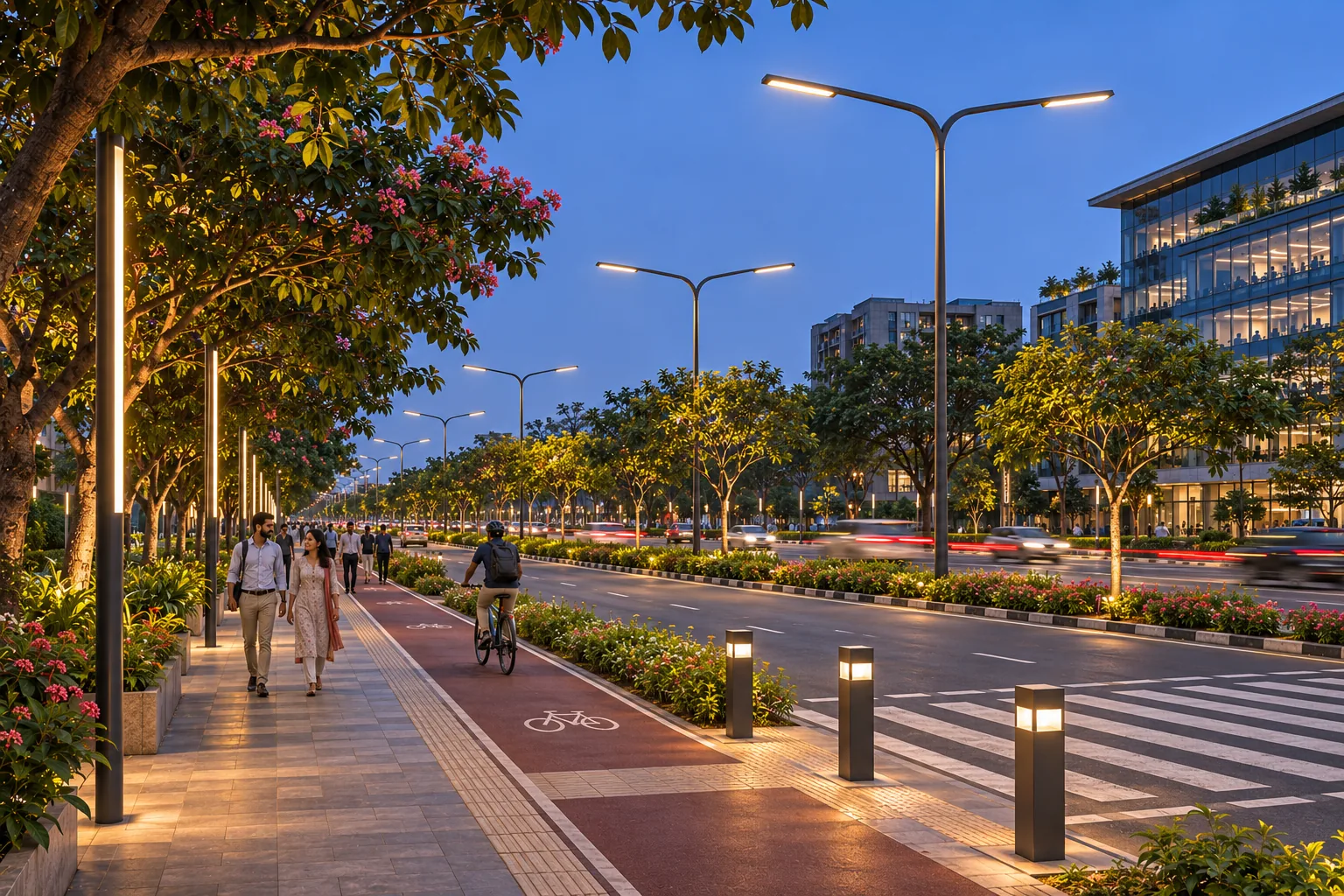
Campus lighting poles have to light roads, walkways, car parks and sports grounds to the right levels while reading as part of the architecture. A common approach is architectural or square poles of 6 to 8 m along avenues and campus roads, bollards and lower poles on pedestrian routes, and area lighting poles for parking and playing fields, all in one family and finish. The same rules hold for a corporate tech park, a university and a school, with different priorities in each.
| Zone | Fitting | Height | Typical spacing | Colour temperature |
|---|---|---|---|---|
| Entry road and avenues | Architectural or square poles | 6 – 8 m | 20 – 30 m | 3000 – 4000 K |
| Internal roads | Round or square poles | 4 – 6 m | 15 – 25 m | 3000 K |
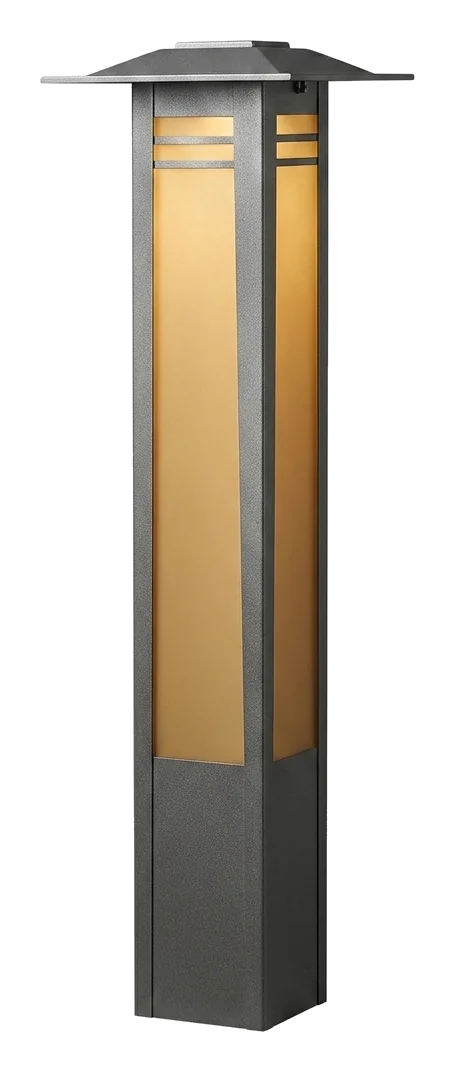
| Pedestrian spines and quads | Bollards | 0.6 – 1.0 m | 4 – 8 m | 3000 K |
| Car parks | Area lighting poles | 8 – 12 m | 25 – 35 m | 4000 K |
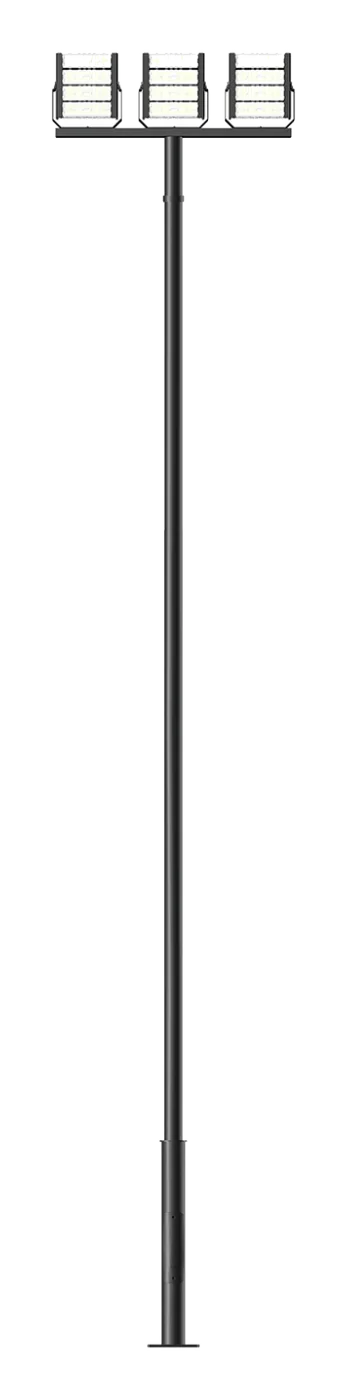
| Sports grounds | Area masts | 12 – 15 m | Set by layout | 4000 K |
Read the campus as a hierarchy. The main avenue is the brightest and most formal, internal roads step down, and walkways are lit at human scale. Our article on street light pole height and spacing explains how height, spacing and uniformity work together.
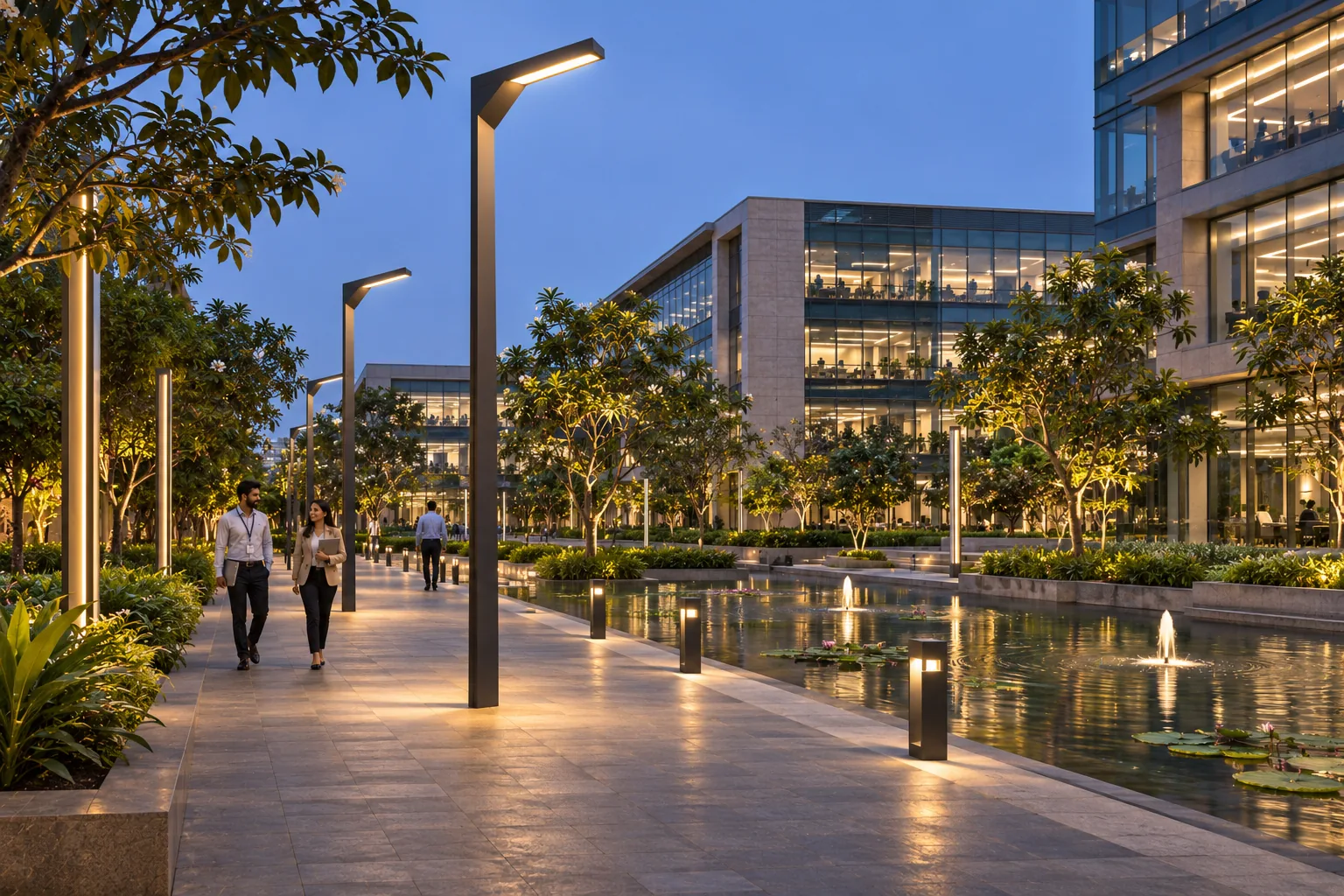
On a corporate campus, the poles are seen from every office window by day, so they should look as if they belong to the buildings.
Pair shapes and finishes: square poles with square or frame bollards, finished to suit the facade, such as anthracite grey against glass and aluminium. An example tech park scheme shows architectural poles and bollards carrying one profile across a campus.
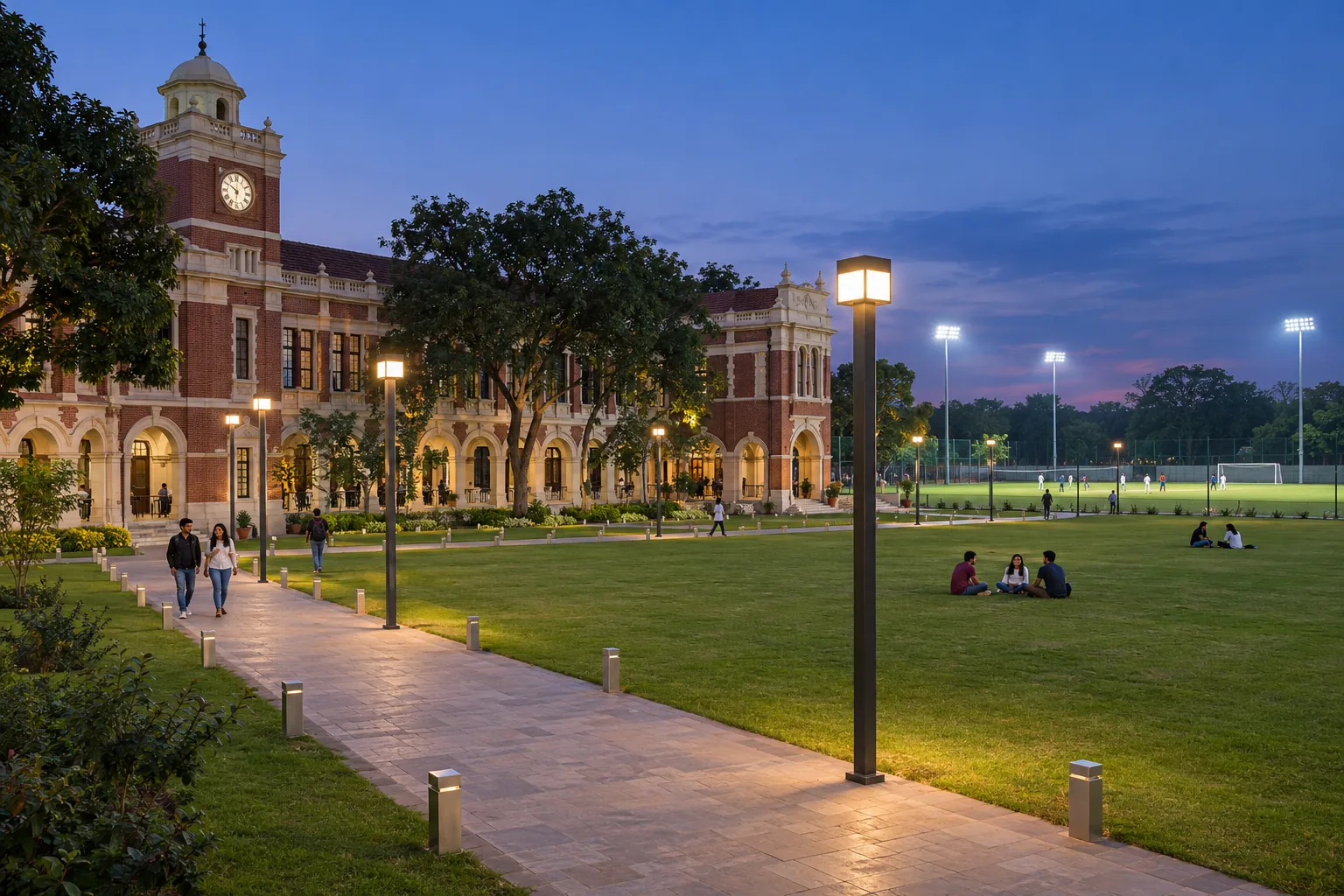
Educational campuses add their own demands.
An example university scheme shows square poles through a quadrangle and area masts on the sports ground.
A campus usually has one owner paying the electricity bill, which makes controls worth the effort.
Keep the colour temperature consistent: 3000 K on paths and courtyards, and 4000 K on the main road, car parks and sports grounds, where crisp light helps drivers and cameras. A deliberate step between zones looks planned; mixed tints in one view look like a mistake.
Campus fittings work hard: sprinklers on lawns, dust on open sites, monsoon rain, and plenty of people within reach. Specify IP65 as a minimum, IP66 for floodlights and exposed sites, and IK08 to IK10 according to how easily a fitting can be reached. Our guide to IP and IK ratings explains the numbers.
GI shafts suit roads and area lighting, and aluminium bollards suit irrigated landscapes. For the facility team, a short list of models keeps spares simple and replacements matching. Every Luminex pole comes with a foundation drawing and anchor bolt cage, and our studio prepares lighting layouts for roads, paths and open areas.
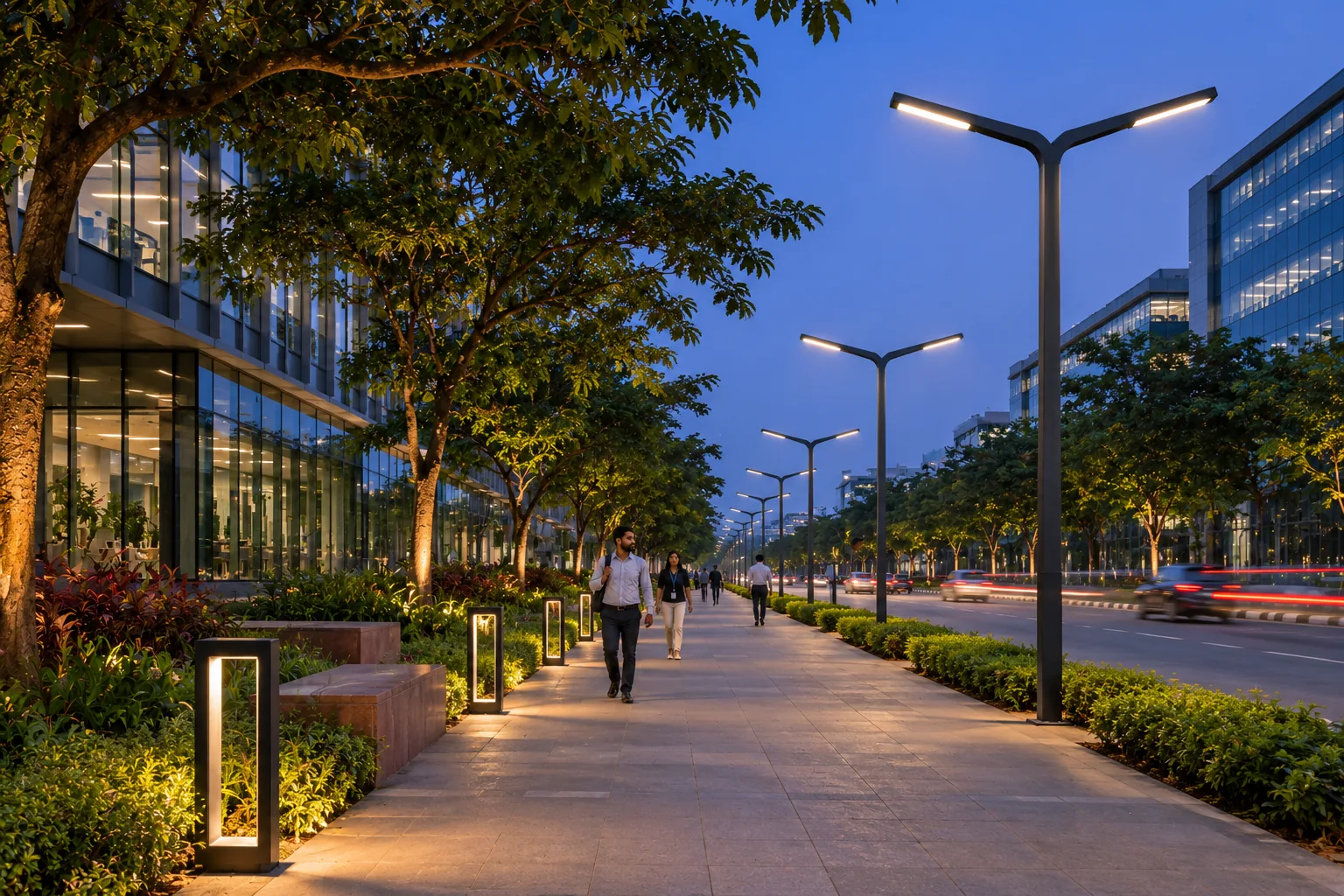
Case study
Hyderabad, Telangana
Architectural poles and bollards across a 40-acre technology campus, matched to the buildings' anodised-aluminium facades.
Read the case studyAsk us anything else when you request a quote.
Avenues and main campus roads commonly use architectural or square poles of 6 to 8 m, spaced 20 to 30 m apart. Narrower internal roads step down to 4 to 6 m poles, and pedestrian routes use bollards of 0.6 to 1.0 m.
Light the routes students use after dark, between hostels, libraries, canteens and sports grounds, with even, continuous light. Use warm 3000 K on paths, keep light out of hostel windows with shielded heads, and specify impact-rated fittings within reach.
Area lighting poles with multi-head crossarms or ring-mounted floodlights, commonly 12 to 15 m on larger grounds, set out by a layout for the specific field. Back-shielded floods keep glare out of nearby hostels and homes.
Yes. Choose a pole family that echoes the architecture, such as square or architectural poles for modern buildings, and finish it in a RAL colour that suits the facade. Bollards in the same profile carry the design along walkways.
They are worth it on most campuses, because one owner pays for all the energy. Dimmable drivers with after-midnight dimming on roads and car parks, and motion sensors on quiet paths, cut running costs without leaving routes dark.
Articles that go deeper into heights, spacing, materials and ratings.