Poles and bollards0 / 302 models
A double arm decorative pole carries two luminaires on arms that reach out on either side of the shaft, so one pole lights in two directions: both carriageways of a divided road from the median, or both sides of a drive or plaza. A single arm pole reaches out in one direction, usually from the kerb over the road. Both come in decorative forms, with curved, angled or scrolled arms and heads designed to match, at mounting heights from about 4 m on society roads to 9 to 12 m on main roads.
| Configuration | How it lights | Where it suits |
|---|---|---|
| Single arm | Reaches out from one side, over the road | Kerbside poles on one-sided and staggered layouts |
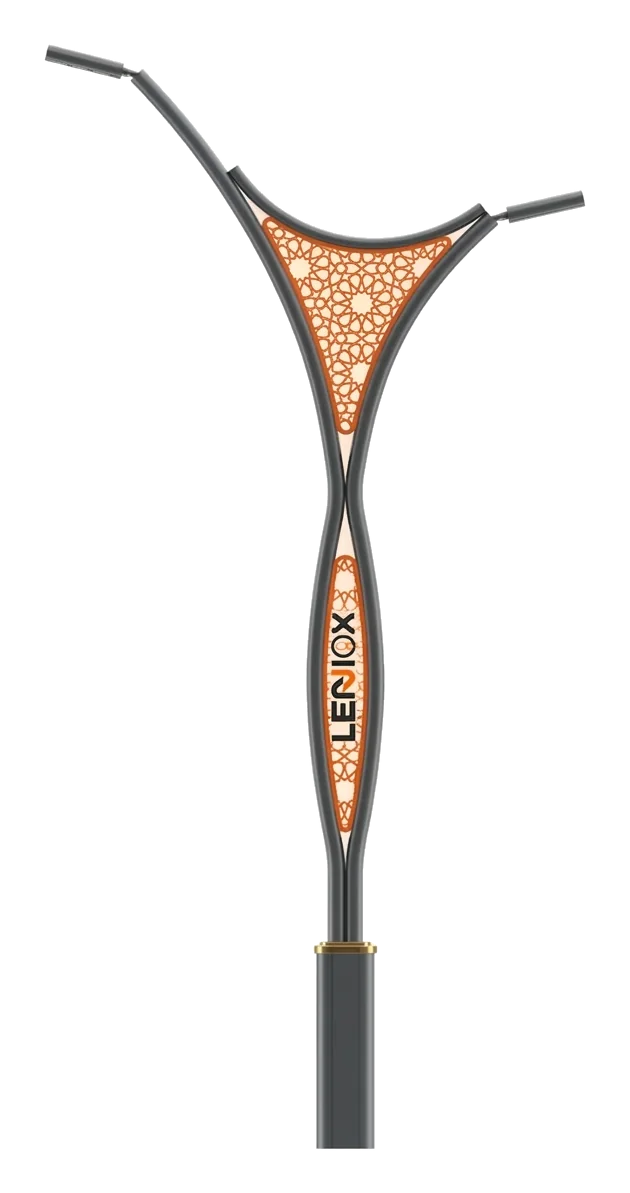
| Double (twin) arm | Two heads back to back, lighting both ways | Central medians, drives with paths on both sides, plazas |
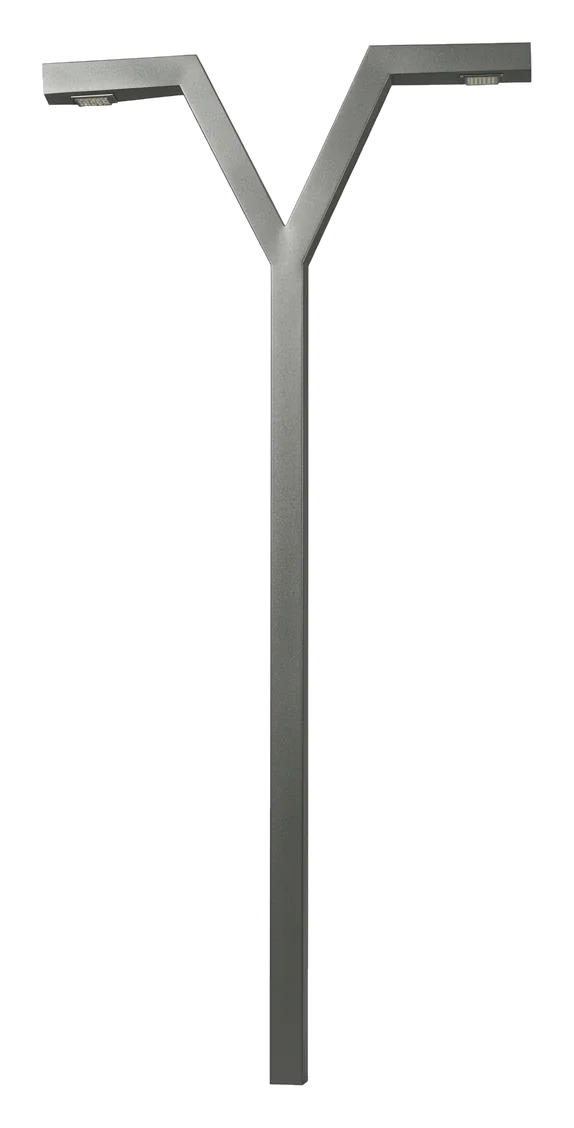
| Angled heads | Heads set at an angle to the shaft | Modern avenues and campus roads |
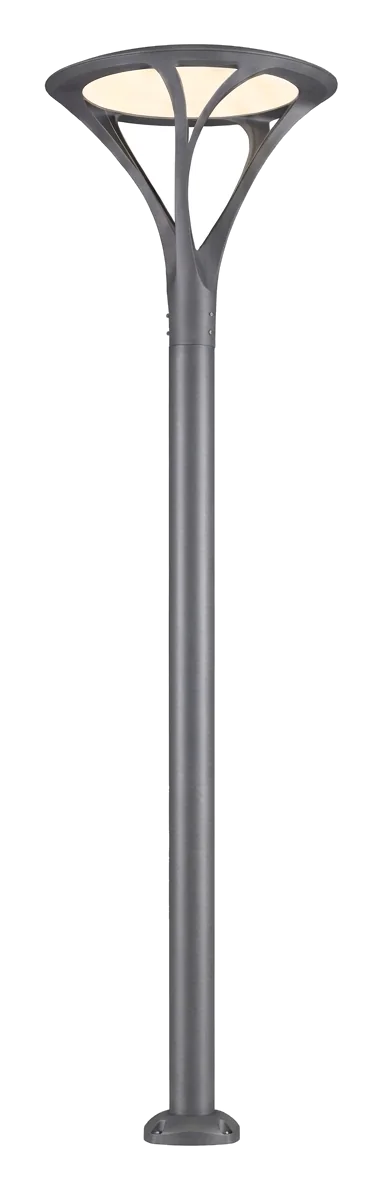
| Post top | One head on top of the pole, light all round | Gardens, plazas and pedestrian streets |
| Cluster or triple | Three or more heads around the shaft | Squares, junctions and entrances, as a centrepiece |
The width of the road compared with the mounting height decides the layout. A road no wider than the mounting height can usually be lit from one side. Between about 1 and 1.5 times the height, poles are staggered from side to side. Wider roads use poles in opposite pairs, and divided roads with a central median often use double arm poles in the median.
A median layout has clear advantages: one row of foundations and one cable run instead of two, and fewer poles on the footpaths. It works best where the median is wide enough to keep poles clear of traffic, and where each carriageway is narrow enough for one head to light it. On very wide carriageways, poles on the outer edges may still be needed.
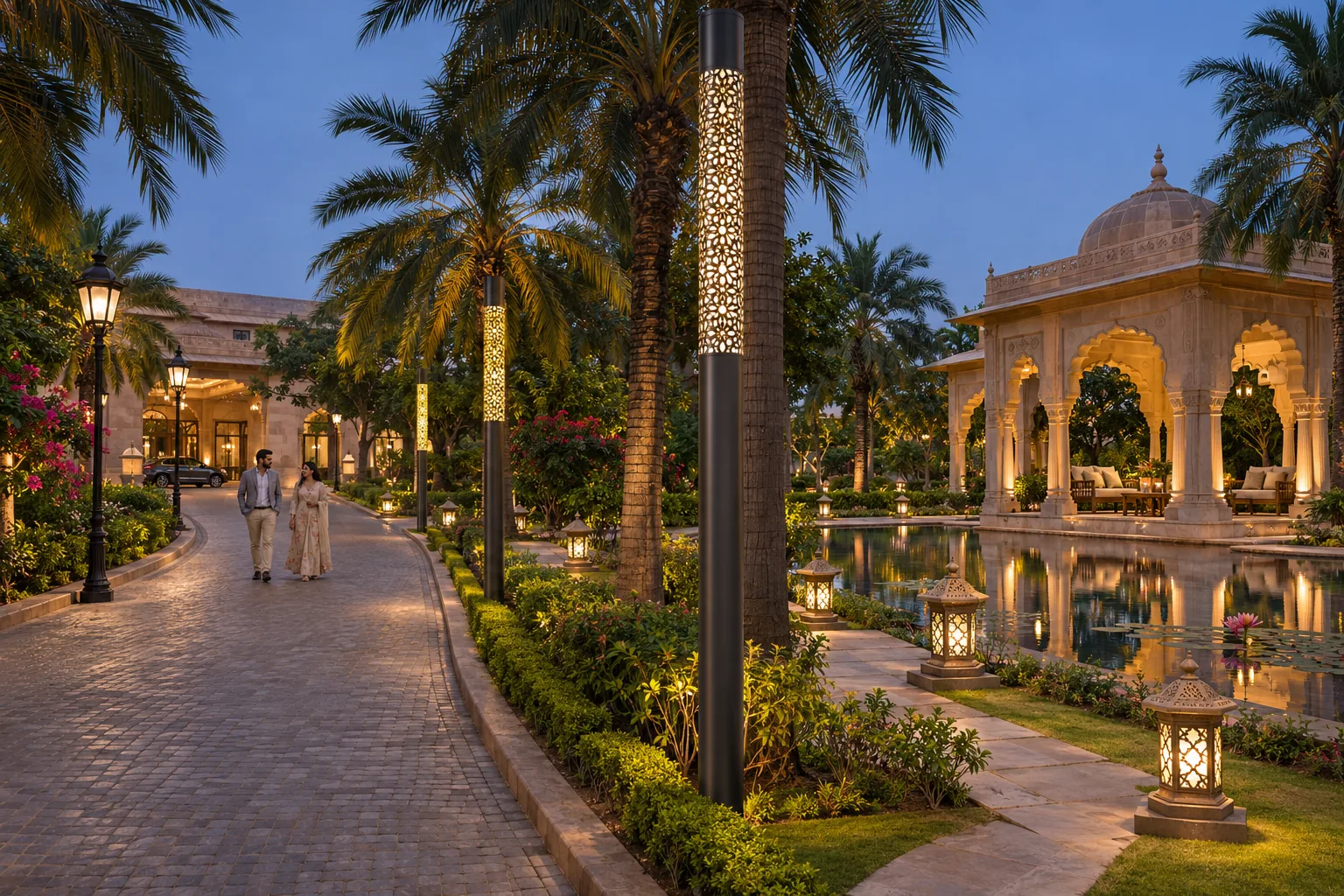
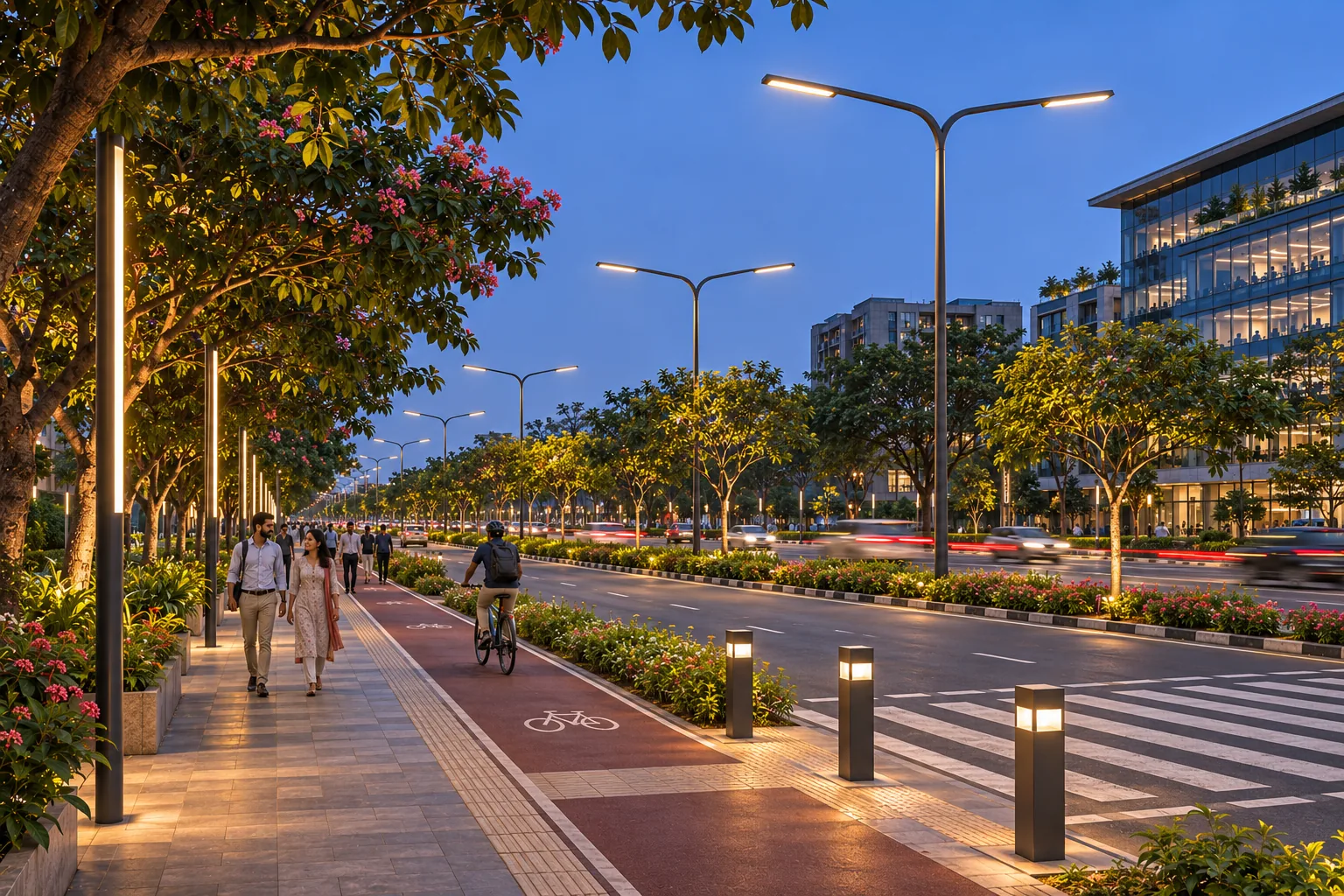
Double arm poles also suit places that are not roads at all: a hotel drive with a footpath on each side, the centre line of a plaza, or a boulevard with a cycle track on one side and a walk on the other.
Our article on street light pole height and spacing explains these layout rules in detail.
Every Luminex pole is made to order in your height, arm configuration and any RAL colour.
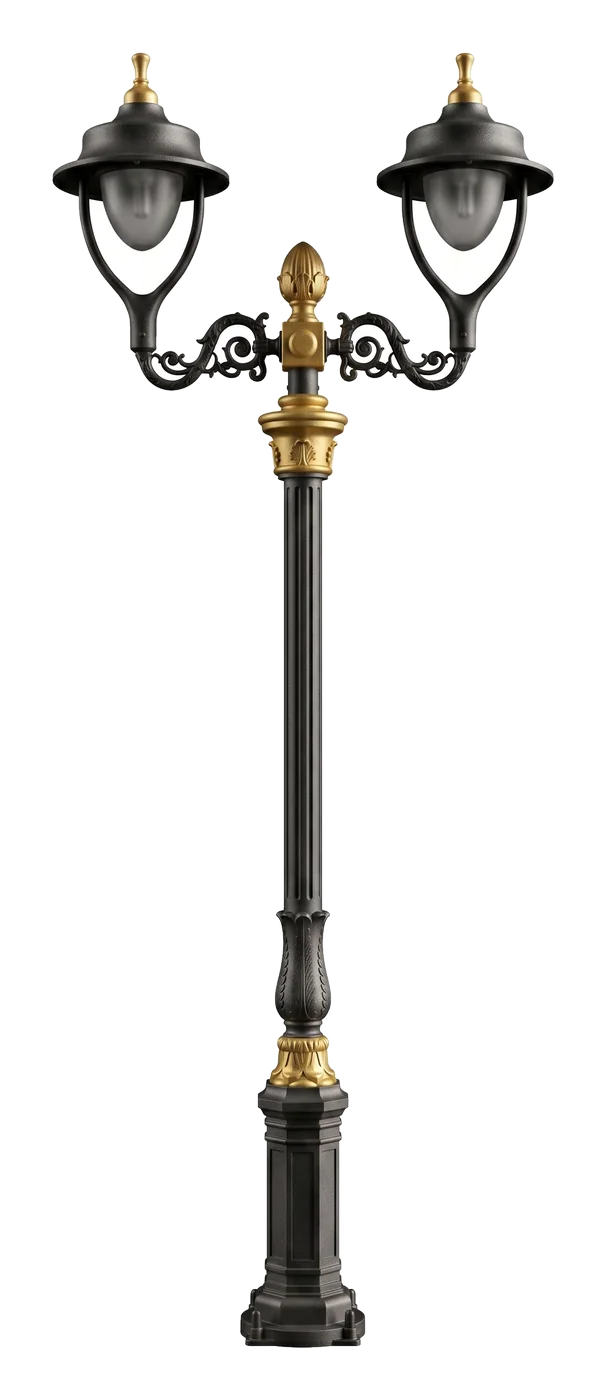
Match the arm to the setting: a clean straight or angled arm on a modern avenue, a gentle curve on a boulevard, a scrolled bracket with lanterns on a heritage street.
Two heads and two arms catch more wind than one, and the load sits high on the pole. Shaft size, wall thickness, base plate and foundation have to be designed for the site's wind speed and for the area of the heads and arms. On a double arm pole, balance matters too: matched heads on equal arms keep the load even. Every Luminex pole comes with a foundation drawing and anchor bolt cage. For more on matching a pole to its setting, see how to choose decorative light poles.
Ask us anything else when you request a quote.
A double arm pole, also called a twin arm pole, carries two luminaires on arms that reach out on either side of the shaft. Placed in a central median, one row of these poles lights both carriageways of a divided road.
Use double arm poles in the central median of a divided road, on drives with paths on both sides, and along the centre of plazas. Single arm poles suit kerbside layouts, either along one edge or staggered from side to side.
The 1970 edition of IS 1944 advises that the overhang beyond the kerb should not generally exceed a quarter of the mounting height. Longer arms leave the kerb and footpath in shadow and add wind load at the top of the pole.
It follows the road. Common starting points are 6 to 8 m for avenues and campus roads and 9 to 12 m for main roads, with spacing of roughly three to four times the mounting height, confirmed by a lighting calculation.
Yes. Architectural poles come as ornate single, twin and triple lantern columns with scrolled brackets, and round poles in single, twin and cluster versions. Every Luminex pole is made to order in your height, arm configuration and any RAL colour.
Articles that go deeper into heights, spacing, materials and ratings.