Poles and bollards0 / 302 models
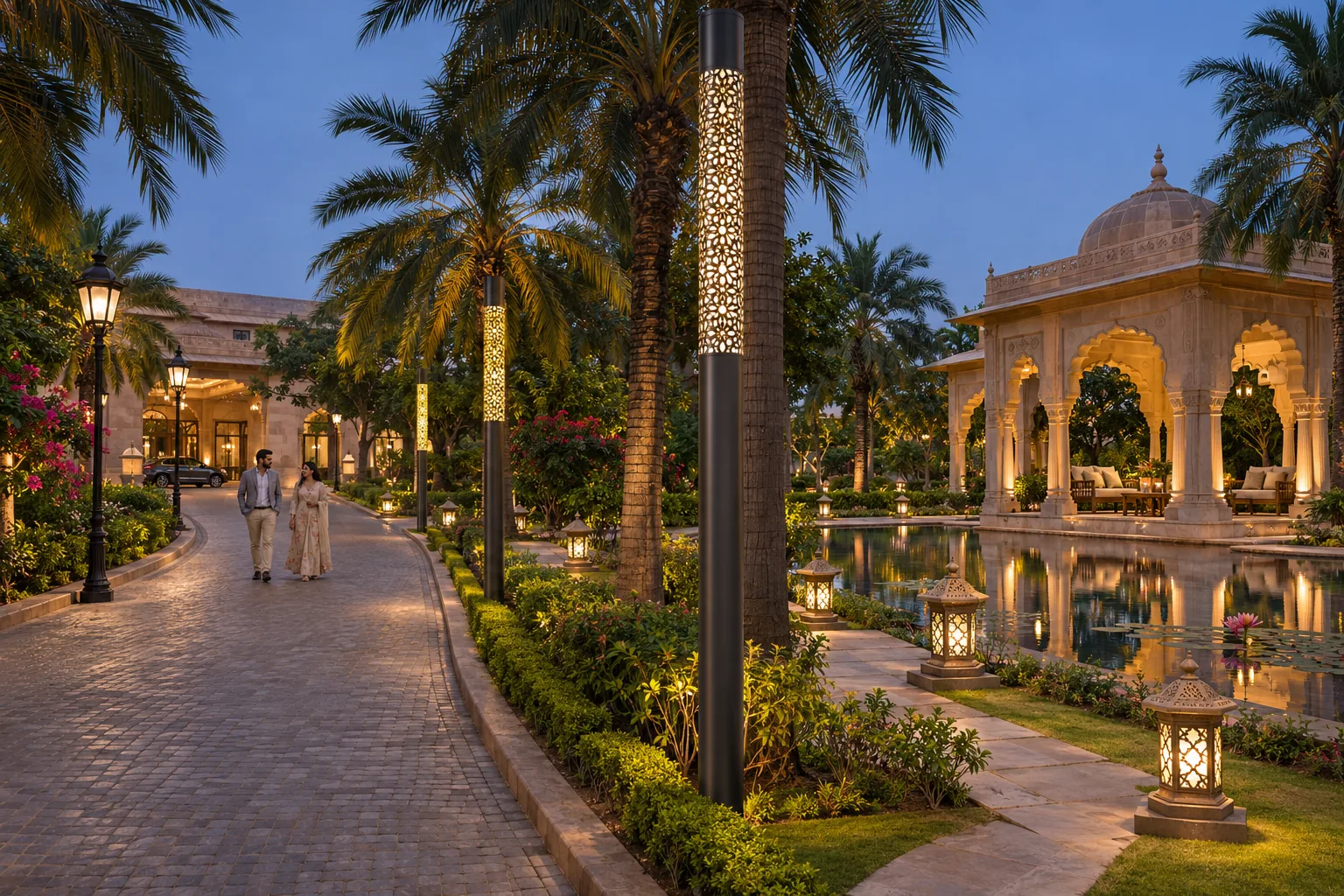
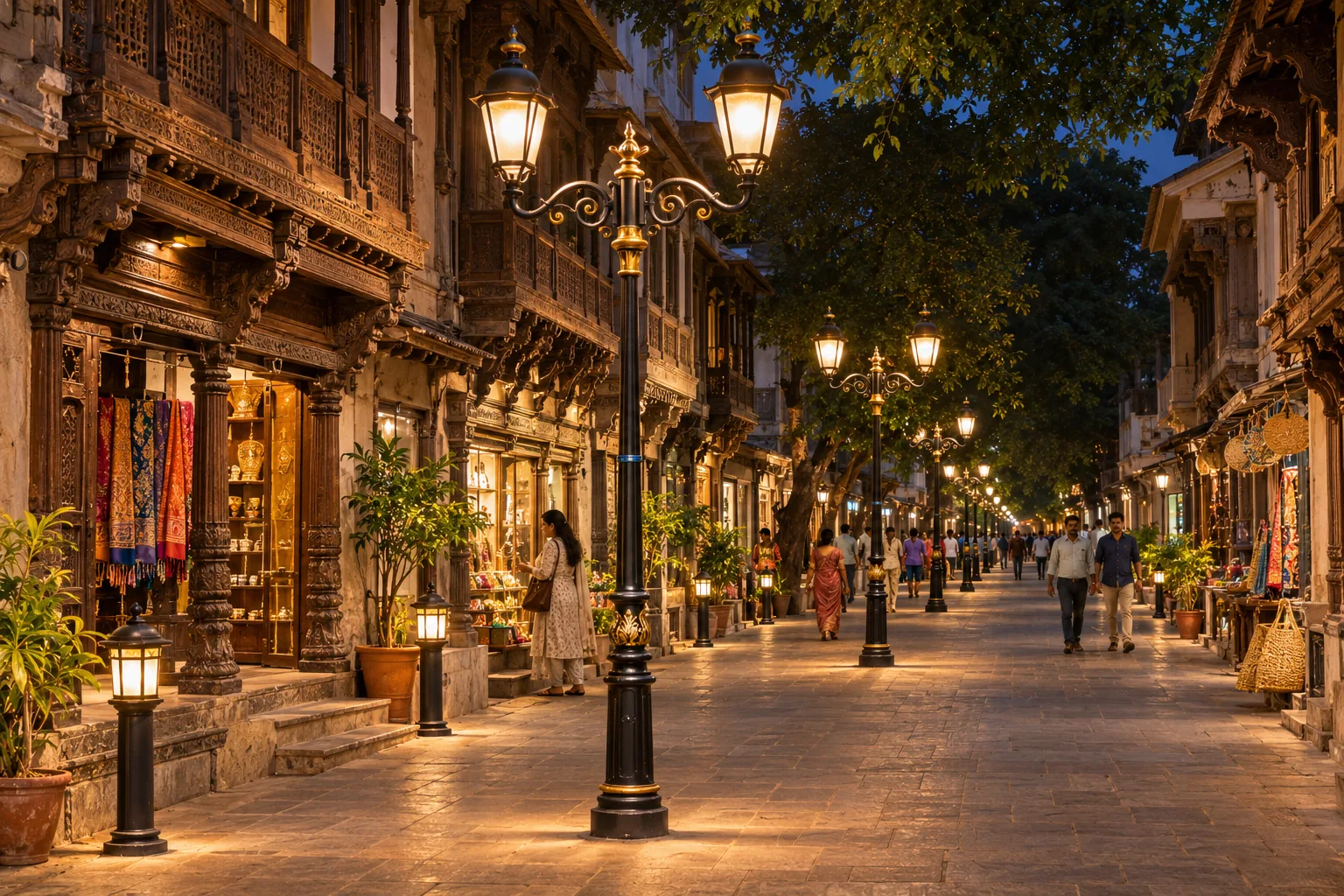
A post top lantern is a light fitting mounted on top of a pole rather than at the end of an arm, so it sits on the centre line of the pole and lights the space all round it. Classic lanterns have a roof, glazed panes and a finial; modern post tops take the form of discs, mushrooms and cylinders. Mounted at about 2.5 to 3.5 m in gardens and 3 to 5 m on heritage streets and plazas, they suit places where people walk rather than roads where they drive.
| Style | Look | Where it suits | Luminex range |
|---|---|---|---|
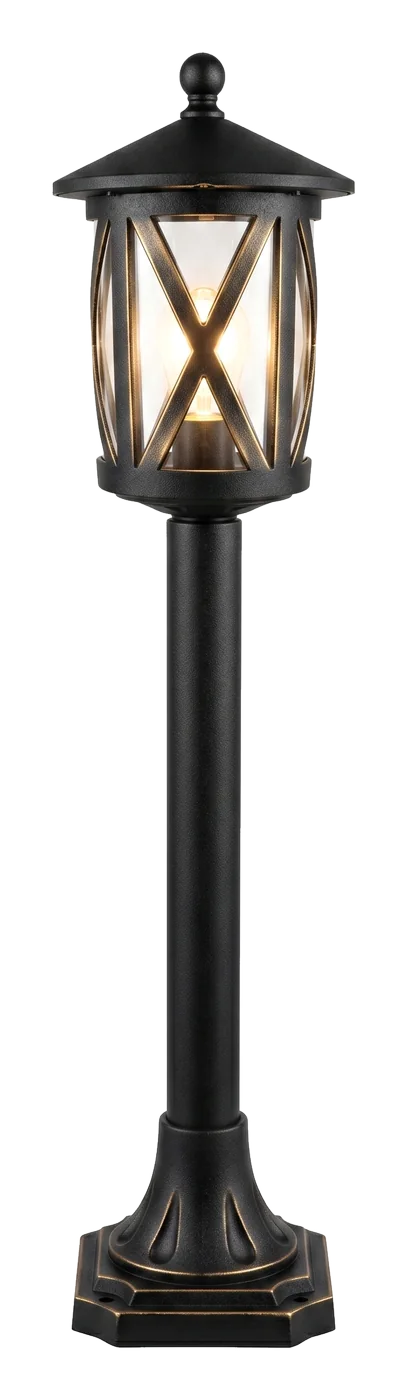
| Classic lantern | Roof, glazed panes and finial, often with cast details | Gardens, villas, resorts, heritage lanes | Garden poles |
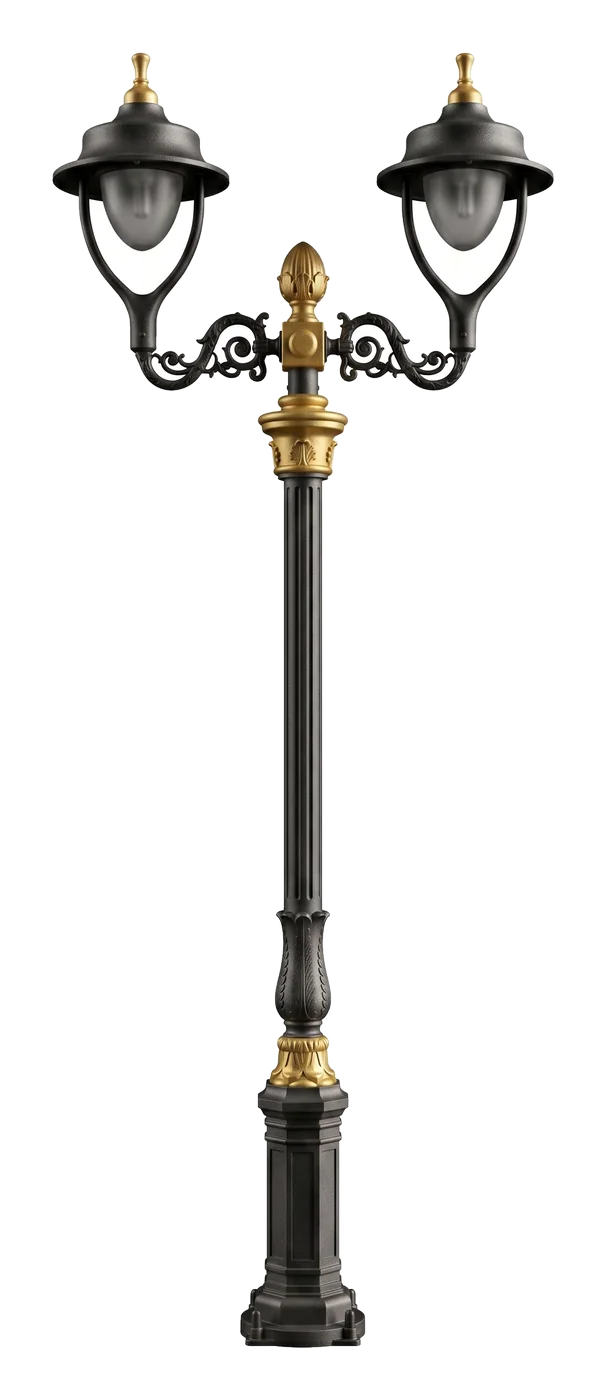
| Heritage lantern or globe | Lantern or globe on a fluted shaft with an ornate base | Civic squares, promenades, temples | Cast iron poles |
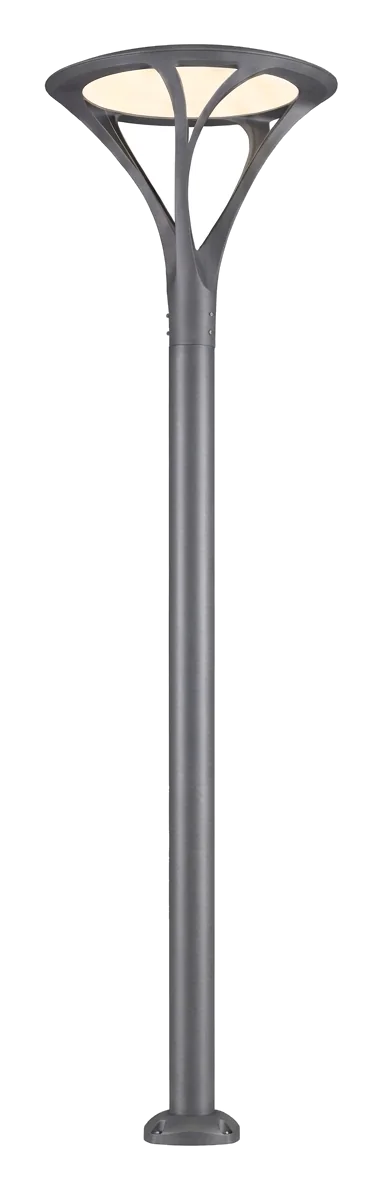
| Modern post top | Disc, mushroom or contemporary head on a plain shaft | Societies, parks, campuses, boulevards | Round poles |
| Lantern bollard | Lantern or globe on a low fluted body | Path edges beside lantern posts | Aluminium heritage bollards |
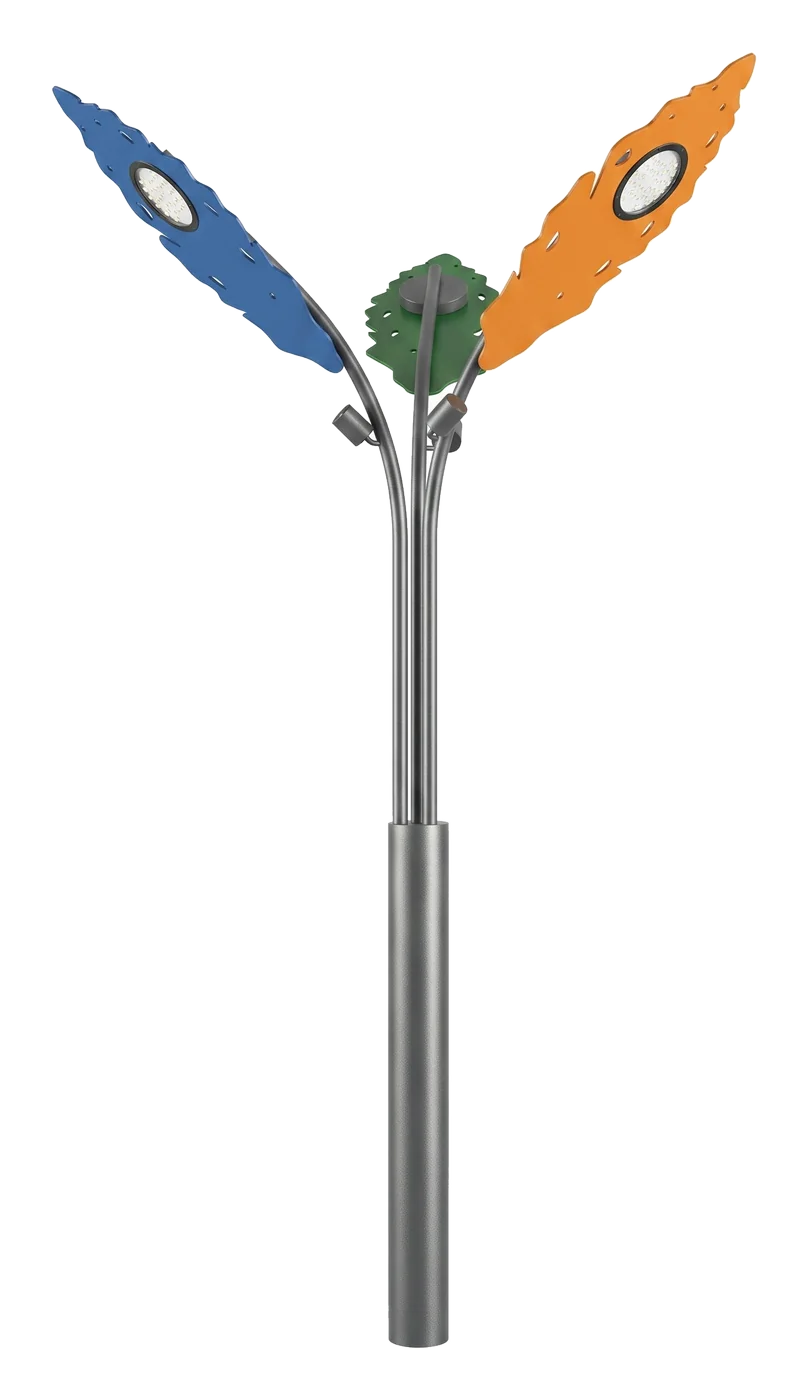
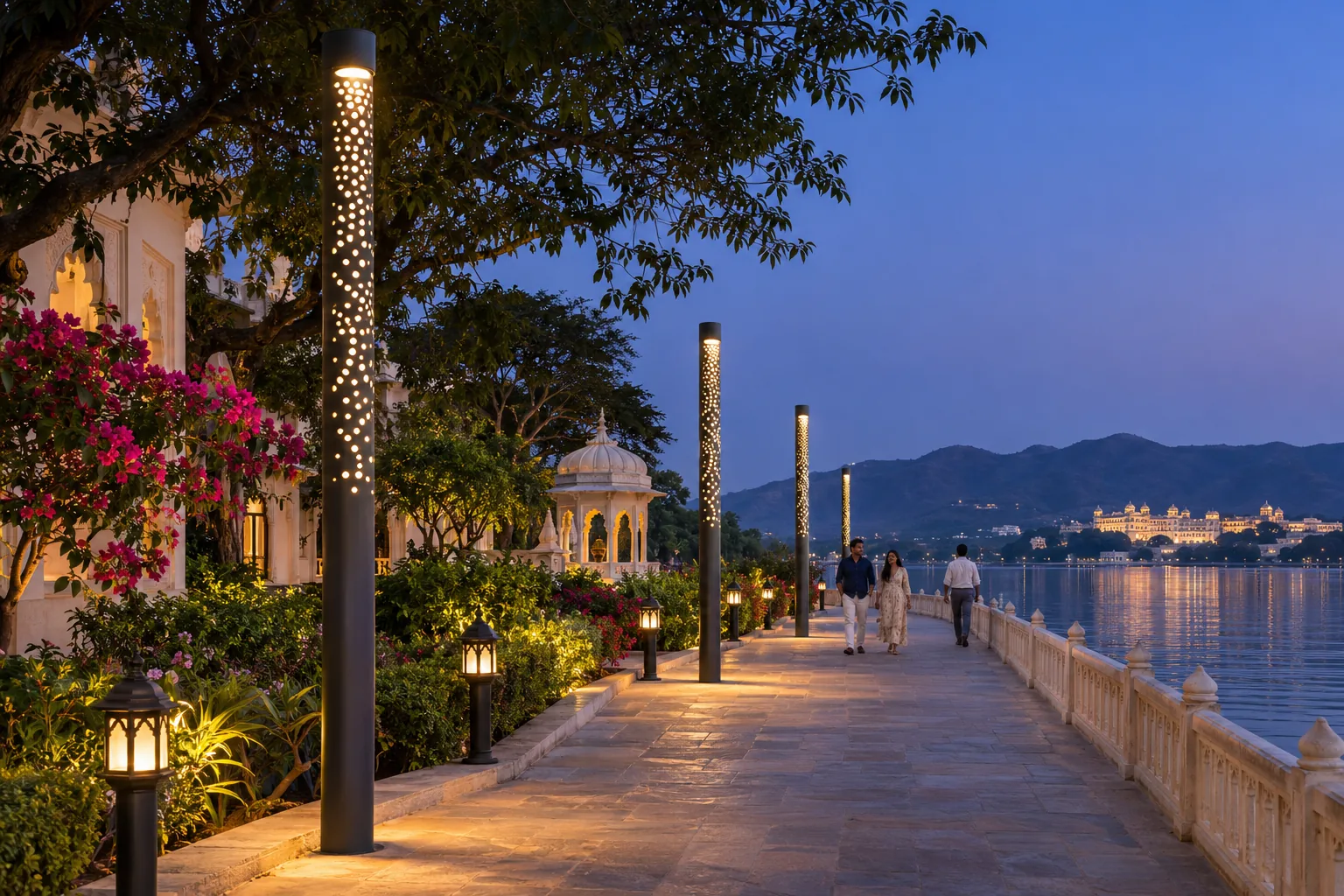
Garden poles carry classic lantern heads with scrolled arms and cast details, from 2 to 4.5 m, alongside leaf and branch designs. Cast iron poles, from 3 to 6 m, combine fluted shafts and ornate bases with traditional lantern and globe heads. Round poles cover the modern side, with contemporary post tops and mushroom and disc heads. At ground level, aluminium heritage bollards repeat the lantern or globe in cast aluminium, so a path and its posts read as one design.
A post top usually spreads light evenly all round the pole: the symmetric Type V distribution in our lighting guide. That suits plazas, courtyards, lawns and junctions, where people arrive from every direction. Along a road, a lantern is less efficient than an arm-mounted road luminaire, because part of its light falls behind the pole onto verges and walls. Where a street needs a measured light level, pair lanterns with road poles.
Old lanterns sent light in every direction, including straight up. A modern LED lantern should not. Look for a solid roof with the LED shining down from it, and full cut-off optics where the setting allows. The lantern then glows softly while the light lands on the ground, not in the sky.
Garden poles come with single to triple lanterns. Proportion matters as much as light: a large lantern on a short, thin post looks top-heavy, and a small lantern on a tall shaft looks lost. Check the lantern size against the mounting height on a drawing, or better, with a sample on site.
The glazing decides whether a lantern glows or glares.
Our article on heritage and cast iron lamp posts explains how to fit LED into a period lantern without losing its character.
Black, deep green and bronze suit classic and heritage lanterns, often with gold picked out on collars and finials. Graphite black, anthracite grey and signal white suit modern post tops, and any RAL shade can be matched to the architecture.
Garden poles are made in GI, MS, aluminium or cast iron, and mount on a base plate or by direct burial. Cast iron poles are built on a galvanised shaft with cast iron details, which keeps the period look with less weight and upkeep than solid iron. Near the coast or in irrigated gardens, choose galvanised steel or aluminium under a powder coat, and keep the base clear of standing water.
Ask us anything else when you request a quote.
A post top lantern is a light fitting mounted on top of a pole rather than on an arm. It sits on the centre line of the pole and usually lights all round it, which suits gardens, lanes, plazas and heritage streets.
Garden post tops are commonly 2.5 to 3.5 m, spaced 10 to 15 m apart. On heritage streets and plazas, lantern posts of 3 to 5 m spaced 12 to 20 m apart are common starting points, confirmed by a lighting calculation.
They can on quiet lanes and pedestrian streets, but on roads that need a measured light level an arm-mounted luminaire is more efficient. A lantern sends part of its light behind the pole, so pair lanterns with road poles where needed.
Frosted glass spreads the light across the panes, so the lantern glows softly and the LED is hidden. Clear glass suits lanterns where the light source is recessed in the roof. Either way, keep spare panes for each lantern type.
Yes. Luminex post top lanterns are offered in 3000 K, 4000 K and 6000 K. Warm 3000 K is the usual choice for gardens, heritage streets and resorts, because it flatters stone, planting and people.
Articles that go deeper into heights, spacing, materials and ratings.