Poles and bollards0 / 302 models
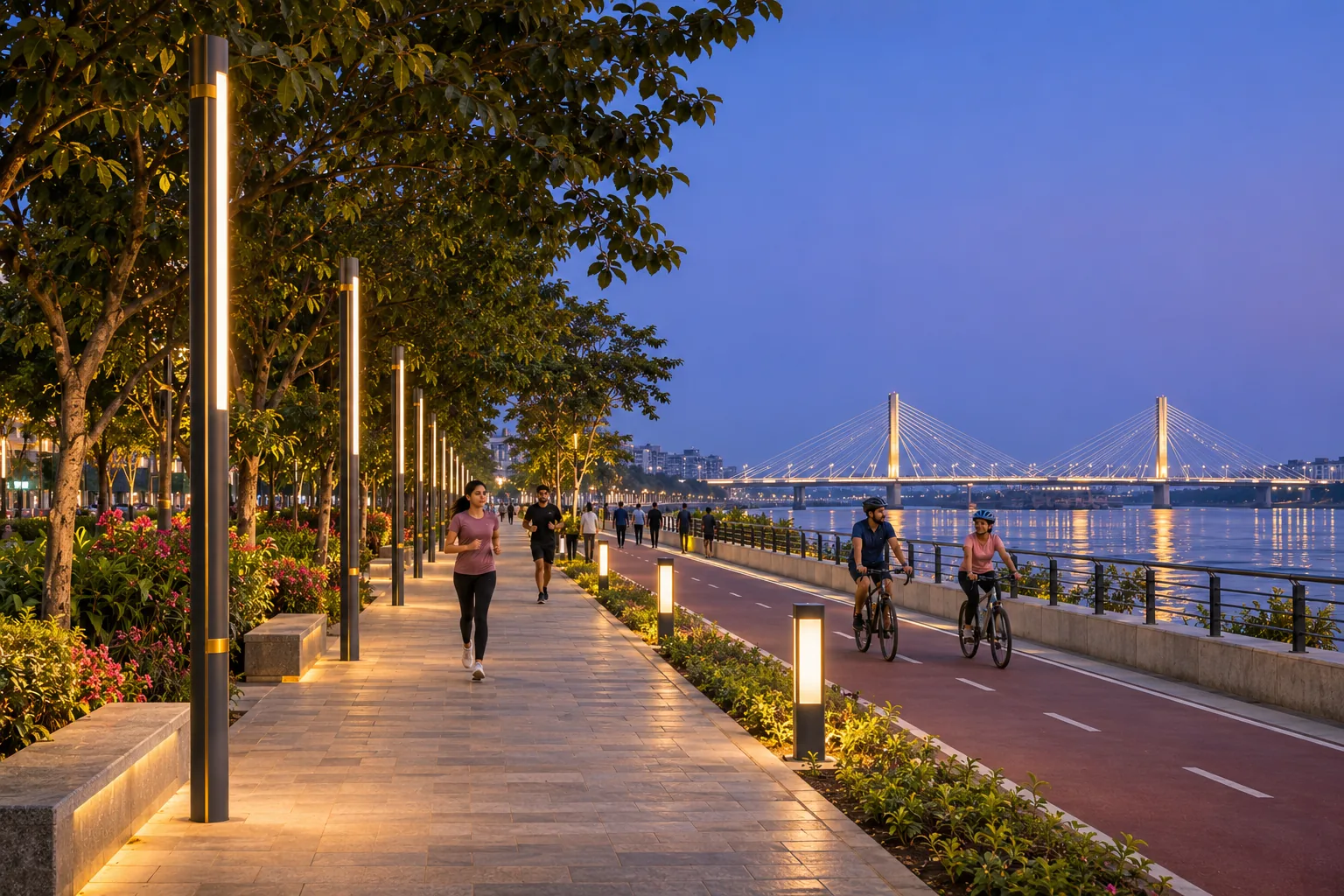
Promenade lighting has to do three things at once: light a long walkway evenly for walkers and cyclists, keep glare and spill off the water, and leave the view across the river, lake or sea open. The usual answer is a line of slim poles along the land side of the walk, low columns or bollards at the water's edge, and warm, shielded light throughout. Everything has to survive damp air, wind, spray and, on many riverfronts, the occasional flood.
On a waterfront, the lighting is read as a line along the water, from far away as much as close up. A regular rhythm of poles makes the walk legible at night and doubles as wayfinding.
| Element | Fitting | Height | Job |
|---|---|---|---|
| Main walkway | Profile poles | 2.5 – 6 m | Light the walk and mark its line from a distance |
| Cycle track edge | Column lights | 1 – 4 m | Define the edge without blocking the view |
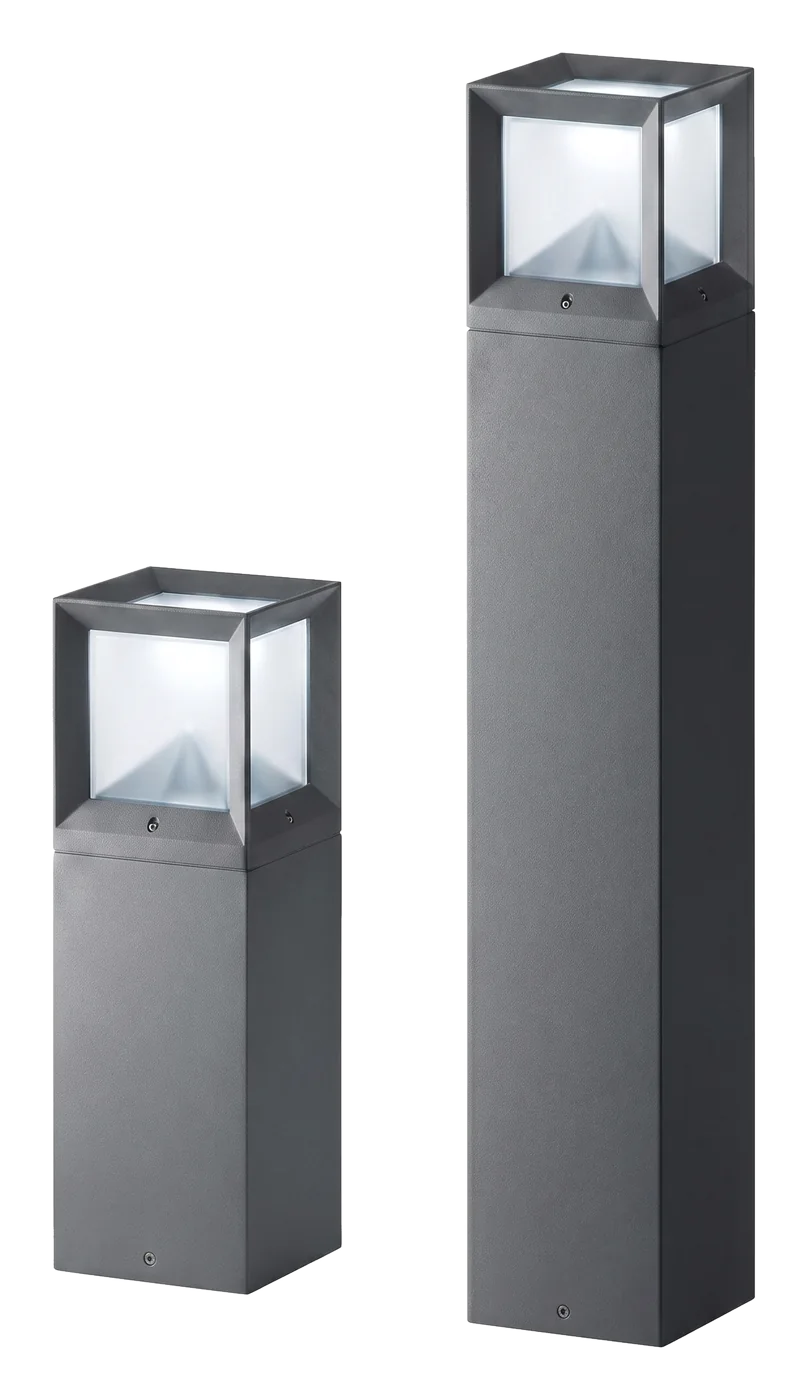
| Water's edge, steps and ramps | Square bollards | 500 – 1100 mm | Mark edges and changes in level |
| Plazas and viewing decks | Profile poles or column lights | Set by the design | Focal points where people gather |
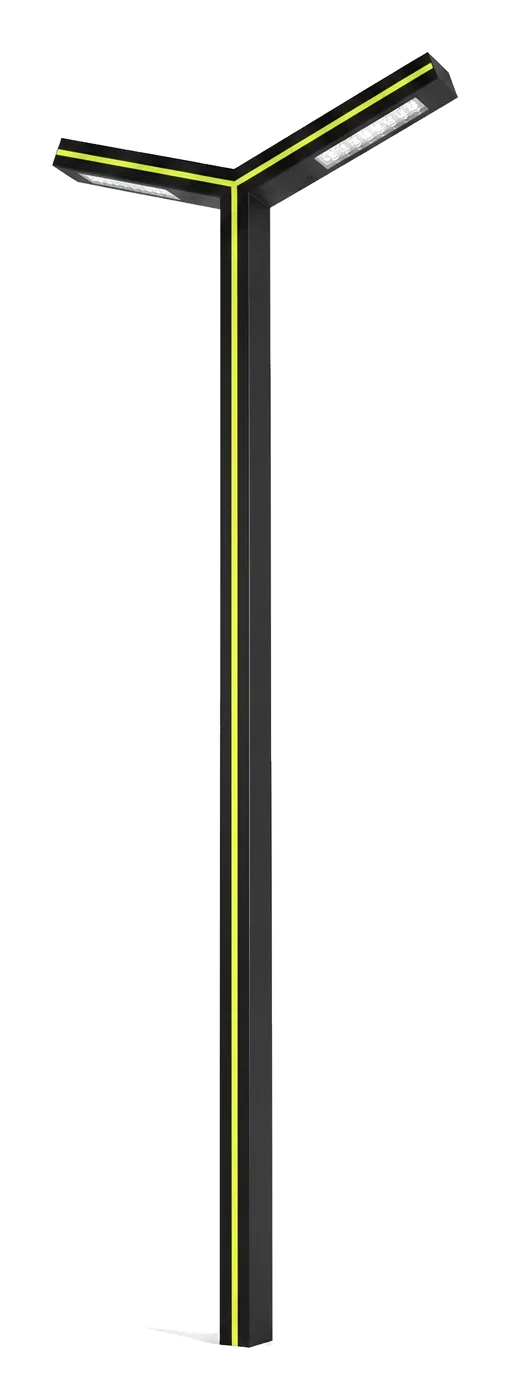
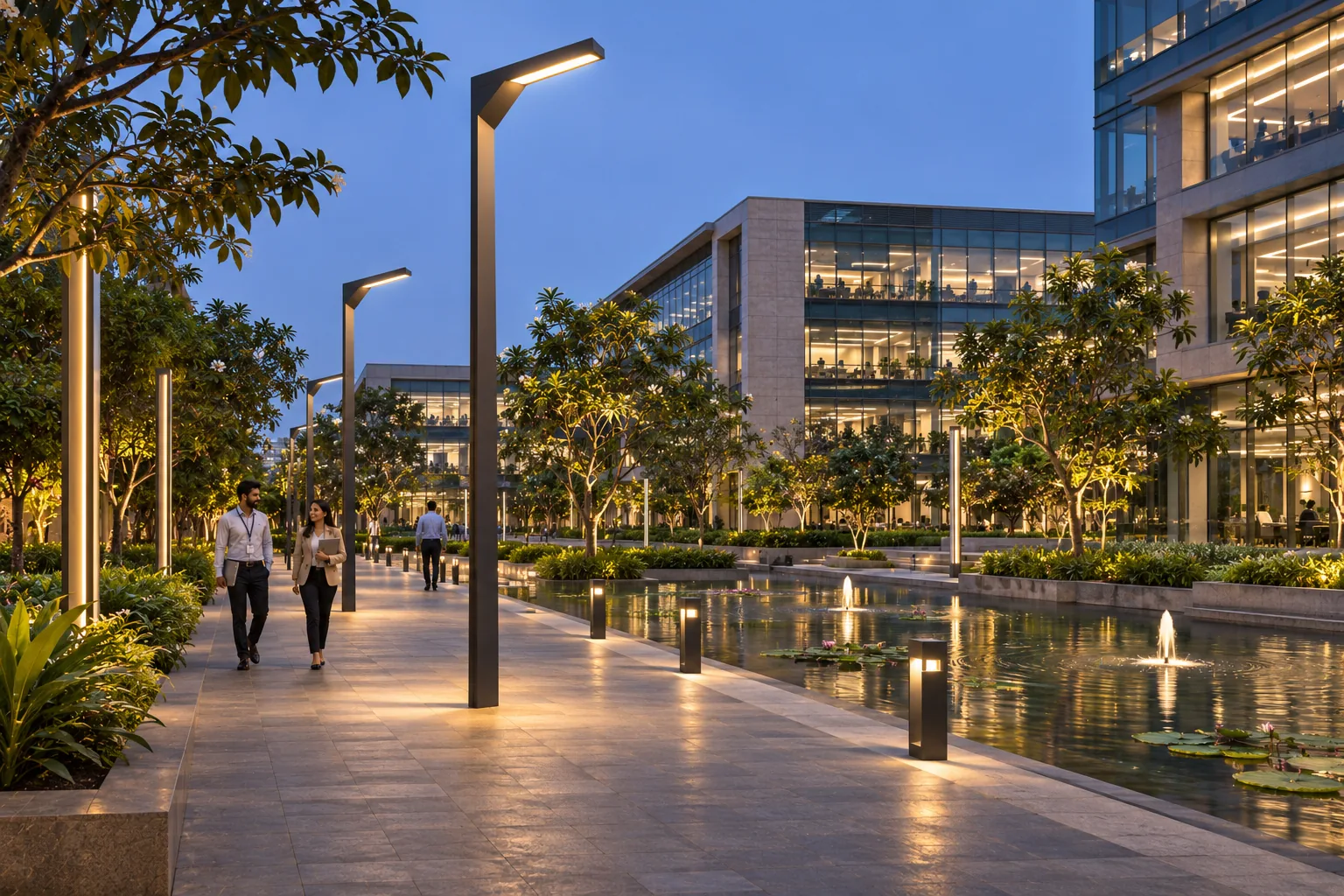
Profile poles carry LED light lines along their bodies, so the pole itself becomes the luminaire. They run from 2.5 to 6 m, with gold and bronze accents and dimmable drivers. Column lights, from 1 to 4 m, glow along their height through diffused panels, with vandal-resistant diffusers rated IK10. Square bollards of 500 to 1100 mm, with slotted or panel apertures, mark steps and edges at ground level. An example riverfront boulevard scheme shows profile poles and column lights along a walk and cycle track.
Light that spills onto water is wasted, and its reflection doubles the glare. It also disturbs fish, birds and insects along the bank.
Waterfronts are among the hardest outdoor sites. Moist, often salty air attacks steel and seals, and an open front catches the full force of the wind.
Our guide to IP and IK ratings explains which numbers to specify where.
Some riverfronts have a lower walk that is meant to flood during the monsoon. Plan for it from the start.
Promenades are lively early in the evening and quiet late at night. Dimmable drivers let the lighting step down after midnight while keeping the walk safe. Separate circuits for the main walk, the water's edge and the feature lighting let each run to its own schedule, and a timer or photocell switches the whole scheme at dusk. On festival days, weatherproof outlets in the pole bases and banner arms make the promenade easier to dress for events.
Case study
Surat, Gujarat
Profile poles with integrated light lines and column lights along a new riverfront boulevard and cycle track.
Read the case studyAsk us anything else when you request a quote.
Run a line of slim poles or light columns along the land side of the walk, mark the water's edge and steps with low bollards, and aim light down onto the path. Warm white, shielded optics and dimming late at night keep glare off the water.
Choose aluminium, or galvanised steel with a powder coat over the zinc, with stainless steel fixings. Specify IP66 luminaires on exposed seafronts and IK10 for anything within reach. Avoid painted mild steel, which rusts quickly in salty air.
Promenade poles are usually lower than street poles, often 2.5 to 6 m, because they light a walkway at human scale. Low columns of 1 to 4 m suit cycle track edges, and bollards mark steps and the water's edge.
Keep taller poles on the land side, aim light down onto the walk and use low, shielded fittings at the water's edge with no up-light. Warm white and moderate brightness also reduce the glare people see in reflections.
Poles and bollards on the upper walk need IP65, or IP66 where they are exposed. Fittings on a lower level that floods need IP67 or IP68 for immersion, and junction boxes and drivers should sit above the highest expected water level.
Articles that go deeper into heights, spacing, materials and ratings.