Poles and bollards0 / 302 models
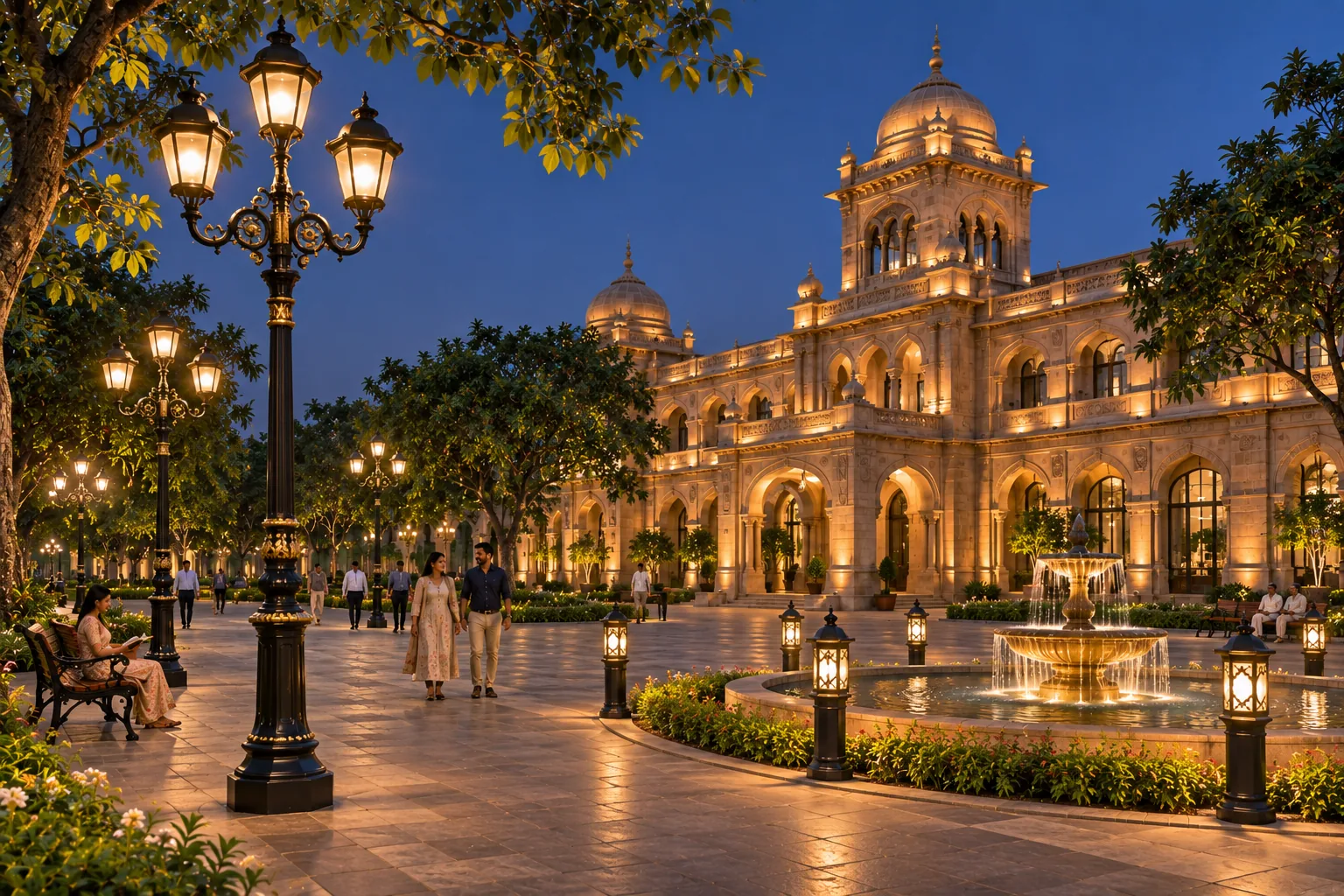
A heritage street light pole carries modern LED inside a traditional form: a fluted shaft, an ornate base, scrolled arms and lantern or globe heads, usually mounted at 3 to 5 m and spaced 12 to 20 m apart. In temple precincts, old city lanes and civic squares it has to respect the architecture by day, give warm, comfortable light by night, and stand up to crowds, festivals and decades of weather.
| Setting | Fitting | Why |
|---|---|---|
| Lanes and footpaths | Single lantern posts | Human scale; keeps the footway clear |
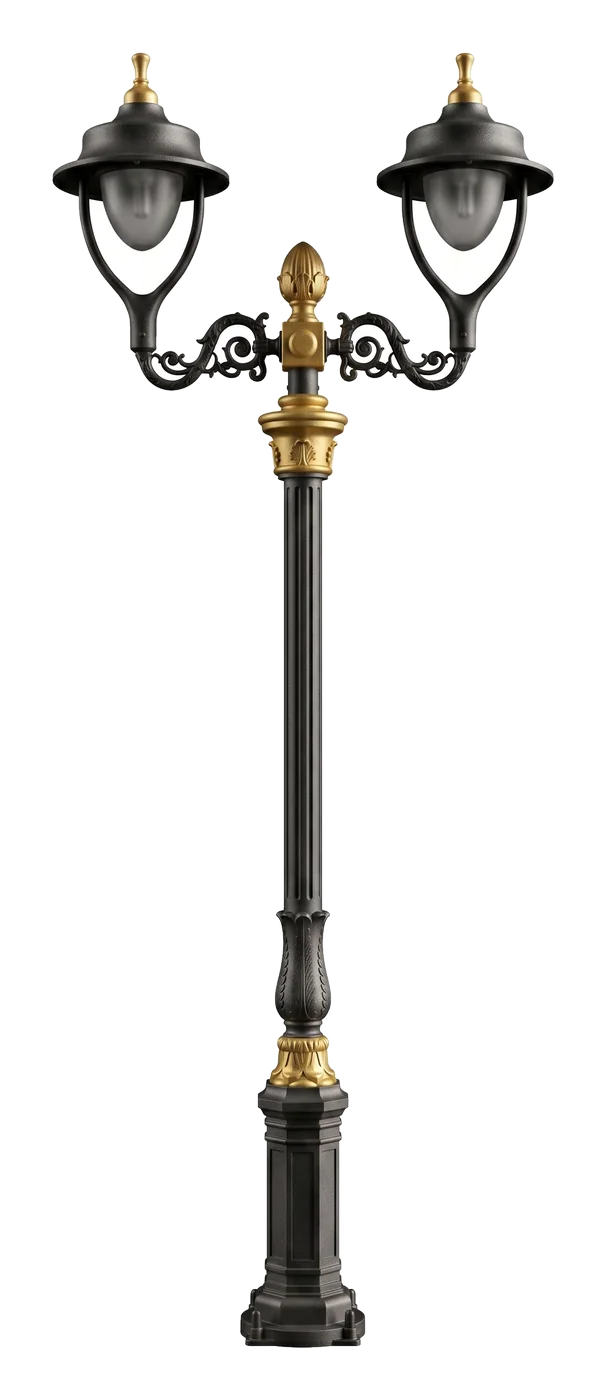
| Wider streets and market roads | Twin-lantern posts | More light per post, fewer posts in the way |
| Squares, gateways and forecourts | Triple-lantern columns | A centrepiece on the axis of a gate or shrine approach |
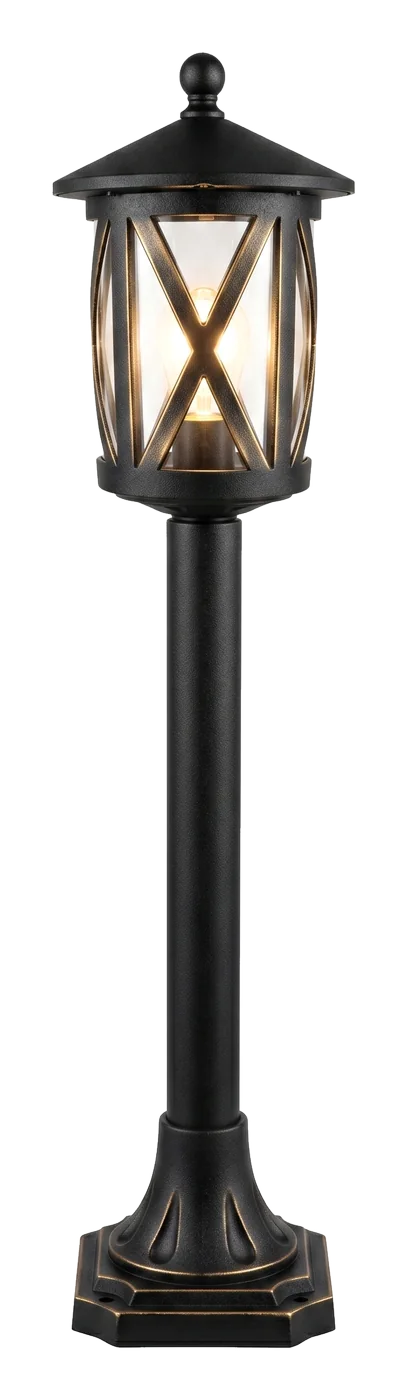
| Edges, steps and planting | Lantern or globe bollards | Low light that matches the posts |
Mounting heights of 3 to 5 m and spacings of 12 to 20 m are common starting points, to be confirmed by calculation. Cast iron poles from Luminex run from 3 to 6 m, with fluted shafts, ornate bases and traditional lantern and globe heads, built on galvanised shafts with cast iron details. Garden poles from 2 to 4.5 m bring lantern heads, scrolled arms and cast details to smaller lanes and temple gardens. At ground level, aluminium heritage bollards have fluted bodies and lantern or globe heads, cast in aluminium at a fraction of the weight of iron.
Temple lighting has demands that an ordinary street does not.
Old lanes are narrow, busy and full of character. Line posts up with the architecture: between bays and arches, on the axis of a gate, or in matched pairs either side of an entrance. Where a lane is too narrow for posts, wall-mounted lanterns keep the footway clear. Shopfronts add a good deal of light in markets, so the posts can work at a moderate level.
Small details give a street its identity. Cast nameplates are available on request on cast iron poles, so a street name or civic crest can become part of the post. An example market street scheme shows twin-lantern posts and heritage bollards on a pedestrian street.
Heritage streets and temples look best under warm white. 2700 K is the traditional choice and 3000 K a close, slightly crisper alternative. Luminex lanterns are offered in 3000 K, 4000 K and 6000 K, and 3000 K is the one to choose here. Our article on colour temperature for outdoor lighting explains why.
Hide the LED in the lantern roof or behind frosted glass, so the lantern glows rather than sparkles, and use solid roofs with downward optics to keep light out of the sky. Black, deep green and bronze are the traditional colours, often with gold picked out on collars and scrolls, and any RAL shade can be matched to surviving originals. Our article on heritage and cast iron lamp posts covers lantern optics, materials and upkeep in more detail.
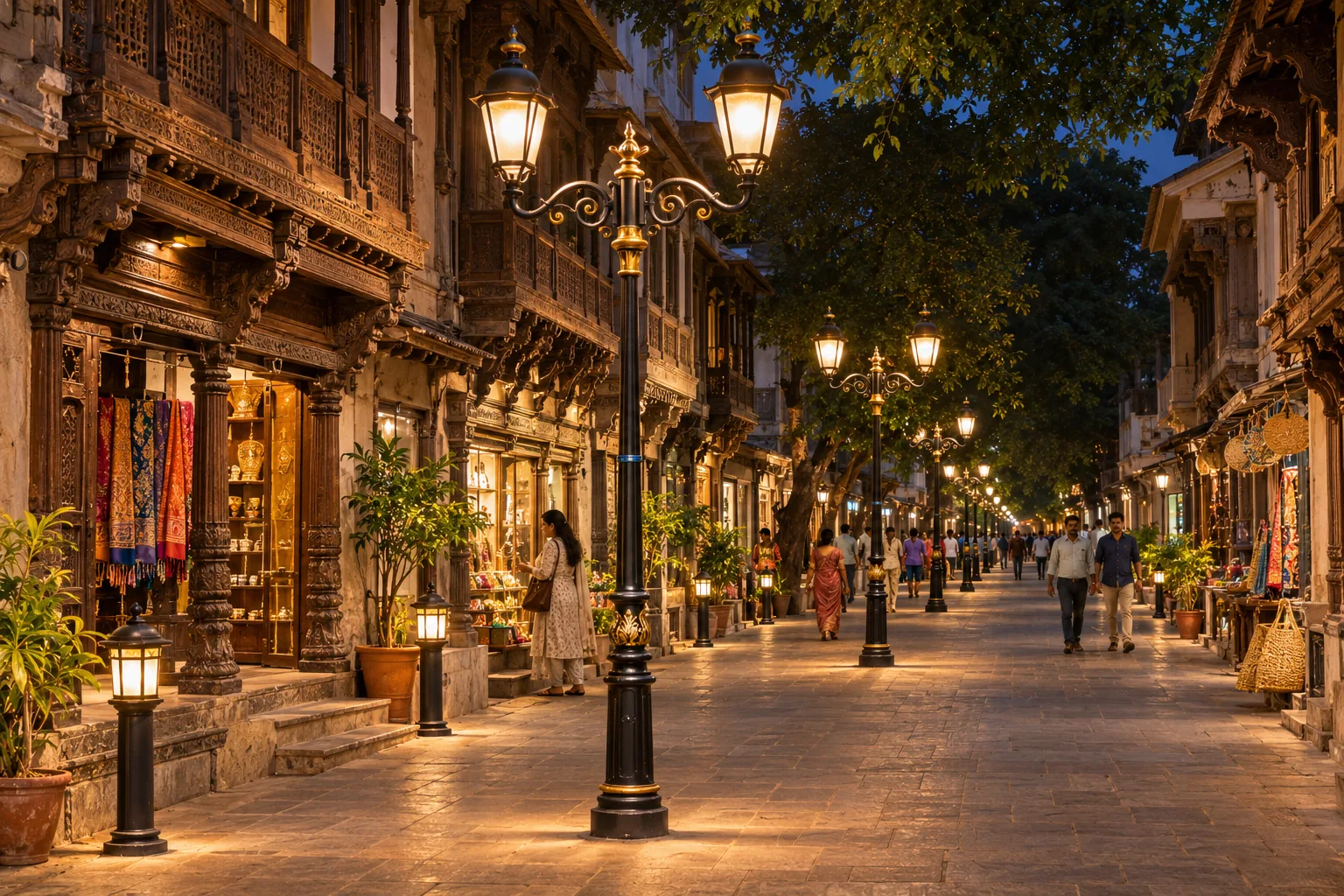
Case study
Ahmedabad, Gujarat
Cast iron poles with twin lanterns and heritage bollards for a pedestrianised market street in a conservation precinct.
Read the case studyAsk us anything else when you request a quote.
Mounting heights of 3 to 5 m, spaced 12 to 20 m apart, are common starting points for heritage streets and plazas. Single lanterns suit lanes, twin lanterns suit wider streets, and triple-lantern columns make centrepieces on squares and at gateways.
Lantern posts and heritage bollards in warm white suit most temple precincts. Light the approach, gates and steps evenly for festival crowds, use frosted glass to cut glare on polished stone, and choose impact-rated bollards with IP65 sealing for washed forecourts.
Yes. Modern LED modules fit inside traditional lanterns. The light source sits in the lantern roof or behind frosted glass, so the lantern glows softly, and a solid roof with downward optics keeps light out of the sky.
Black, deep green and bronze are the traditional colours, often with gold highlights on collars, scrolls and finials. Any RAL shade can be specified to match a local palette or surviving original posts.
Yes, when they are built for it. A galvanised steel shaft with cast iron details takes knocks better than solid cast iron, which is brittle under a sharp blow. Add impact-rated glazing and keep spare glass for each lantern type.
Articles that go deeper into heights, spacing, materials and ratings.