Poles and bollards0 / 302 models
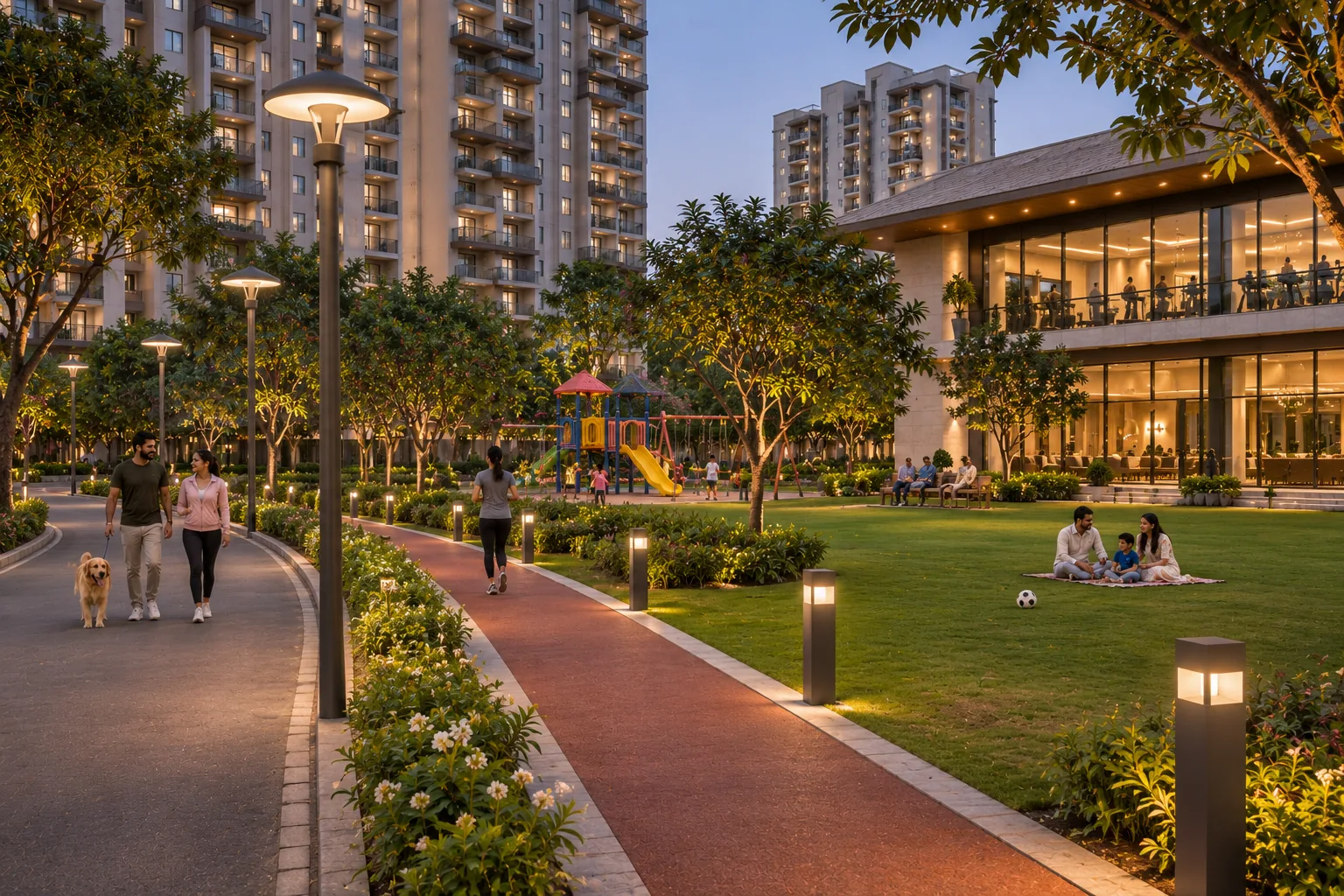
Township street lighting covers far more than the roads: internal streets, footpaths, parking, gardens, play areas, the entrance and the boundary each need their own fitting and height. For most internal roads, round or square poles of 4 to 6 m spaced 15 to 25 m apart are the usual starting point, with bollards of 0.6 to 1.0 m along footpaths and post tops of 2.5 to 3.5 m in gardens. Getting these right once, in one family of fittings, is what keeps a society looking planned for years after handover.
| Zone | Fitting | Height | Typical spacing |
|---|---|---|---|
| Internal roads | Round or square poles | 4 – 6 m | 15 – 25 m |
| Wider spine roads | Square or architectural poles | 6 – 8 m | 20 – 30 m |
| Footpaths and jogging tracks | Pathway or round bollards | 0.6 – 1.0 m | 4 – 8 m |
| Gardens, lawns and play areas | Garden post tops | 2.5 – 3.5 m | 10 – 15 m |
| Entrance and clubhouse | Feature or garden poles | Set by the design | Set by the design |
Before fixing the grid, mark the places that need extra light: the main gate and security cabin, junctions, speed breakers, ramps, and the walk from parking to each tower lobby. Our society and township lighting checklist takes you through every decision from site plan to handover.
Light along a township road falls a few metres from bedroom windows, so comfort matters as much as brightness.
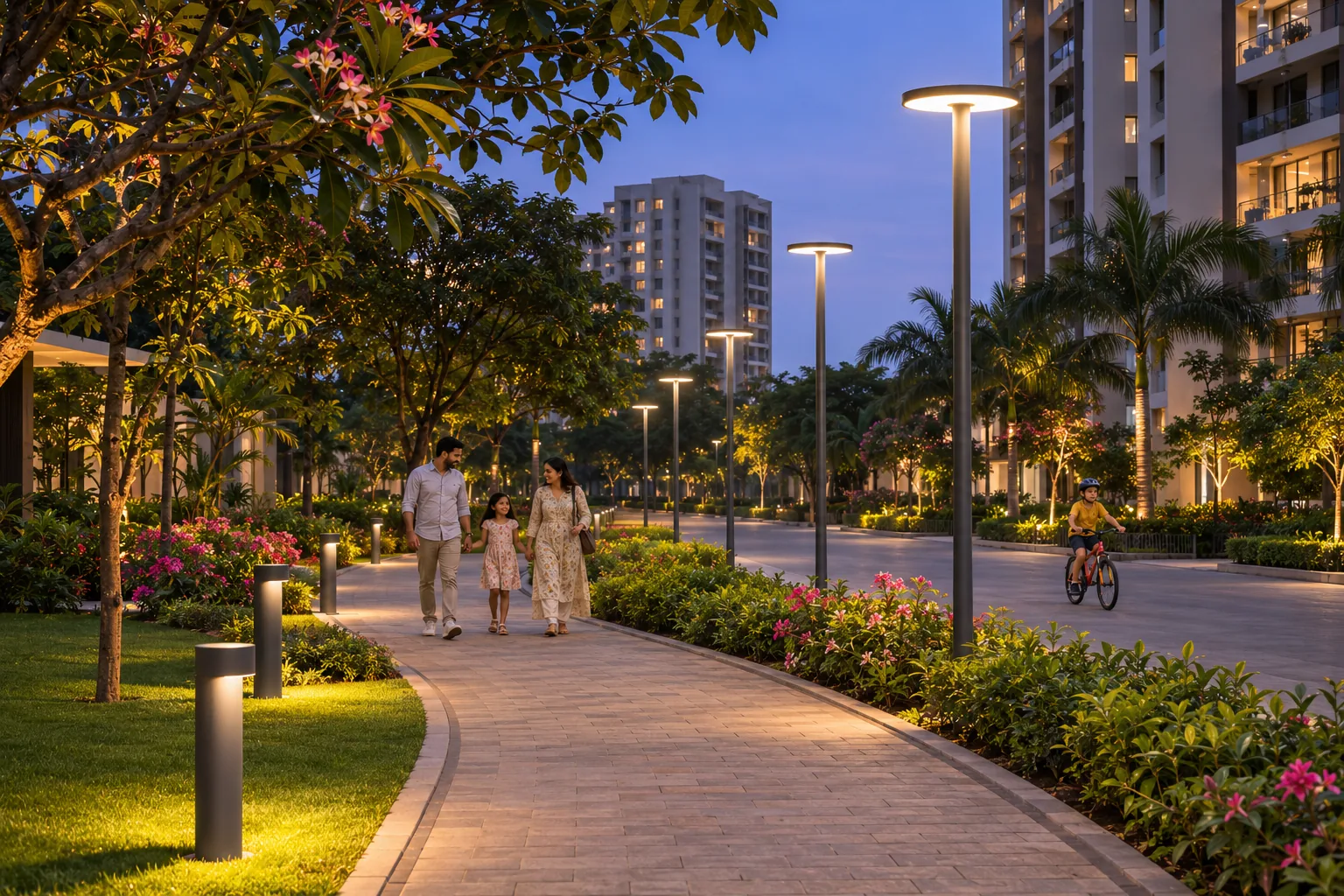
A township looks designed when its poles, post tops and bollards share one profile and finish. The simplest way is to pair shapes: round poles with round bollards, or square poles with square bollards.
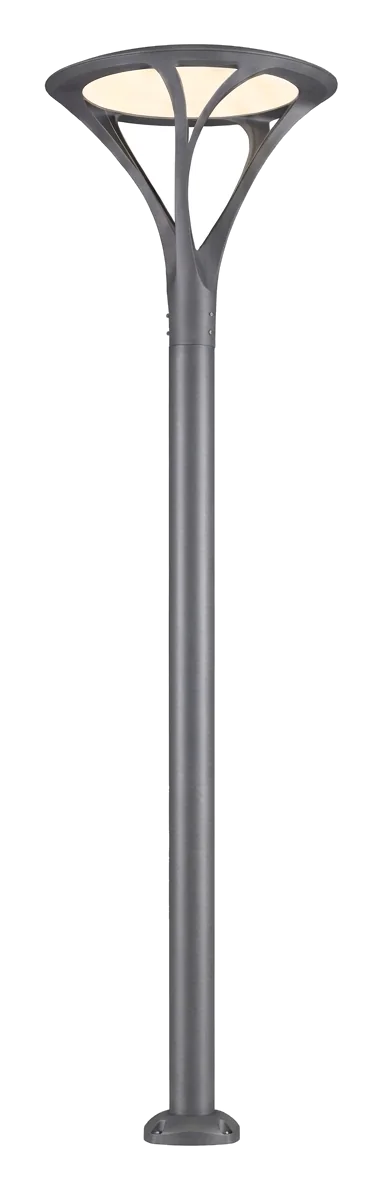
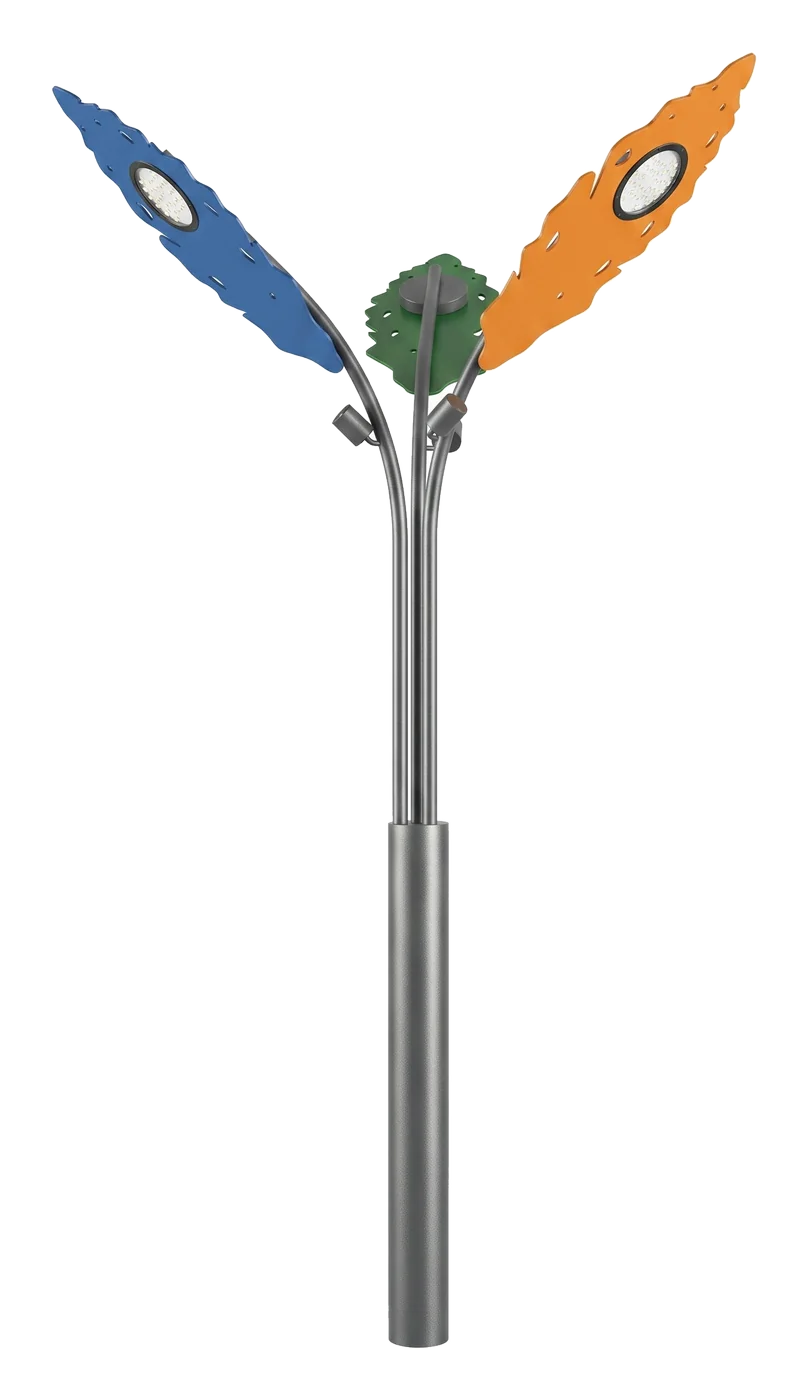
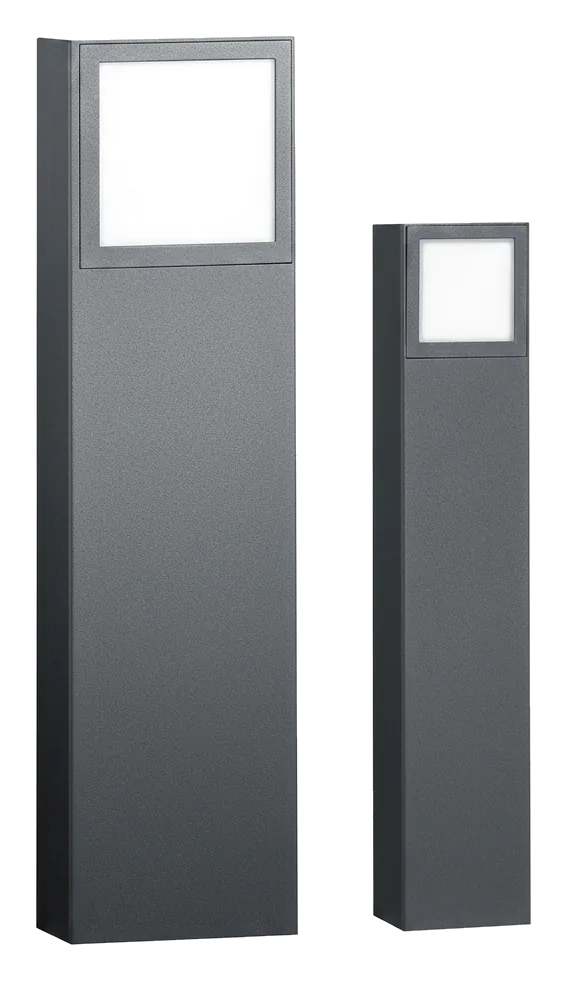
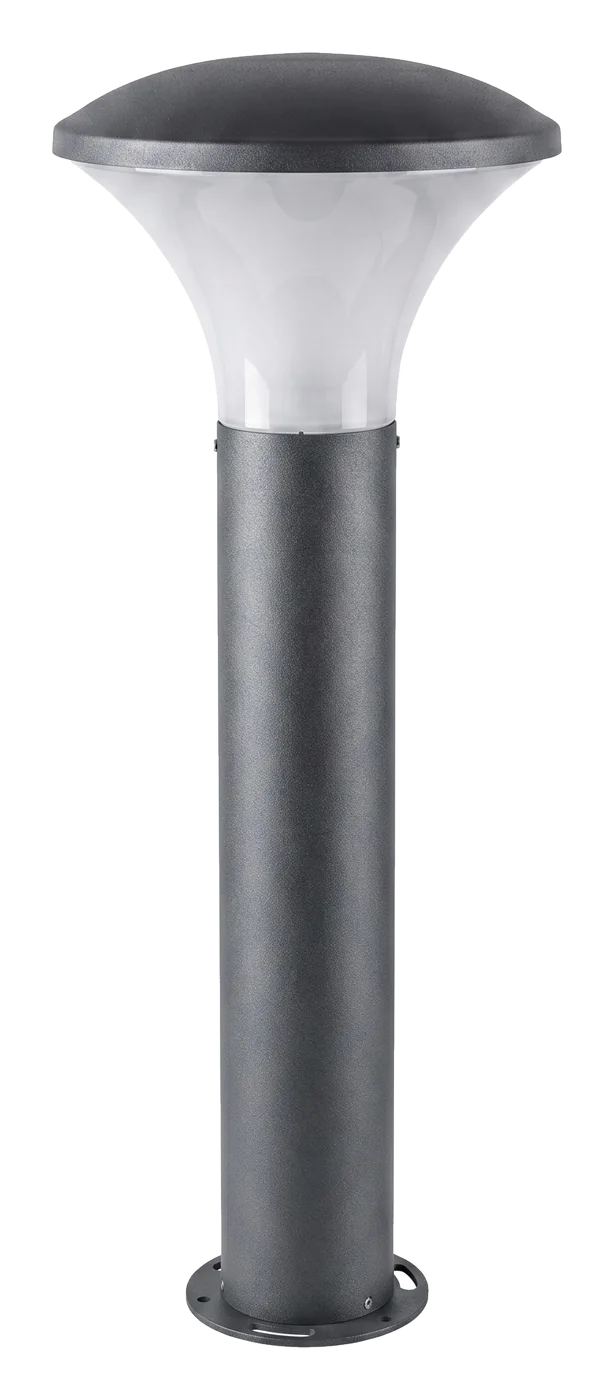
Round poles suit most internal roads, with contemporary post tops, mushroom and disc heads, or arm-mounted luminaires, from 3 to 10 m. Garden poles of 2 to 4.5 m add lantern heads around lawns, clubhouses and play areas. Along footpaths, pathway bollards of 450 to 900 mm wash the path with glare-free down-light, while round bollards of 500 to 1100 mm give 360° or directional light, in single, twin and triple sets for entrances.
Fewer models also mean fewer spares. The maintenance team keeps one stock of drivers, LED modules and glass, replacements match, and the colour stays even for years.
A builder and a resident welfare association buy township lighting at different moments, with different worries.
Builders and developers think about programme and cost. Large sites are handed over tower by tower, so deliveries are best phased to match. Fix pole positions, ducts and foundations with the civil contractor before roads and paving are laid. Every Luminex pole comes with a foundation drawing and anchor bolt cage, so bases are cast right the first time.
Associations taking over a site think about upkeep and running cost. Ask the builder for as-built drawings with pole numbers and circuits, a record of every model, wattage, colour temperature and finish, and a small stock of spares. Where old fittings are failing on sound poles, new LED heads can cost less than new poles.
Case study
Pune, Maharashtra
Round poles and pathway bollards across a 1,200-home township, stocked for phased hand-overs over eighteen months.
Read the case studyAsk us anything else when you request a quote.
Internal township roads commonly use round or square poles of 4 to 6 m, spaced 15 to 25 m apart. Wider spine roads take 6 to 8 m poles, and gardens use post tops of 2.5 to 3.5 m. A lighting calculation confirms the final layout.
It depends on road lengths, widths and the light level chosen. As a rough guide, divide each road's length by a spacing of 15 to 25 m for 4 to 6 m poles, add poles at gates, junctions and speed breakers, then check by calculation.
Bollards of 0.6 to 1.0 m, set 4 to 8 m apart, are the usual choice. Down-light pathway bollards keep glare low for walkers and runners. Place one at every junction, step and ramp first, then fill in the straight runs.
3000 K is the better choice for most societies. It is comfortable beside homes, flatters planting and attracts fewer insects. 6000 K looks cold, adds glare and suits industrial and security areas rather than residential roads and gardens.
Yes, deliveries can be phased to match construction. Fix pole positions, ducts and foundations with the civil contractor early, and keep to a small set of models so that later phases match the first.
Articles that go deeper into heights, spacing, materials and ratings.