Poles and bollards0 / 302 models
City beautification lighting turns streets, squares and junctions into places people want to spend the evening in, while still lighting them safely. It usually combines functional street poles with a few distinctive pieces: feature poles with sculptures or sign arms on theme streets, laser-cut poles carrying a local motif in plazas and gardens, heritage lantern posts in old precincts, and smart poles that add cameras and displays on main corridors. The skill lies in choosing where each one belongs.
| Setting | Pole family | Height | What it adds |
|---|---|---|---|
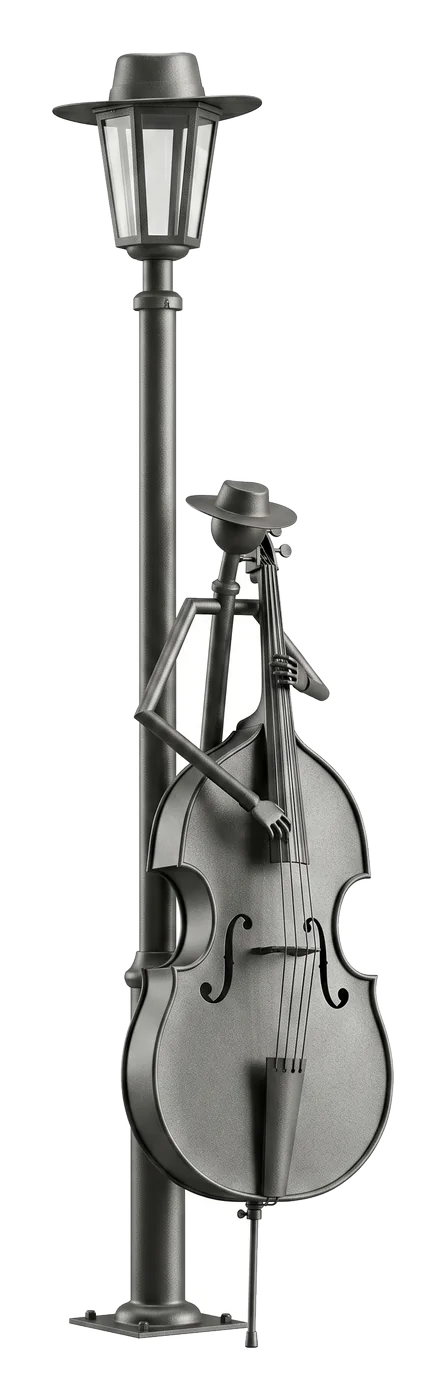
| Theme streets, malls and public art | Feature poles | 3 – 4.5 m | Musician sculptures, sign and billboard arms, heritage lantern heads |
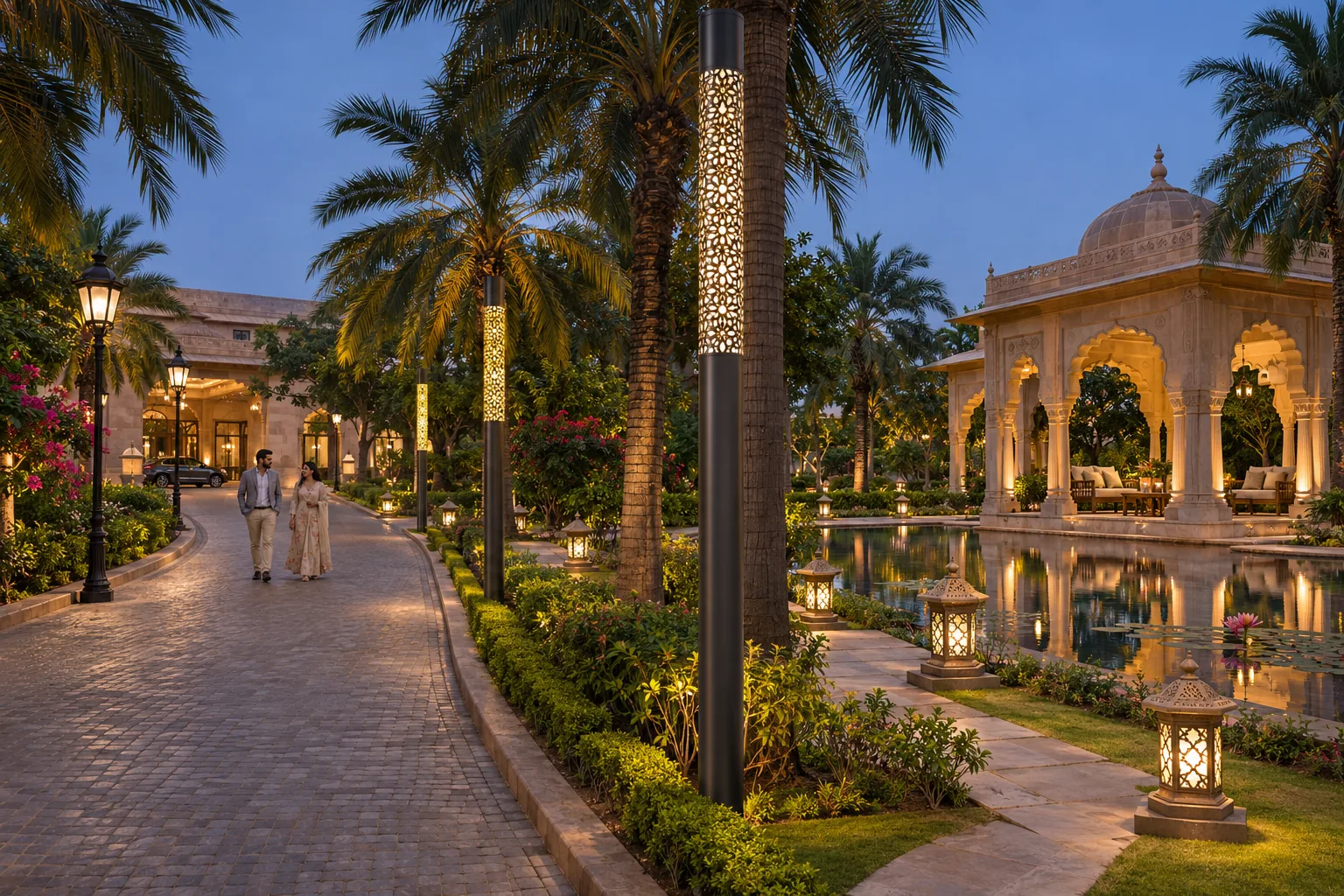
| Plazas, gardens and promenades | Laser-cut poles | 2.5 – 6 m | Patterned light and shadow, with a local motif |
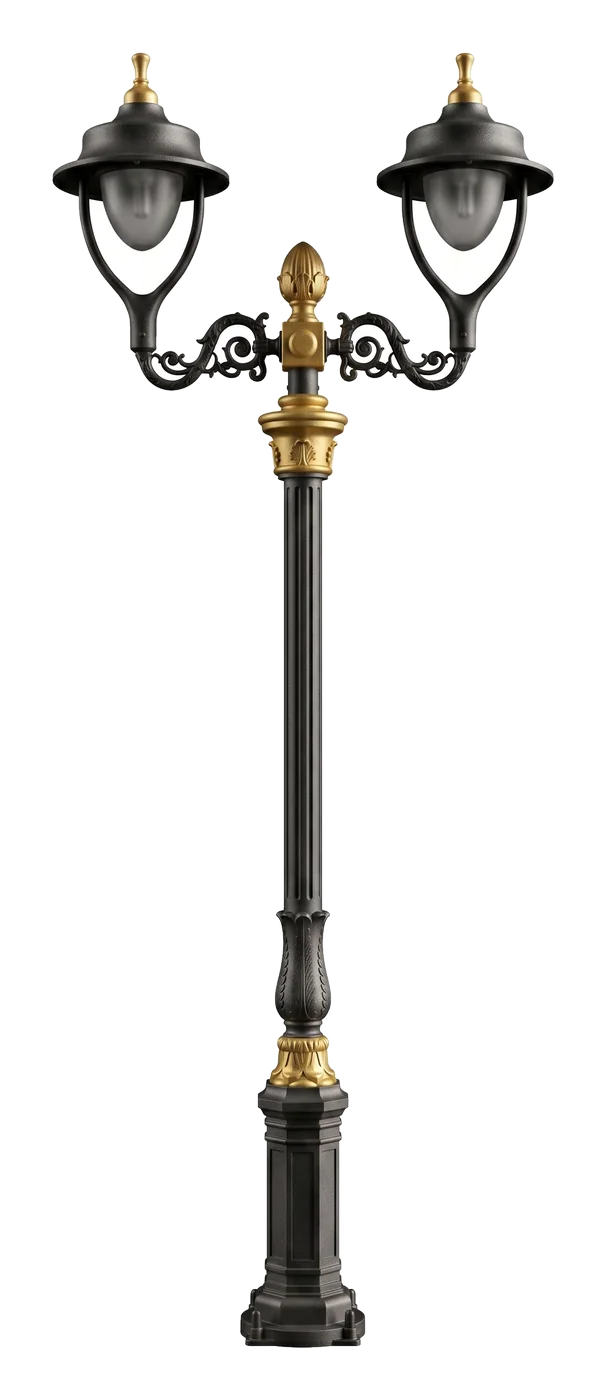
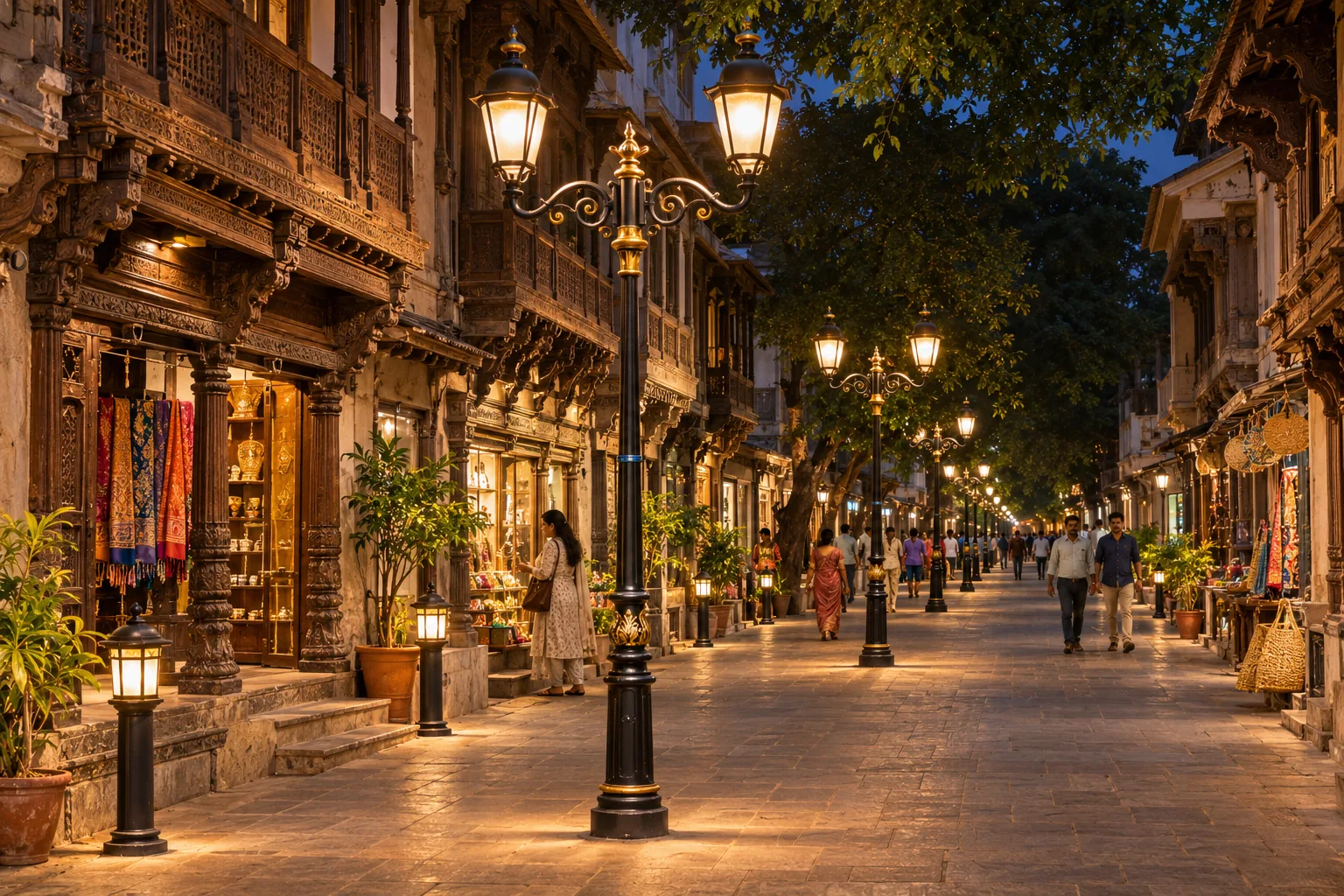
| Heritage precincts and civic squares | Cast iron poles | 3 – 6 m | Fluted shafts, ornate bases, lantern and globe heads |
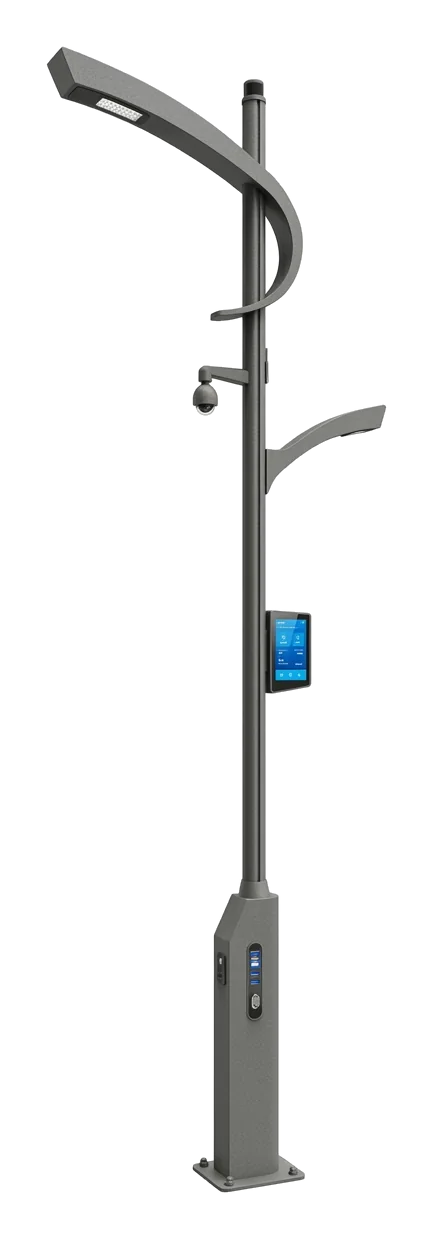
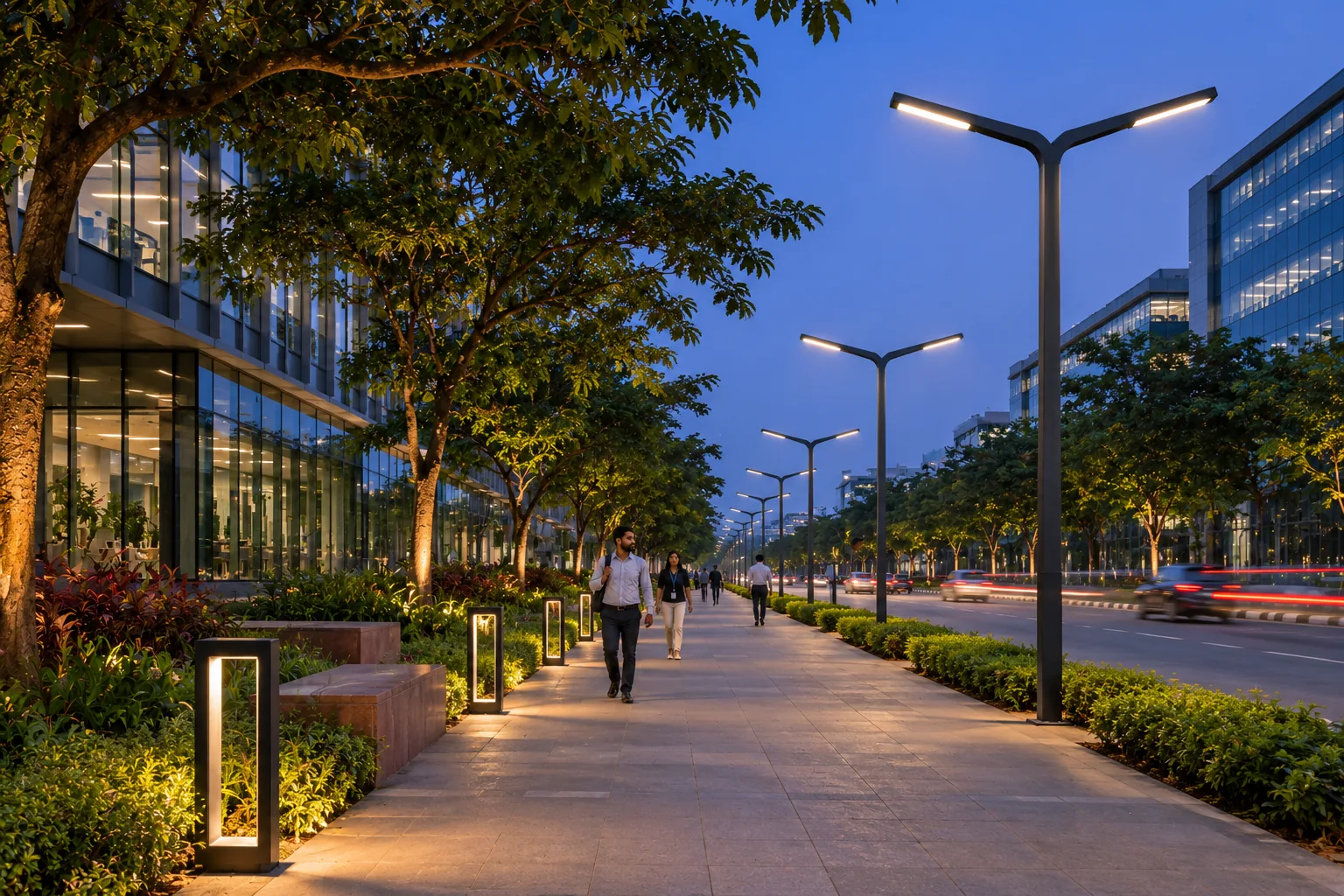
| Smart corridors, campuses and parks | Smart poles | 6 – 12 m | Street lighting with CCTV, a display and connected controls |
Feature poles shaped as street musicians, or heritage posts that carry direction signs and boards, give a theme street its personality. Laser-cut poles can carry a motif drawn from the city's architecture, crafts or emblem; send us the artwork, or choose from our pattern library. Cast iron poles suit conservation areas and civic squares, with cast nameplates on request for a crest or a street name.
Smart poles combine LED street lighting with CCTV, an information display and connected controls on a single galvanised column, from 6 to 12 m. One pole in place of several separate posts reduces clutter on footpaths and medians. Integrated cable management keeps the wiring inside the shaft, and the poles are ready for IoT controllers, so they can join a city's monitoring and dimming system.
Plan the services as early as the lighting: power and data routes, camera positions, and which agency will maintain each part. A smart pole is only as useful as the system it connects to.
Beautification should add to good lighting, not replace it. A sculptural pole spaced like a highway pole leaves dark gaps, and a feature column cannot light a wide road on its own.
Our article on how to choose decorative light poles covers matching each pole to its role and setting.
Public works are maintained for years by teams who were not part of the design. A clear specification protects both the look and the budget.
Two quotes for the same height of decorative pole can describe very different products. Our guide to decorative light pole price factors explains how to compare them line by line.
Ask us anything else when you request a quote.
City beautification lighting uses decorative poles, feature pieces and warm, well-shielded light to make streets, squares, gardens and junctions more attractive and welcoming after dark, while still lighting them safely for the people and traffic that use them.
A smart pole combines LED street lighting with other services on one column, such as CCTV cameras, an information display and connected controls. Fewer separate posts mean less clutter, and the lights can be monitored and dimmed remotely.
A centrepiece column, such as a triple-lantern heritage pole or a sculptural feature pole, gives a square or circle its focal point. Surround it with lower lantern posts or laser-cut poles, and keep the roads around it lit by functional poles.
Specify more than height: material, wall thickness and galvanising for the pole; lumen output, colour temperature, optic, IP and IK ratings for the luminaire; and foundation drawings with anchor bolt cages. Ask for a lit sample before a large order.
Yes. Laser-cut poles can carry a motif drawn from local architecture, crafts or a city emblem, cut into the sleeve so it glows and casts patterned light. Cast nameplates with a crest or street name are another option on heritage poles.
Articles that go deeper into heights, spacing, materials and ratings.