Planning & design5 min read
Temple and ghat lighting: poles, lanterns and crowd safety
Light for sacred places has to be warm and dignified, and safe for large crowds on steps and riverbanks. How to plan poles, lanterns and bollards for temples and ghats.
By the Luminex Electronics design team, Ahmedabad
Temple and ghat lighting has to do two jobs at once: show sacred architecture and riverbanks with warmth and dignity, and keep large crowds moving safely on steps, ramps and narrow routes after dark. Warm white light from lantern and motif poles, glare-free bollards on steps, and fittings that cope with water, festivals and heavy use are the basis of a good scheme.
Temple and ghat lighting, zone by zone
Temple complexes, ghats and pilgrimage routes are made up of distinct spaces, and each needs different light.
| Zone | Typical fittings | Light character |
|---|---|---|
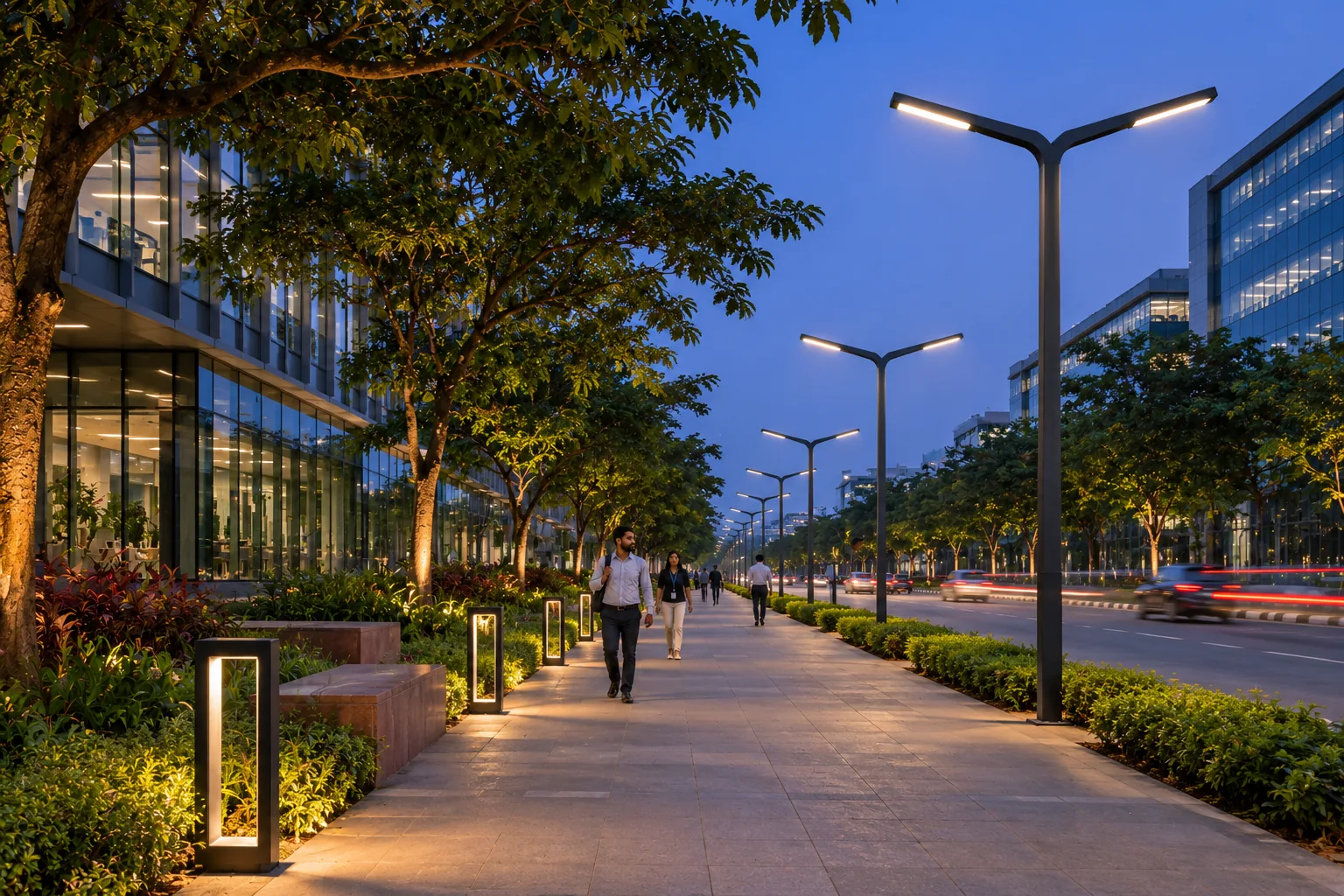
| Approach roads and parking | Round or square poles | Even, functional, 3000 – 4000 K |
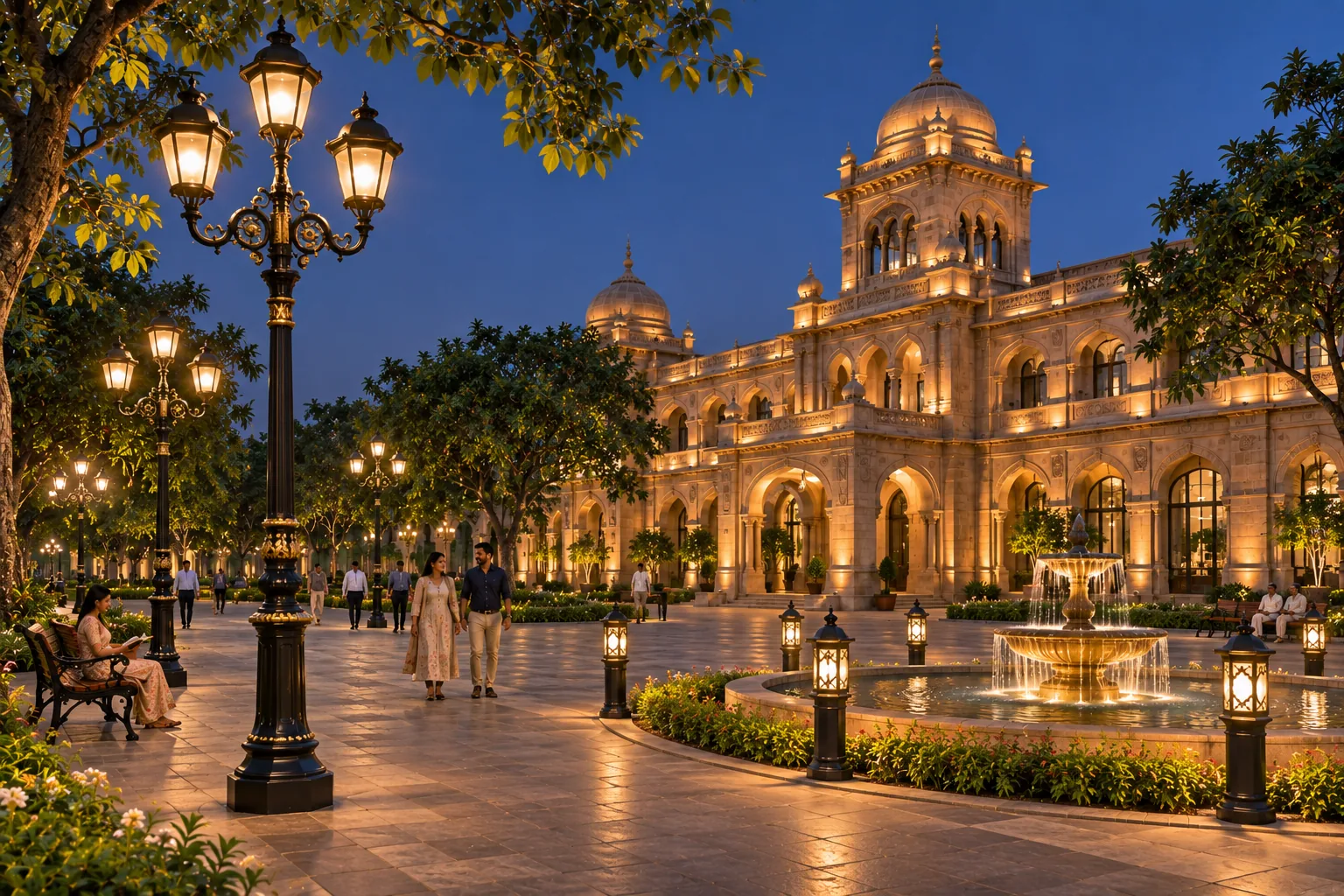
| Forecourt and plaza | Lantern poles, cast iron columns, multi-head columns | Warm, generous, a sense of arrival |
| Queue and darshan routes | Low poles and bollards | Even, low glare, no dark patches |
| Steps and ghats | Bollards and side lighting on each flight | Step edges clearly visible |
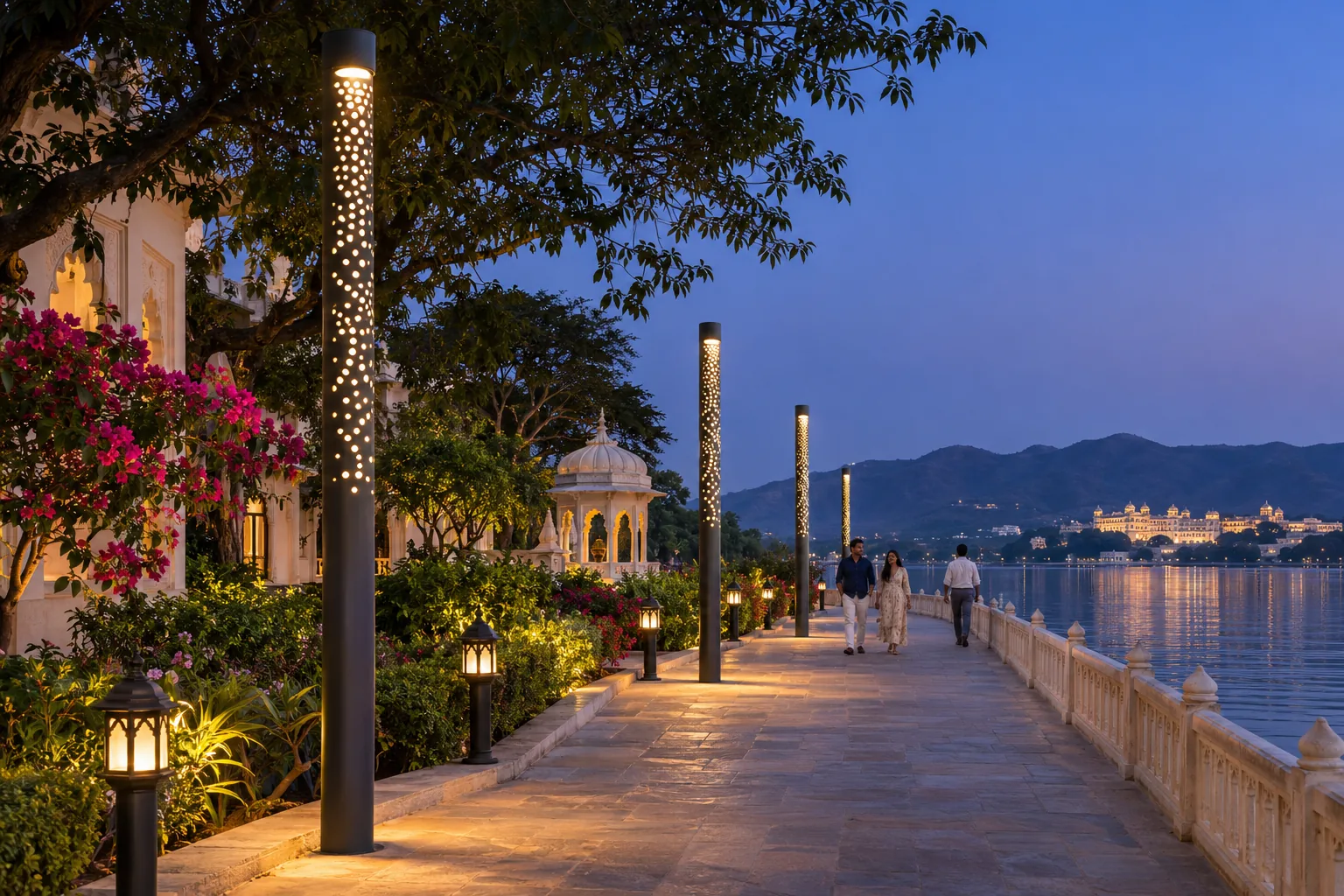
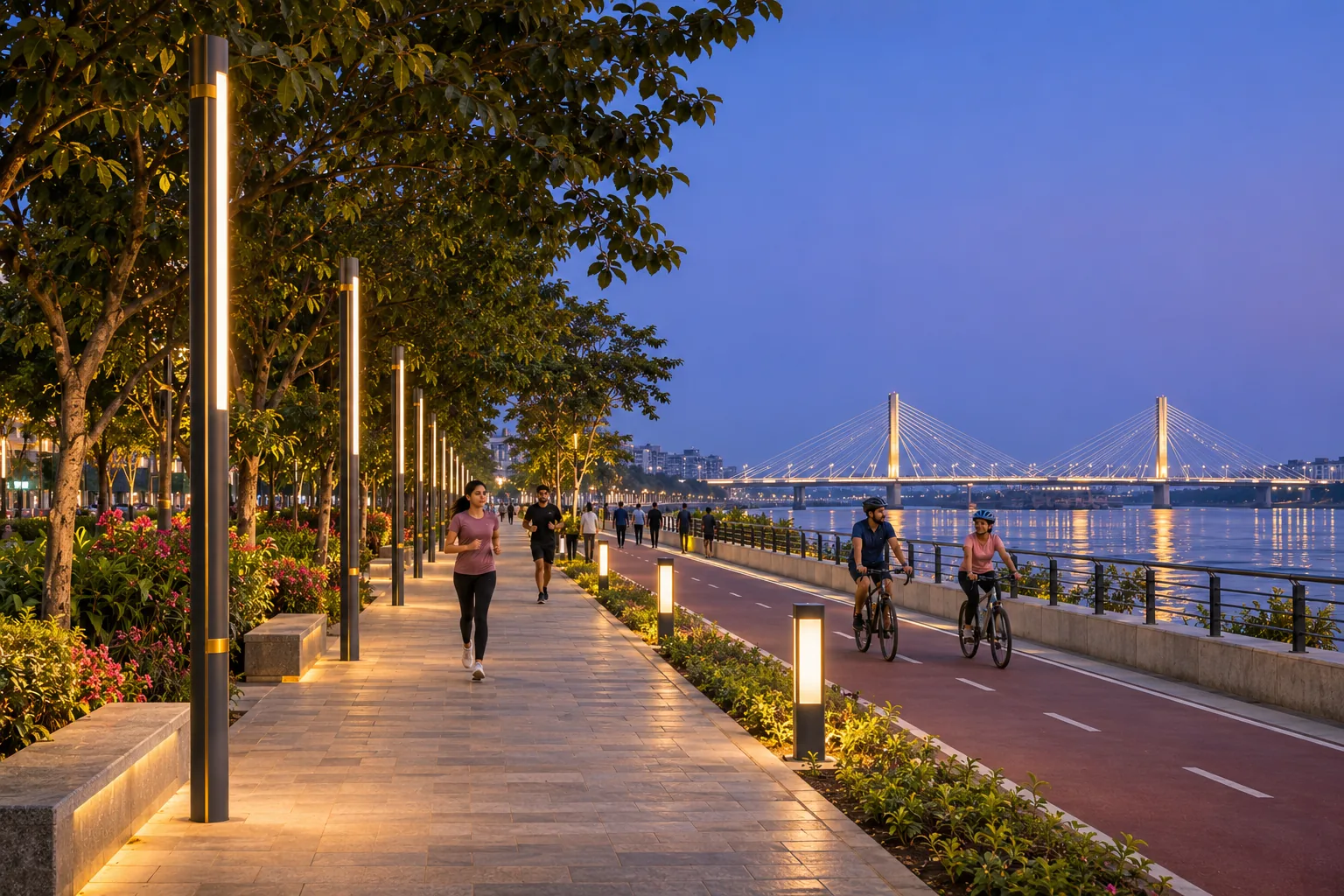
| Riverbank promenade | Light columns and bollards along railings | Calm, low glare towards the water |
| Gardens and courtyards | Garden post tops and bollards | Soft and warm |
Plan the lighting as a journey: from the road to the parking, through the forecourt, along the queue, up the steps and down to the water. Each change in level, direction or crowd density is a place where light matters most.
Lighting for crowds and safety
Festival days can bring crowds many times larger than an ordinary evening, so design for the peak.
- Even light: dark patches between poles make crowds bunch and slow down. Aim for uniform light along every route, especially queues.
- Steps and level changes: light every flight from the side so the edge of each tread is visible, and mark the top and bottom of steps and ramps.
- No glare: people look ahead and up as they walk; fittings that shine into their eyes hide the ground. Use shielded heads and down-light bollards.
- Backup supply: keep the main routes, exits and gathering points lit from a backup supply if the mains fails during a crowded event.
- Separate circuits: split the site so a single fault does not leave a whole area in darkness.
- Robust fittings: bollards and low fittings in crowds should be IK10 rated, with no sharp edges and no loose parts people can pull on.
Warm light and devotional character
Warm white of 2700 K to 3000 K suits temples and ghats. It flatters carved stone, brass, marigold and fabric, and keeps the setting calm. A colour rendering index of 80 or more brings out those colours properly.
Keep path and plaza lighting moderate. Oil lamps, diyas and the flames of the aarti are the focus of evening worship, and bright floodlighting around them takes their meaning away. Light the architecture gently and separately, so the building glows without the forecourt being flooded.
Poles can carry the character of the place. Lantern and handi heads suit traditional settings, and laser-cut poles and bollards can throw lotus, paisley or other motifs onto the paving, from a pattern library or from the temple's own artwork. Heritage-style bollards with lantern heads continue the design at path level.
Water, floods and the riverbank
Ghats are built for a river that rises, often to cover the lower steps during the monsoon. Electrical design has to accept that.
- Keep power above the flood line: place feeder pillars, junction boxes and cable joints above the highest recorded flood level.
- Choose ratings by position: IP66 for exposed poles and bollards; IP67 or IP68 for anything that may be submerged.
- Protect the metal: river air, splashing and humidity call for galvanised steel under a powder coat, or aluminium, with stainless steel fixings.
- Mind the reflections: light reflects off water and wet steps, so aim fittings down and away from the river.
- Plan for silt: after a flood, fittings on the lower steps need cleaning and checking before they are switched on again.
Our guide to riverfront and promenade lighting covers waterside layouts and railings in more detail.
Festivals, events and maintenance
- Festival power: plan spare circuits and weatherproof outlets for festival decorations, so people do not tie extra wiring to poles.
- Scenes and timers: brighter settings for festivals and aarti, dimmed settings late at night.
- Smoke and soot: lamps, incense and cooking smoke leave deposits on lantern glazing, so plan regular cleaning.
- Spares: keep spare glazing, LED modules and drivers for each model on site.
- Decorations: banner arms with wind-release fixings are safer than banners tied to the shaft.
Frequently asked questions
What colour temperature is best for temple lighting?
Warm white of 2700 K to 3000 K suits temples and ghats. It flatters carved stone, brass, marigold and fabric, keeps the setting calm, and leaves oil lamps and the aarti as the focus of evening worship, especially with a colour rendering index of 80 or more.
How should ghat steps be lit safely?
Light every flight of steps from the side so the edge of each tread is clearly visible, mark the top and bottom of steps and ramps, and use shielded, glare-free fittings so people can see the ground as they walk.
What IP rating do lights on a ghat need?
Use IP66 for exposed poles and bollards, and IP67 or IP68 for anything that may be submerged when the river rises. Keep feeder pillars, junction boxes and cable joints above the highest recorded flood level.
How do you plan lighting for festival crowds?
Design for the peak crowd, not an ordinary evening. Keep light even along every route, keep main routes and exits lit from a backup supply, split the site into separate circuits and use robust, IK10-rated fittings at low level.
Temple and ghat lighting with Luminex
Plan the site as a journey, keep the light warm, even and glare-free, design for festival crowds and the monsoon river, and let the poles carry the character of the place. Luminex designs and makes cast iron poles with lantern and globe heads, laser-cut poles with custom motifs and aluminium heritage bollards in Ahmedabad. See our heritage and temple lighting page, then request a quote.