Buying guides7 min read
How to choose decorative light poles for a project
A decorative pole is seen all day and used all night. How to choose one that suits the place, lights it properly and lasts.
By the Luminex Electronics design team, Ahmedabad
To choose decorative light poles, start with the job the light has to do, then pick a style that suits the place, a height that suits the people using it, and a material, finish and LED specification that will last. A decorative pole is looked at all day and used all night, so it has to work both as a piece of design and as a light fitting.
Start with what each pole has to do
Most decorative poles do one of three jobs, and it helps to write the job next to each pole on the drawing before looking at designs.
- Light a road or drive to a set level, with a decorative profile. Light output, optics and spacing come first.
- Light paths, courts and gardens at a human scale, where comfort and low glare matter more than reach.
- Mark a place: an entrance, a plaza, a temple forecourt or a promenade, where the pole is a feature and some output can be traded for character.
Problems start when one pole is asked to do another's job: an ornate lantern spaced like a highway pole, or a slim feature column expected to light a 7 m wide road. If a road needs a measured light level, choose a decorative pole with a proper road optic, or pair feature poles with functional ones.
Match decorative light poles to the setting
The pole should look as if it belongs to the architecture around it, by day as much as by night.
| Setting | Pole families that tend to suit | Why |
|---|---|---|
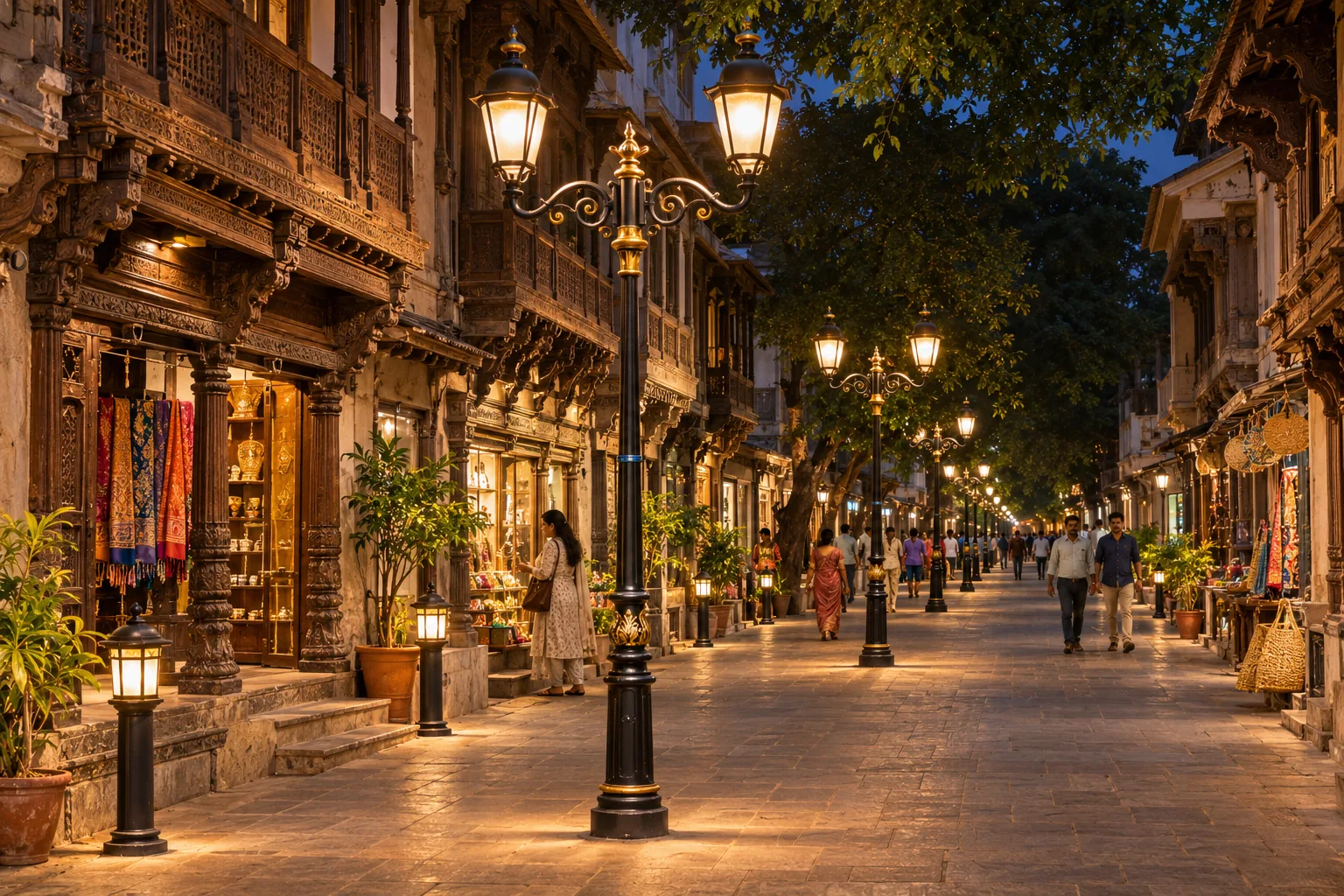
| Heritage streets, old markets, temple precincts | Cast iron poles, lantern columns | Fluted shafts, ornate bases and lanterns read as period pieces |
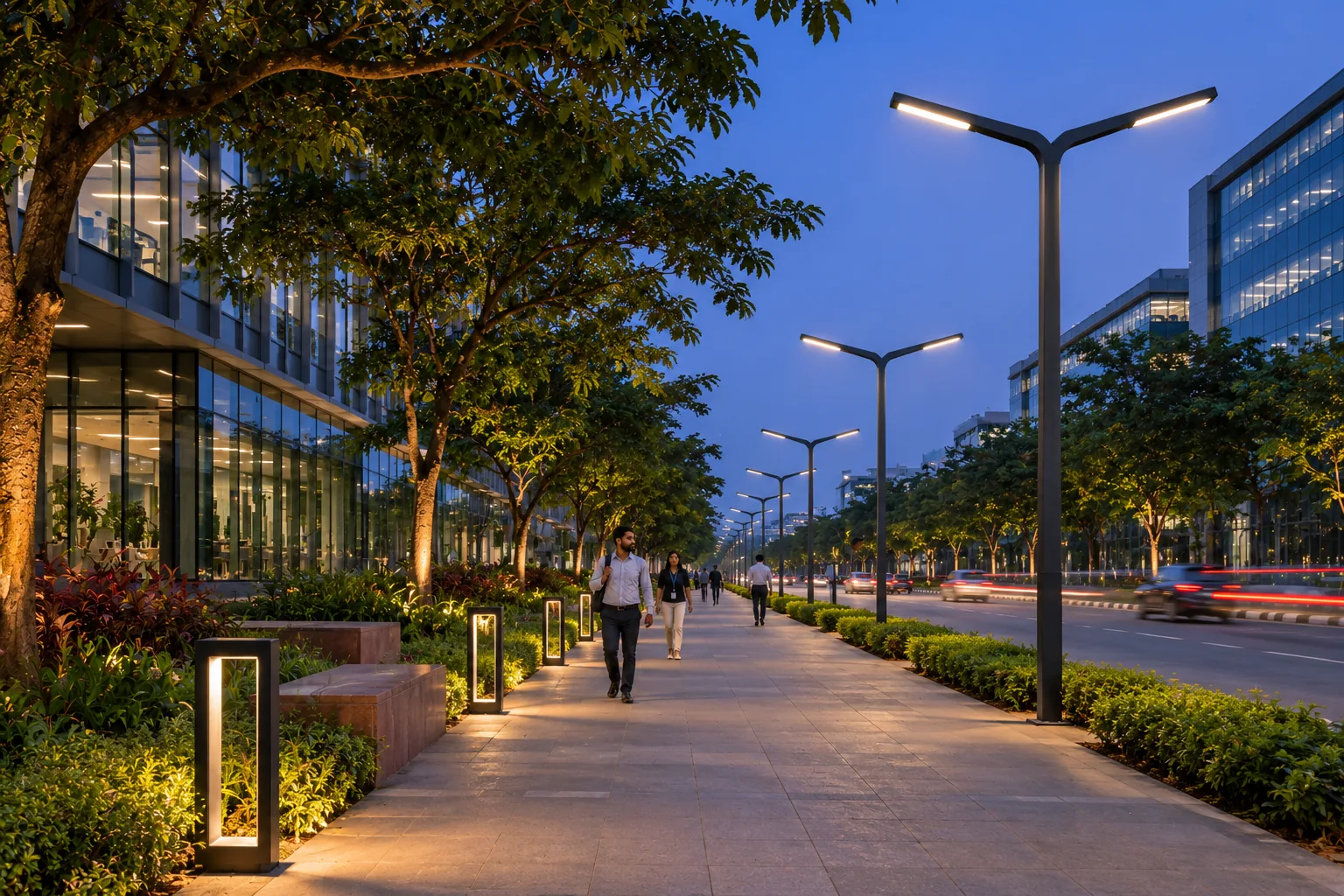
| Corporate campuses, premium developments | Architectural poles, square poles | Sculpted arcs, laser-cut panels and clean lines suit modern buildings |
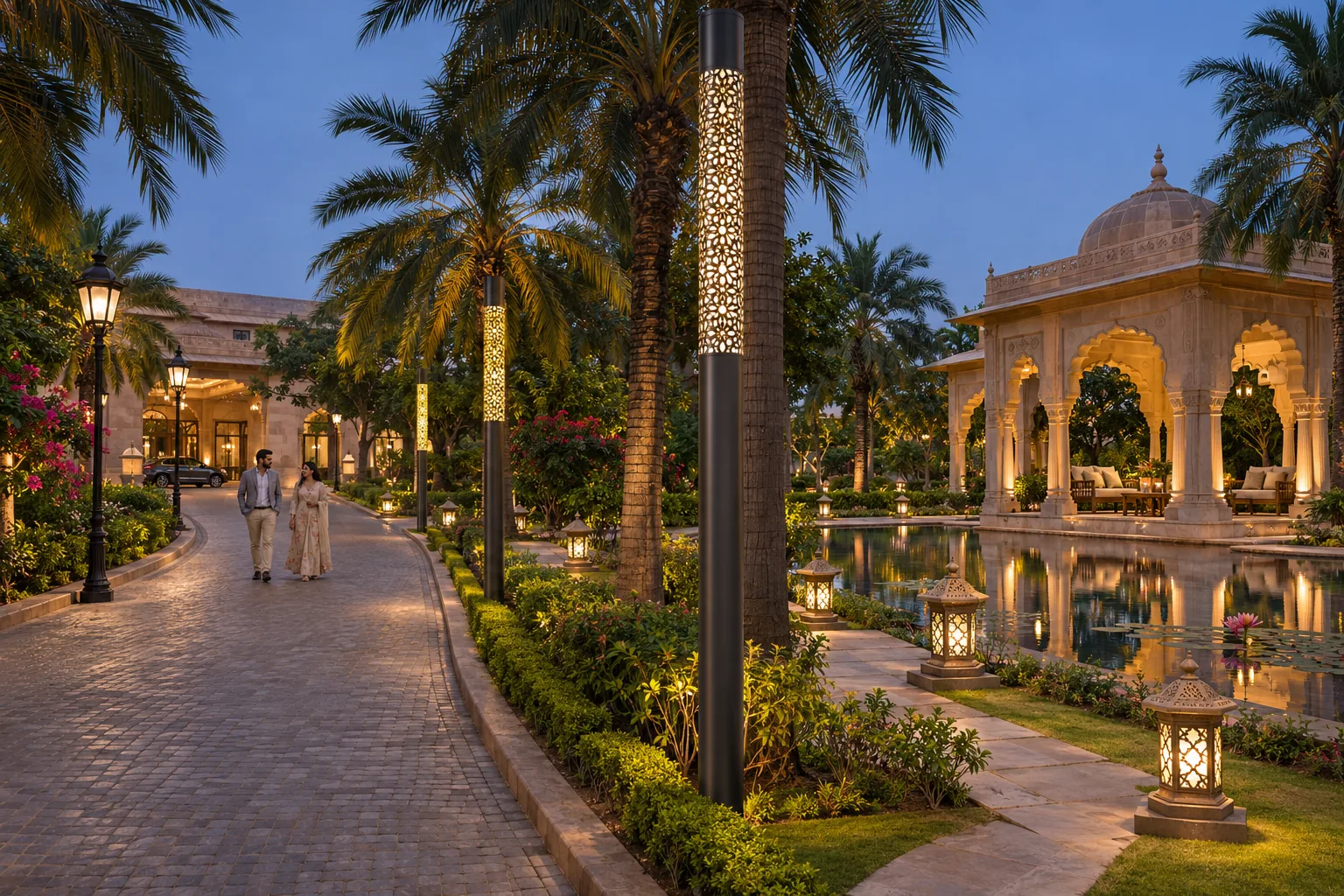
| Resorts, villas and gardens | Garden poles, laser-cut poles | Lanterns, leaf designs and patterned shadows sit well among planting |
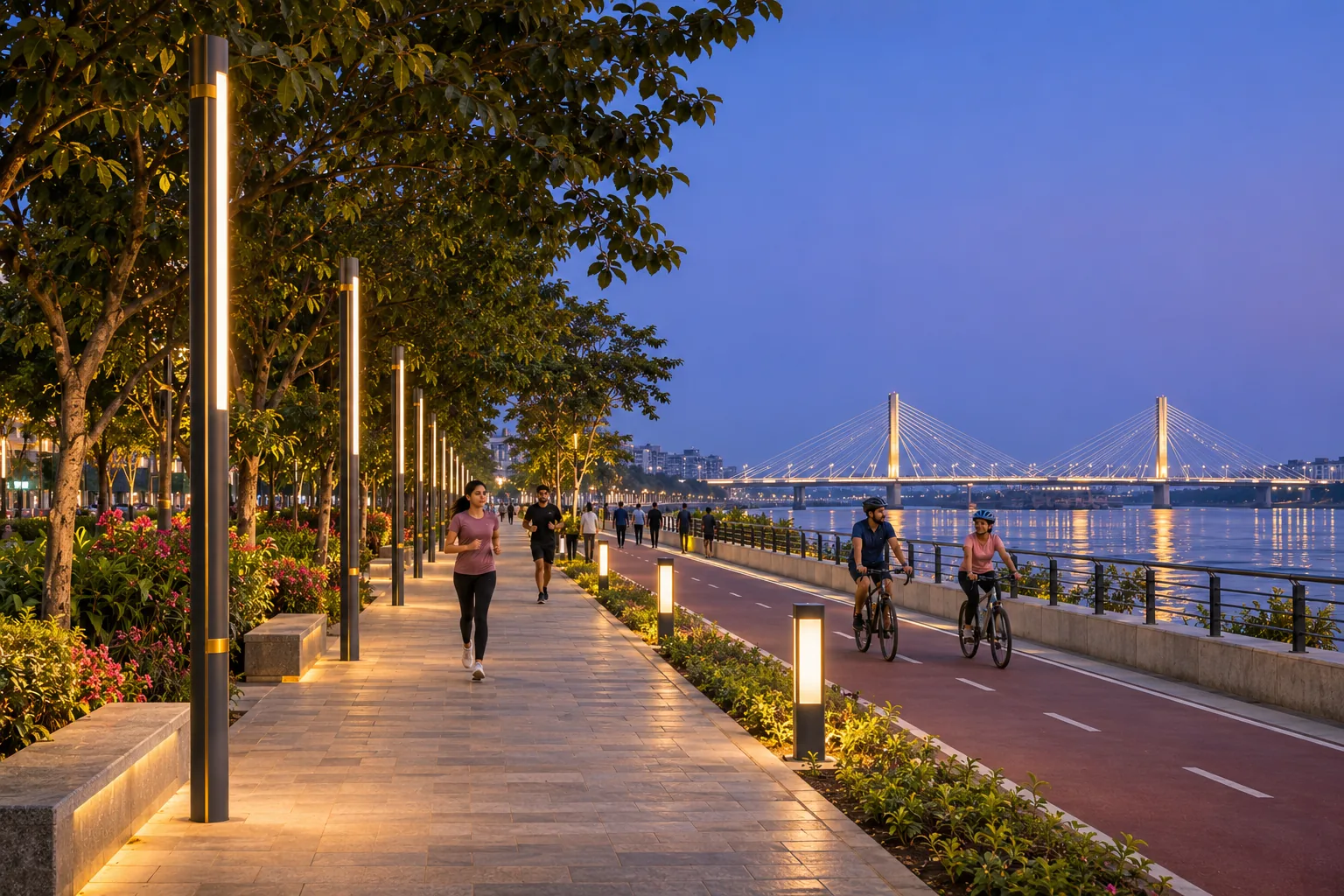
| Plazas, hotel drives, waterfronts | Column lights, profile poles | The pole itself glows, so it works as a vertical marker |
| Housing societies and townships | Round and square poles | Wide choice of heads, easy to repeat across a large site |
| Promenades and theme streets | Feature poles with sculptures or sign arms | Character and wayfinding on the same pole |
Keep to one family, or two that clearly relate, across a space. Choose bollards that match the poles in profile and finish, so the scheme reads as one design.
Get the height and spacing right
Decorative poles are usually lower than road poles, because they sit close to people. Commonly used starting points are 2.5 to 3.5 m for garden post tops, 3 to 5 m for heritage and lantern poles, and 6 to 8 m for architectural poles along avenues and campus roads. Spacing for pedestrian areas usually starts at about four times the mounting height, then is checked by calculation.
Proportion matters as much as light. An ornate head on a tall, thin shaft looks lost, and a heavy base on a short pole looks squat. Line poles up with what is already there, such as building bays, columns, tree rows or parking bays, so the rhythm looks intended. Our guide to street light pole height and spacing covers the layout rules in detail.
Look at the light, not only the pole
A good-looking pole that gives harsh or patchy light is a poor buy. Check these points on the luminaire, not just the drawing of the pole.
- Distribution: post tops and lanterns usually light all round the pole, which suits plazas and gardens. Along a road, an asymmetric road optic puts the light where it is needed.
- Glare: a bright, bare LED module inside a clear lantern looks harsh. Ask for diffused, frosted or shielded optics, and full cut-off heads where sky glow matters.
- Output: compare lumens, not watts. Two fittings of the same wattage can give very different amounts of light.
- Colour temperature: 3000 K suits most residential, hospitality and heritage settings, and 4000 K suits roads and car parks.
- Pattern: laser-cut sleeves throw patterns onto the ground. Check how the pattern reads at the actual mounting height.
Material, finish and corrosion protection
Most decorative poles in India are made in one of four materials, and each has a place.
- GI: hot-dip galvanised steel, protected inside and out. The sensible default outdoors.
- MS: mild steel, protected only by its paint. Economical, but it depends entirely on the coating.
- Aluminium: light and rust-free, useful on coastal sites and for lighter decorative pieces.
- Cast iron: used for ornate bases, collars and heritage details; heavy and best kept away from impact.
Over the metal, a polyester powder coat or PU paint gives the colour. Standard choices such as graphite black, anthracite grey, signal white, bronze and corten effect cover most schemes, and any RAL shade can be specified. Dark finishes recede into planting at night, while white, bronze and gold accents read as features. Our comparison of GI, MS and aluminium poles goes deeper on materials.
Structure, foundations and maintenance
- Wind: shaft size, wall thickness, base plate and foundation have to suit the wind speed of the site and the area of the heads and arms. Triple lanterns and wide arms catch more wind than a single post top.
- Foundations: ask for a foundation drawing and an anchor bolt cage, so the contractor casts the base correctly the first time.
- Access: a lockable door with a gear tray at the base lets an electrician reach the wiring and connections without taking the pole apart.
- Spares: confirm that glass, LED modules and drivers for the chosen model can be replaced later.
- Public spaces: specify impact-rated diffusers and tamper-resistant fixings where vandalism is likely.
A short specification checklist
- Role of each pole and the light level it must give
- Design family, model and head configuration: single, twin or triple
- Mounting height and arm outreach
- Material, wall thickness, and galvanising where the pole is steel
- Finish type and RAL shade
- LED wattage, lumen output, colour temperature and colour rendering
- Optic and light distribution
- IP and IK ratings of the luminaire
- Driver, surge protection and dimming if needed
- Foundation drawing, anchor bolts and base cover
- Quantities, delivery phasing and installation support
For a large order, it is worth seeing one pole lit on site at night before the full quantity is made.
Frequently asked questions
Which material is best for decorative light poles?
For most outdoor sites, hot-dip galvanised (GI) steel is the sensible default, because it is protected inside and out. Aluminium suits coastal sites and lighter pieces, mild steel suits sheltered or budget work, and cast iron is used for ornate heritage details.
What height should decorative light poles be?
Decorative poles are usually lower than road poles because they sit close to people. Commonly used starting points are 2.5 to 3.5 m for garden post tops, 3 to 5 m for heritage and lantern poles, and 6 to 8 m for architectural poles along avenues.
Can decorative light poles be made in any colour?
Yes. Decorative poles are finished with a polyester powder coat or PU paint, and any RAL shade can be specified. Graphite black, anthracite grey, signal white, bronze and corten effect cover most schemes, and dark finishes recede into planting at night.
Can a decorative pole light a road properly?
Yes, if it carries a proper road optic and is spaced for the light level the road needs. An ornate lantern spaced like a highway pole leaves dark gaps, so pair feature poles with functional ones wherever a measured light level is required.
Choosing decorative light poles with Luminex
Decide the role of each pole, match the style to the place, then check the light, the material and the structure as carefully as the look. Luminex designs and makes decorative poles in Ahmedabad, built to order in your height, arm configuration and any RAL colour. Browse our architectural poles, laser-cut poles and cast iron poles, then send us your drawings and request a quote.