Buying guides6 min read
Decorative light pole price in India: what decides the cost
Two quotes for the same height of pole can be far apart because they describe different products. What drives the cost, and how to compare quotes fairly.
By the Luminex Electronics design team, Ahmedabad
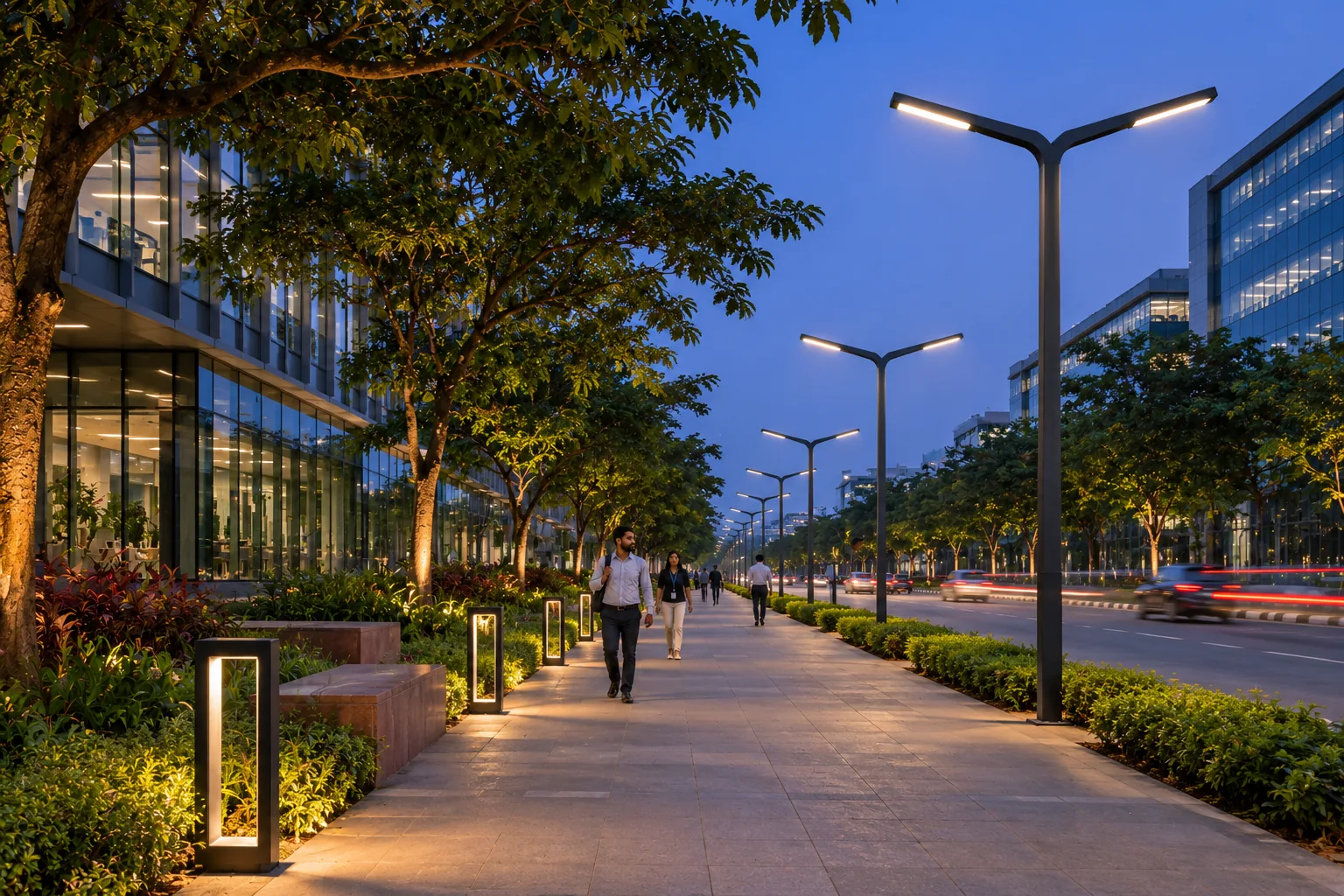
The decorative light pole price you are quoted in India depends mostly on how much metal goes into the pole, how that metal is protected from corrosion, how much decoration is fabricated or cast onto it, and the quality of the LED luminaire on top. Two quotes for "a 4 m decorative pole" can be far apart because they describe different products. Comparing them fairly means comparing the specification line by line, not the bottom line.
The pole: material, height and wall thickness
The shaft is usually the largest single item, and its cost follows its weight.
- Material: mild steel is the most economical, galvanised steel adds the cost of zinc and the galvanising process, aluminium costs more per kilogram, and stainless steel more again. Cast iron is heavy and needs patterns for casting.
- Height and section: a taller or wider shaft uses more metal. Tapered, octagonal and fabricated profiles take more work than straight round or square tube.
- Wall thickness: this is the hidden variable. A shaft with a thicker wall can weigh noticeably more than one that looks identical, and it is stronger in wind. A low quote often means a thinner wall.
- Base plate and door: plate size and thickness, gussets, and a lockable door with a gear tray all add material and labour.
The simplest check is weight. Ask each supplier for the weight of the pole without the luminaire, and for the wall thickness of the shaft.
Fabrication, laser cutting and castings
Plain tube with a standard head is the simplest pole to make. Cost rises with the amount of design work and handwork in each piece: laser-cut sleeves and panels, sculpted heads, scrolled brackets, fluted shafts, ornate bases and finials.
Castings need a pattern before the first piece is poured. On a standard design, that cost is already spread across many orders. A new motif, crest or nameplate needs a new pattern, which weighs heavily on a small order and very little on a large one. Changing the height of a standard pole, by contrast, usually adds little.
Galvanising and finish
Hot-dip galvanising adds a process step and the weight of the zinc, and a heavier coating for coastal sites adds more. A powder coat over the zinc adds surface preparation and a second process, but it lasts longer than either coating alone.
For the colour finish, a plain polyester powder coat in a standard RAL shade is the baseline. Wood-effect, corten-effect, metallic and multi-colour finishes, and gold or brass-effect highlights picked out by hand, all cost more. The coating thickness matters too, so ask for it in microns.
The luminaire: output, optics and driver
After the pole, the luminaire is the biggest variable, and the one where low prices hide most.
- Light output: compare lumens and efficacy (lumens per watt), not watts. A cheaper fitting may need more watts for the same light.
- LED and optics: the quality of the LED chips, lenses and reflectors decides how evenly the light lands and how well it holds its output over the years.
- Driver: the driver is the part most likely to fail. Ask for the make, the surge protection rating in kV and whether it can be dimmed.
- Heat management: a heavier die-cast housing that sinks heat away from the LEDs costs more and helps them last.
- Protection: IP65 or IP66 sealing and impact-rated glass add cost and are worth it outdoors.
- Controls: dimming, timers, motion sensors and smart-city sockets add hardware.
Arms, heads and accessories
A twin head doubles the luminaire cost and a triple lantern triples it, and each extra head also adds wind load. Arms, scrolled brackets, banner arms, signage arms, base covers and nameplates are all priced extra, so check which ones are in the quote.
What sits around the pole
| Item | Questions to ask |
|---|---|
| Quantity | Is the price for this quantity? Repeat models across a site keep cost down. |
| Foundations | Are the foundation drawing and anchor bolt cage included? Who supplies the concrete and excavation? |
| Installation | Is erection included, and does it need a crane or hydraulic platform? |
| Cabling and electrical | Are cables, junction boxes, earthing and the feeder pillar in this quote or someone else's? |
| Transport | Is delivery to site included, with packing and unloading? |
| Tax | Is GST at the applicable rate shown separately, with the HSN code for each line? |
How to compare decorative light pole price quotes
Put every quote into the same table before comparing prices. For each, note:
- Pole height, shaft section, wall thickness, base plate size and weight
- Galvanising: hot-dip after fabrication or not, and the coating mass or thickness
- Finish: powder coat or PU paint, thickness in microns and RAL shade
- Luminaire: wattage, lumen output, colour temperature, colour rendering, optic, IP and IK ratings
- Driver: make, surge protection and dimming
- Included items: arms, heads, anchor bolts, foundation drawing, base cover
- Excluded items: installation, cabling, civil work, freight and unloading
- Warranty terms, in writing, for the structure and the electronics separately
- Photometric files for the luminaire, so a layout can be checked
The lowest quote is often a different product: a thinner wall, pre-galvanised tube instead of hot-dip galvanising, or a luminaire with fewer lumens. Compare weight, coating and lumens before price.
It also helps to send every supplier the same drawing, quantity schedule and specification, so the quotes describe the same thing. You can request our catalogue and datasheets from the downloads page to build that specification from.
Frequently asked questions
Why do decorative light pole quotes vary so much?
Quotes for the same height of pole often describe different products. Wall thickness, hot-dip galvanising or pre-galvanised tube, the amount of decoration, and the light output and driver of the luminaire all change the cost, so compare specifications line by line.
How can I tell if a cheaper pole has a thinner wall?
Ask each supplier for the weight of the pole without the luminaire and for the wall thickness of the shaft. Weight is the simplest check, because a shaft with a thinner wall can look identical while being lighter and weaker in wind.
Does a custom pole design cost more?
It depends on what changes. Changing the height of a standard pole usually adds little, but a new motif, crest or nameplate needs a new casting pattern, which weighs heavily on a small order and very little on a large one.
Is GST included in a light pole quote?
Check each quote, because suppliers present it differently. A clear quote shows GST at the applicable rate separately, with the HSN code for each line, so that totals from different suppliers can be compared fairly.
Getting a clear quote from Luminex
The cost of a decorative pole follows its metal, its protection, its decoration and its light, plus what is included around it. Send a drawing or reference photo, the height, quantities and site location, and we will quote a matching specification. Luminex designs and makes architectural poles, garden poles and square poles in Ahmedabad, made to order in your height, arm configuration and any RAL colour, with foundation drawings and anchor bolt cages supplied. When you are ready, request a quote.