Lighting basics6 min read
Colour temperature for outdoor lighting: 2700 K to 6000 K
Warm, neutral or cool white? How to choose the colour temperature of outdoor lighting for each kind of space, and why many schemes now lean warm.
By the Luminex Electronics design team, Ahmedabad
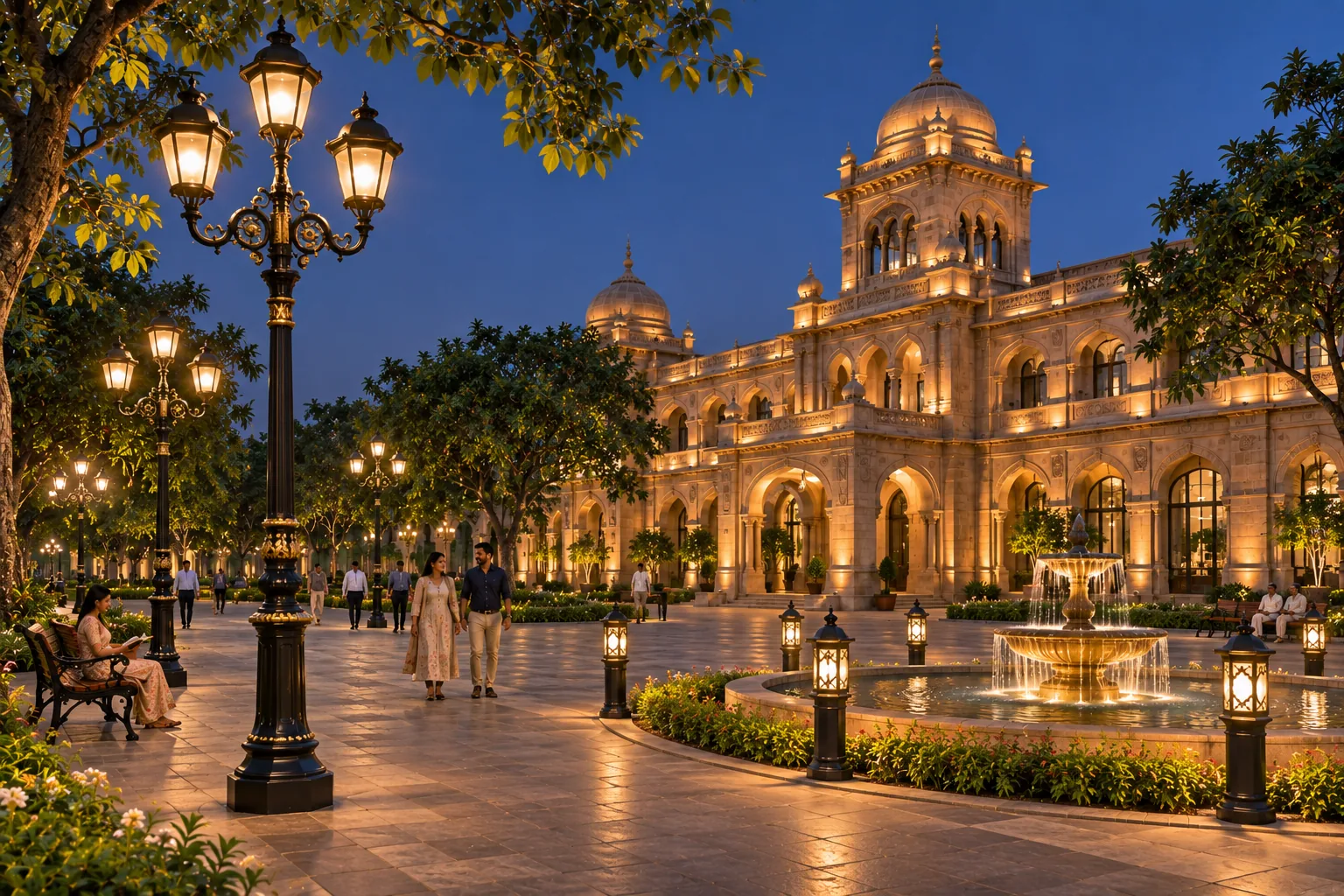
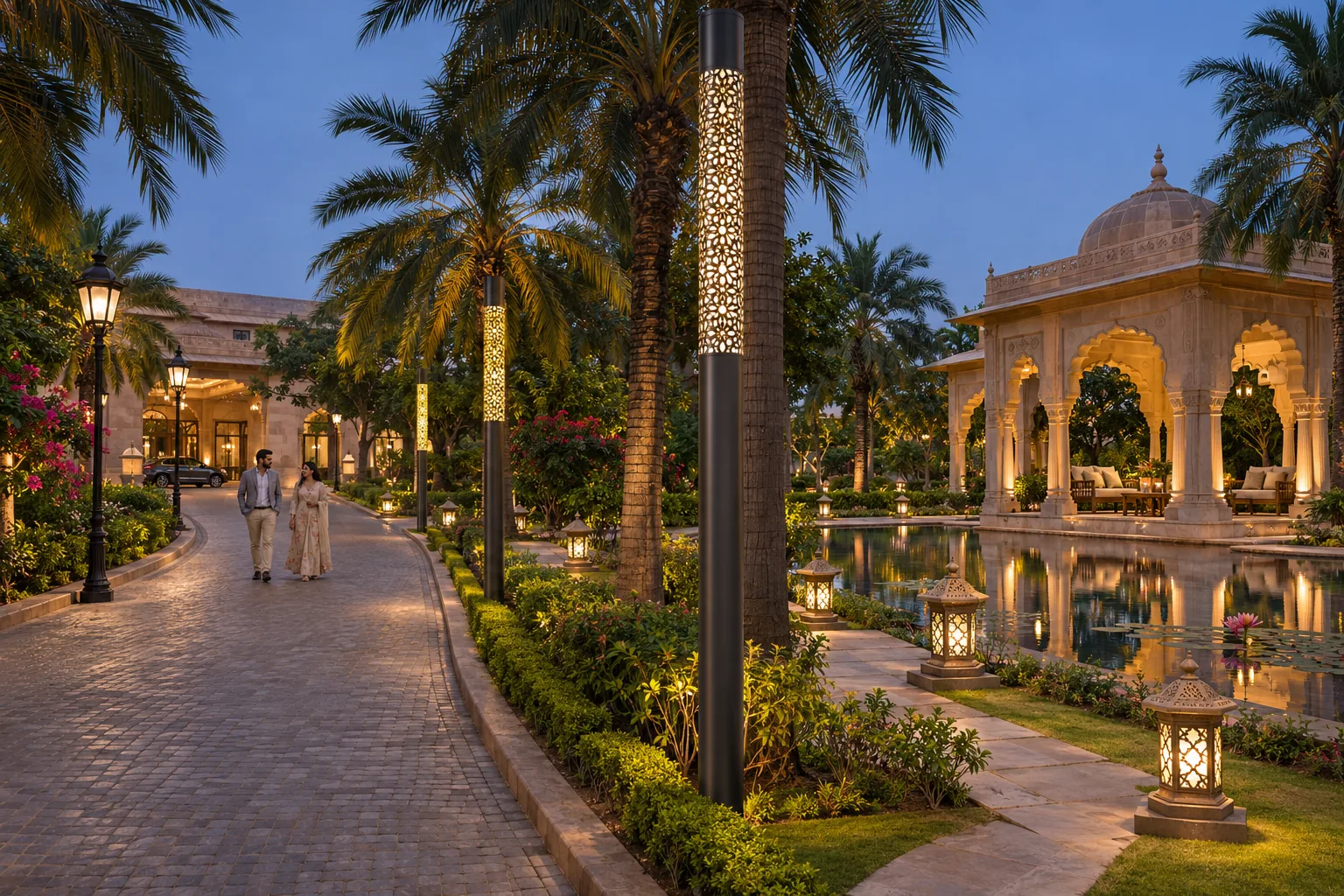
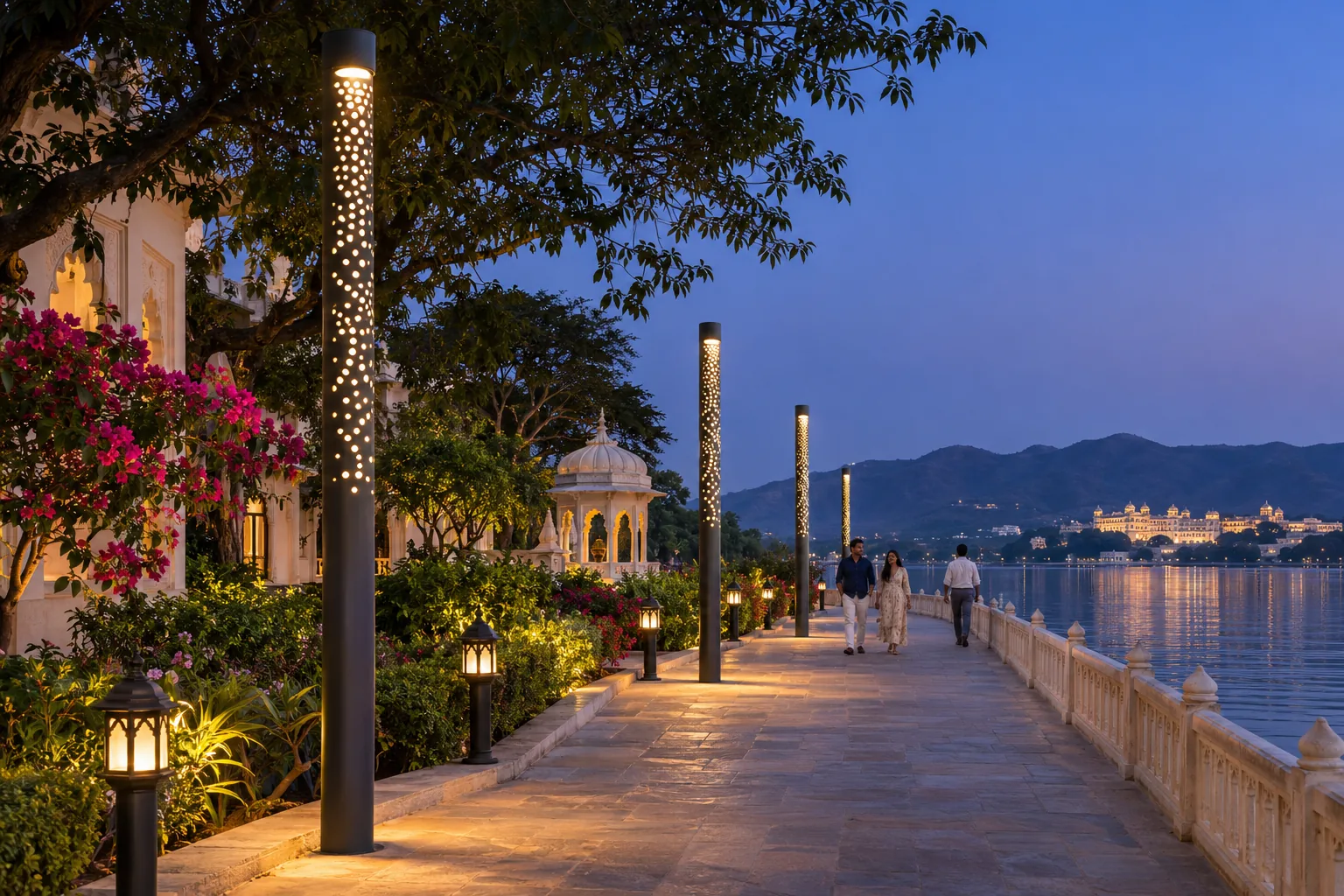
The best colour temperature for outdoor lighting around homes, gardens, hotels and heritage streets is usually warm white of 2700 K to 3000 K. Neutral white of 4000 K suits main roads, car parks and sports areas, and cool daylight of 6000 K belongs in industrial yards and security areas. The right choice for each space depends on who uses it, what they need to see and what lies nearby.
What colour temperature means
Colour temperature, or correlated colour temperature (CCT), describes the colour of white light in kelvin (K). Lower numbers look warmer and more yellow; higher numbers look cooler and more blue. It says nothing about heat: a 3000 K and a 6000 K LED of the same wattage run at much the same temperature.
The same fitting can usually be supplied in several colour temperatures. Cooler LEDs are often slightly more efficient, but optics, driver and layout make a much bigger difference to how well a space is lit.
The common choices compared
| Colour temperature | How it looks | Suits | Watch out for |
|---|---|---|---|
| 2700 K | Warm white, close to old filament lamps | Heritage streets, resorts, temples, dining terraces | Can look dim or yellow on busy roads |
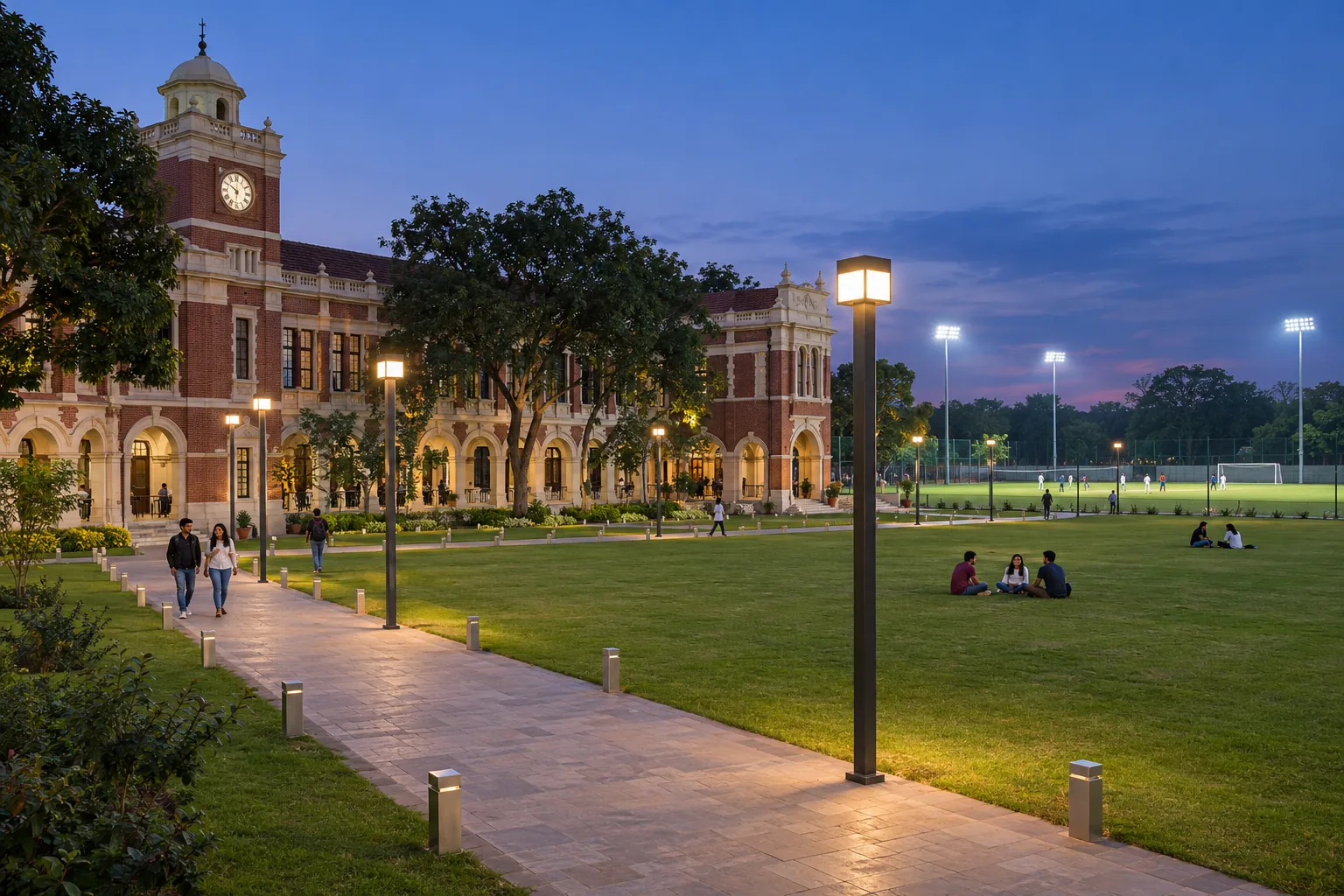
| 3000 K | Soft white, warm but clean | Societies, residential streets, gardens, campus paths, plazas | The balanced default for places where people walk |
| 4000 K | Neutral white | Main roads, car parks, yards, sports grounds | Can feel harsh in gardens and close to homes |
| 6000 K | Cool daylight, slightly blue | Highways, industrial yards, logistics hubs, CCTV-monitored areas | Blue-rich glare, more sky glow, flat look on skin, stone and planting |
For sites next to wetlands, coastline and nature reserves, an amber source of around 2200 K is gentler still on wildlife.
Colour temperature for outdoor lighting, space by space
| Space | Suggested colour temperature |
|---|---|
| Garden paths and villa grounds | 2700 – 3000 K |
| Heritage streets and plazas | 2700 K, or 3000 K where 2700 K is not available |
| Housing society and internal roads | 3000 K |
| Avenues and campus roads | 3000 – 4000 K |
| Main roads | 4000 K |
| Car parks and yards | 4000 K |
| Industrial yards and security areas | 4000 – 6000 K |
| Near wildlife, water and nature reserves | 2200 K amber |
These are starting points. A campus might use 4000 K on its main access road and 3000 K on the paths and courtyards beside it.
Why many outdoor schemes lean warm
Several separate reasons point towards warmer light wherever people walk, sit and live.
- Comfort and glare: at night, blue-rich light from a bright LED feels harsher to most people than warm light of the same brightness.
- Sky glow: blue-rich light scatters more in the atmosphere. DarkSky International treats 3000 K as the upper limit for responsible outdoor lighting, and the Five Principles it published with the IES call for warm-coloured light alongside shielding and dimming.
- Health guidance: in 2016 the American Medical Association advised communities choosing LED street lighting to use sources of 3000 K or lower, citing glare and night-time exposure to blue light.
- Insects and wildlife: many insects are drawn more strongly to blue-rich light, so warmer sources attract fewer of them around gardens, terraces and water.
- Appearance: warm light flatters sandstone, brick, timber, planting and skin, which is why hotels and heritage sites use it.
When cooler light makes sense
Cooler light has its place. On main roads, in car parks and in service yards, 4000 K gives crisp, neutral light that helps drivers and suits CCTV. It is the common choice for traffic routes and outdoor work areas.
6000 K suits industrial yards, logistics hubs, highways and security areas where a daylight look is wanted and there are no homes, gardens or habitats nearby. Avoid it next to residential windows, in gardens and on heritage buildings, where it looks cold and flattens colour.
Municipal engineers replacing old sodium street lights should keep in mind how much the street will change. Sodium lamps glow orange, at around 2000 K, so a switch straight to 6000 K LED is the change residents notice most. On residential and market streets, 3000 K keeps much of the familiar warmth while giving far better colour; on main roads, 4000 K is the usual step. A trial on one stretch of road, looked at by night, settles most debates quickly.
Colour rendering and consistency
Colour temperature tells you the tint of the light; colour rendering (CRI) tells you how faithfully colours look under it. A CRI of 70 and above suits most outdoor work, and 80 and above suits plazas, retail streets and hospitality, where faces, food and materials matter.
Consistency matters as much as the choice itself. Fittings from different batches, or different makers, can show visibly different tints at the same nominal colour temperature. Ask for tight colour binning, stated in SDCM or MacAdam steps, and order replacements to the same specification. Mixing colour temperatures within one view looks like a mistake; a deliberate change between zones, such as 4000 K on the road and 3000 K on the footpath, looks planned.
How to decide on site
- List each zone and who uses it after dark.
- Start from 3000 K for anything residential, hospitality or heritage.
- Move to 4000 K only where traffic, parking or work tasks need it.
- Use 6000 K only for industrial and security areas away from homes and habitats.
- Check what lies nearby: windows, trees, water, wildlife and the night sky.
- Before a large order, look at a sample lit at night next to its neighbours.
Our lighting guide shows each colour temperature side by side, and our article on garden and landscape lighting covers warm light among planting.
Frequently asked questions
Is 3000 K or 4000 K better for outdoor lighting?
3000 K is better where people walk, sit and live, such as housing societies, gardens, campus paths and plazas. 4000 K suits main roads, car parks and yards, where crisp, neutral light helps drivers and suits CCTV.
What colour temperature is best for garden lighting?
Warm white of 2700 to 3000 K suits gardens and villa grounds. It flatters leaves, flowers, stone and skin, and attracts fewer insects than blue-rich light. Near wetlands, coastline and nature reserves, amber of around 2200 K is gentler still on wildlife.
When should 6000 K outdoor lights be used?
Use 6000 K for industrial yards, logistics hubs, highways and security areas where a daylight look is wanted and there are no homes, gardens or habitats nearby. Avoid it beside residential windows and on heritage buildings, where it looks cold and flattens colour.
Does colour temperature change energy use?
Only slightly. A 3000 K and a 6000 K LED of the same wattage draw the same power, and cooler LEDs are often slightly more efficient, but optics, driver and layout make a much bigger difference to how well a space is lit.
Colour temperature options at Luminex
Choose warm white for people, neutral white for traffic and work, cool daylight only where it is needed, and keep it consistent across a site. Luminex poles and bollards are offered in 3000 K, 4000 K and 6000 K, so a scheme can step from warm garden poles and cast iron poles to neutral area lighting for parking and yards. Tell us how each zone is used and request a quote.