Buying guides6 min read
Decorative poles for municipal projects: tenders and standards
A decorative pole tender has to protect both the look the city wants and the quality it pays for. What to specify, which standards to name and what to inspect.
By the Luminex Electronics design team, Ahmedabad

Buying decorative poles for municipal projects means writing a tender specification that a decorative product can be measured against: the standards for steel, galvanising, luminaires and lighting design, the test reports bidders must submit, and how poles will be inspected before they leave the factory. A clear specification lets a city or development authority get the look it wants without giving up the safeguards that public procurement needs.
Why decorative poles for municipal projects are harder to specify
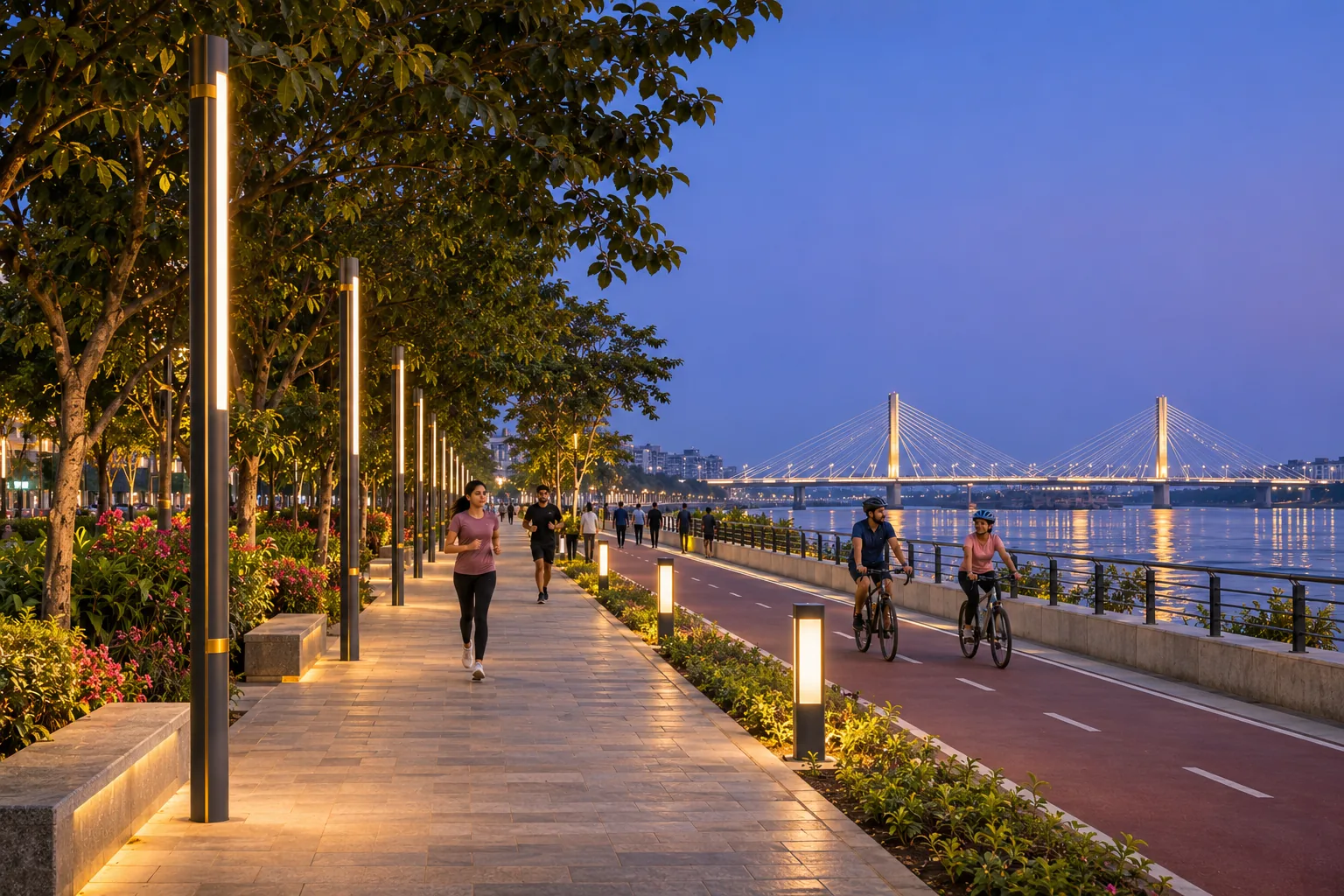
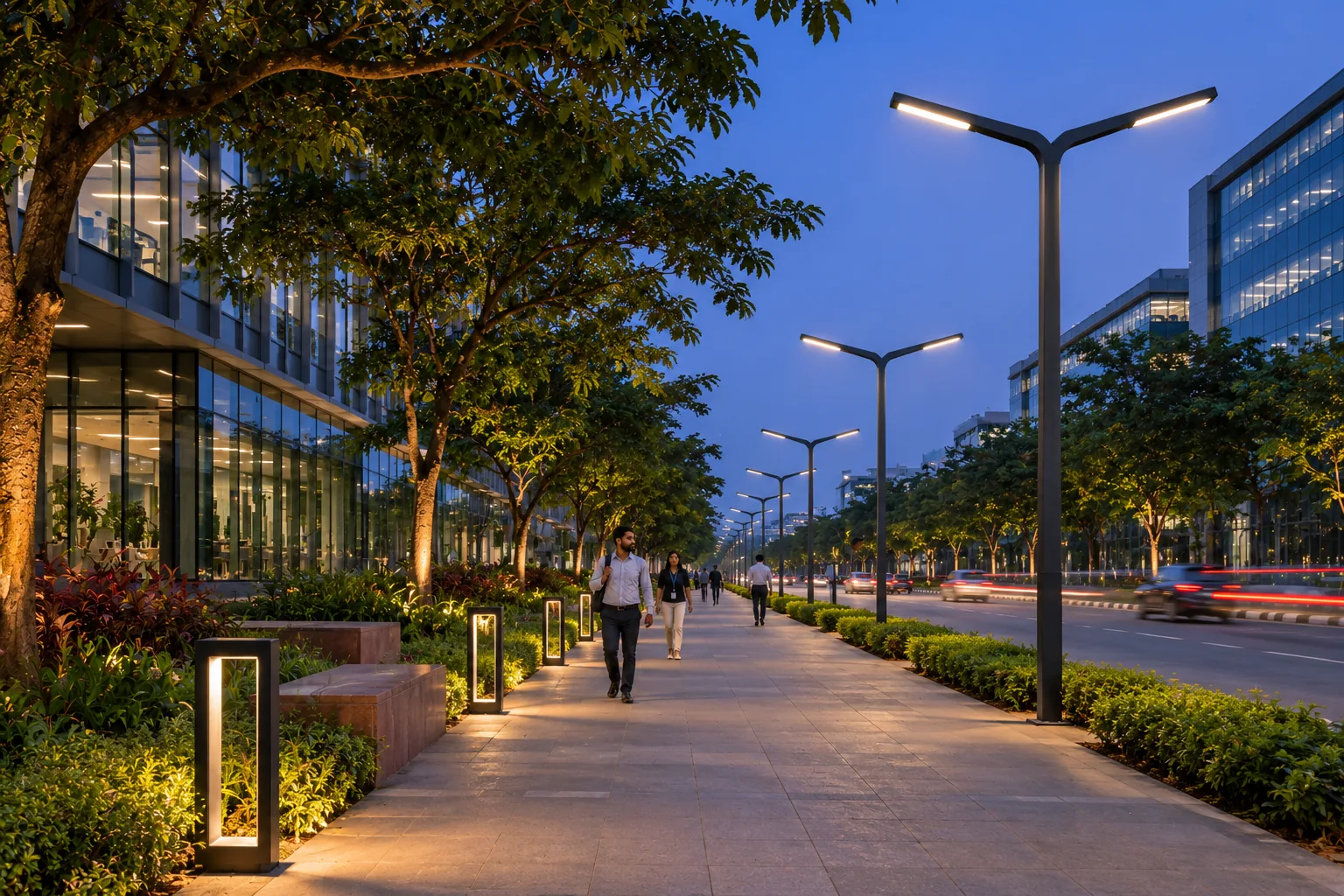
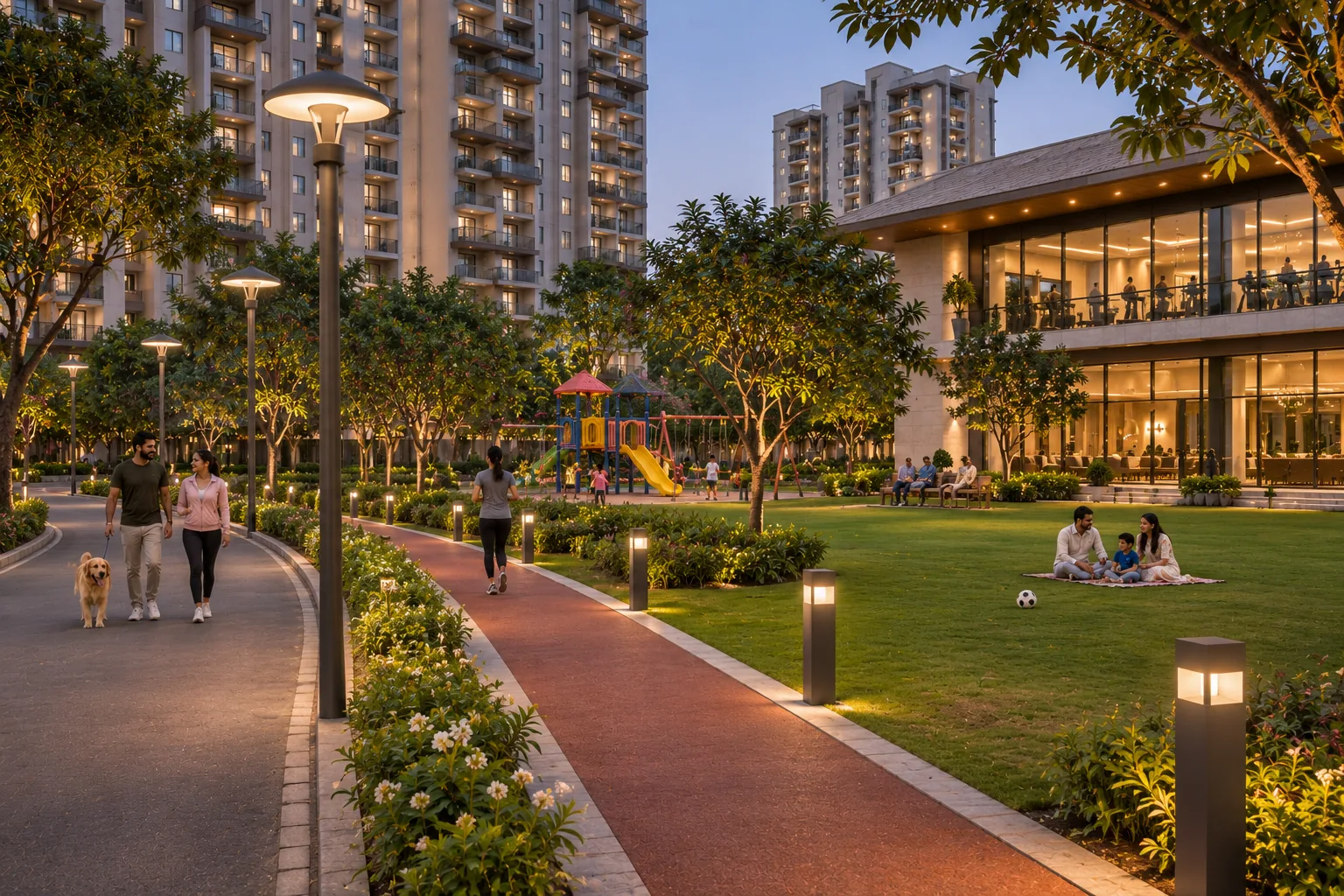
Most municipal lighting specifications were written for plain street poles, where height, wall thickness, galvanising and luminaire output describe the product almost completely. A decorative pole adds design: the shape of the shaft, the arms, the lantern, the base and the finish. If the tender describes only the performance, bidders can offer a cheaper design that technically complies but does not look like the scheme the city approved.
The answer is to specify both. Attach drawings or reference images that fix the design, state the performance it must meet, and make the design subject to sample approval. "Or equivalent" clauses are fair and often required, but define what equivalent means: the same overall dimensions, profile and head configuration, and equal or better performance on every measurable item.
Indian and international standards worth naming
Naming standards turns vague words such as "good quality galvanising" into something that can be tested.
| Item | Standard | What it covers |
|---|---|---|
| Structural steel | IS 2062 | Hot rolled medium and high tensile structural steel |
| Galvanising practice | IS 2629 | Recommended practice for hot-dip galvanising of iron and steel |
| Galvanised coating | IS 4759 | Hot-dip zinc coatings on structural steel, including minimum coating mass |
| Coating tests | IS 2633 and IS 6745 | Uniformity of the zinc coating, and determination of its mass |
| Foundation bolts | IS 5624 | Foundation bolts for embedding in concrete |
| Wind load | IS 875 (Part 3) | Design wind speeds and loads for the site |
| Road lighting | IS 1944 | Code of practice for road and tunnel lighting; the current edition is IS 1944:2026 |
| Luminaire safety | IS 10322 (Part 5/Sec 3) | Road and street lighting luminaires, technically equivalent to IEC 60598-2-3 |
| LED luminaire performance | IS 16107 (Part 2/Sec 1) | Performance requirements for LED luminaires |
| Ingress and impact | IEC 60529 and IEC 62262 | IP and IK ratings |
| Photometry and LED life | IES LM-79, LM-80 and TM-21 | Luminaire light output, and LED lumen maintenance and its projection |
LED luminaires for road and street lighting also fall under BIS's Compulsory Registration Scheme, under IS 10322 (Part 5/Sec 3). Ask bidders for the registration details of the luminaire they offer. Always check the current edition of each standard when the tender is drafted.
What to put in the specification
- Design: drawings or reference images, overall height, mounting height, arm and head configuration, base and decorative details.
- Pole: steel grade, minimum wall thickness, base plate size, door and gear tray.
- Corrosion protection: hot-dip galvanising after fabrication to IS 4759, with a heavier coating for coastal or industrial sites.
- Finish: polyester powder coat or PU paint, minimum dry film thickness in microns, and the RAL shade.
- Luminaire: lumen output, efficacy, colour temperature, colour rendering, optic, IP and IK ratings, surge protection and driver details.
- Controls: dimming, timers or smart-city sockets if the city plans central management.
- Lighting design: the lighting class or target lux and uniformity, verified with the bidder's photometric files.
- Foundations: foundation design for the site's wind speed and soil, with anchor bolt cages supplied.
- After sales: warranty terms, spares and operation and maintenance manuals.
Test reports and documents to ask for
- Mill test certificates for the steel.
- Galvanising test certificates showing coating mass and uniformity.
- Luminaire safety test reports and the BIS registration of the luminaire.
- LM-79 photometric reports and photometric files in IES or LDT format.
- LM-80 data with a TM-21 projection for the LED packages.
- IP and IK test reports for the luminaire offered, not a similar model.
- Supplier registrations the procurement route requires, such as GST, Udyam (MSME) or a Government e-Marketplace (GeM) seller registration when buying through GeM.
- A local content declaration where the tender applies the Public Procurement (Preference to Make in India) Order.
Check that every report names the exact model offered and comes from a recognised laboratory.
Inspection and acceptance
- Sample approval: ask for one complete pole, or a mock-up on site, before the full order is made, and keep it as the reference.
- Pre-dispatch inspection: inspect at the factory before dispatch, checking dimensions, wall thickness, welds, galvanising and coating thickness with a gauge, and a lighting test of the luminaire.
- Third-party inspection for large orders, by an agency named in the contract.
- Site acceptance: check foundations against the drawing, poles for plumb and orientation, finish damage after installation, and light levels against the approved design.
- Handover: as-built drawings, pole schedules, test certificates and maintenance manuals.
Evaluating bids fairly
The lowest bid is only meaningful if every bid meets the same specification. Before opening prices, check each technical bid against a single table: pole weight and wall thickness, galvanising, finish, luminaire lumens and efficacy, test reports and registrations. A bid that is cheaper because it has a thinner wall or fewer lumens is a different product. Our article on decorative light pole price explains the cost drivers behind the numbers.
Where the Public Procurement (Preference to Make in India) Order applies, local content rules also affect how bids are ranked, so state them clearly in the tender.
Frequently asked questions
Which Indian standards apply to decorative street light poles?
Commonly named standards include IS 2062 for structural steel, IS 2629, IS 4759 and IS 2633 for hot-dip galvanising, IS 5624 for foundation bolts, IS 875 (Part 3) for wind load and IS 1944 for road lighting. Always check the current edition when drafting.
What test reports should a municipal buyer ask for?
Ask for steel mill test certificates, galvanising test certificates, luminaire safety test reports and BIS registration, LM-79 photometric reports with photometric files, LM-80 data with a TM-21 projection, and IP and IK test reports for the exact model offered.
Are LED street light luminaires covered by BIS registration?
Yes. LED luminaires for road and street lighting fall under BIS's Compulsory Registration Scheme, under IS 10322 (Part 5/Sec 3). Municipal buyers should ask each bidder for the registration details of the luminaire offered.
How can a tender protect the design of a decorative pole?
Attach drawings or reference images that fix the design, state the performance it must meet, and make the design subject to sample approval. Define "or equivalent" as the same dimensions, profile and head configuration, with equal or better performance.
Working with Luminex on public projects
Specify the design and the performance, name the standards, ask for test reports on the exact model, and inspect before dispatch. Luminex designs and makes decorative poles in Ahmedabad, from round poles and cast iron poles to smart poles, with foundation drawings and anchor bolt cages supplied. You can request tender specifications and datasheets from our downloads page. Send us your tender documents and drawings and request a quote.