
Materials & finishes6 min read
Hot-dip galvanising vs powder coating for light poles
Galvanising protects steel; powder coating gives it colour. Why the two work best together, and how to specify and look after them on humid and coastal sites.
By the Luminex Electronics design team, Ahmedabad
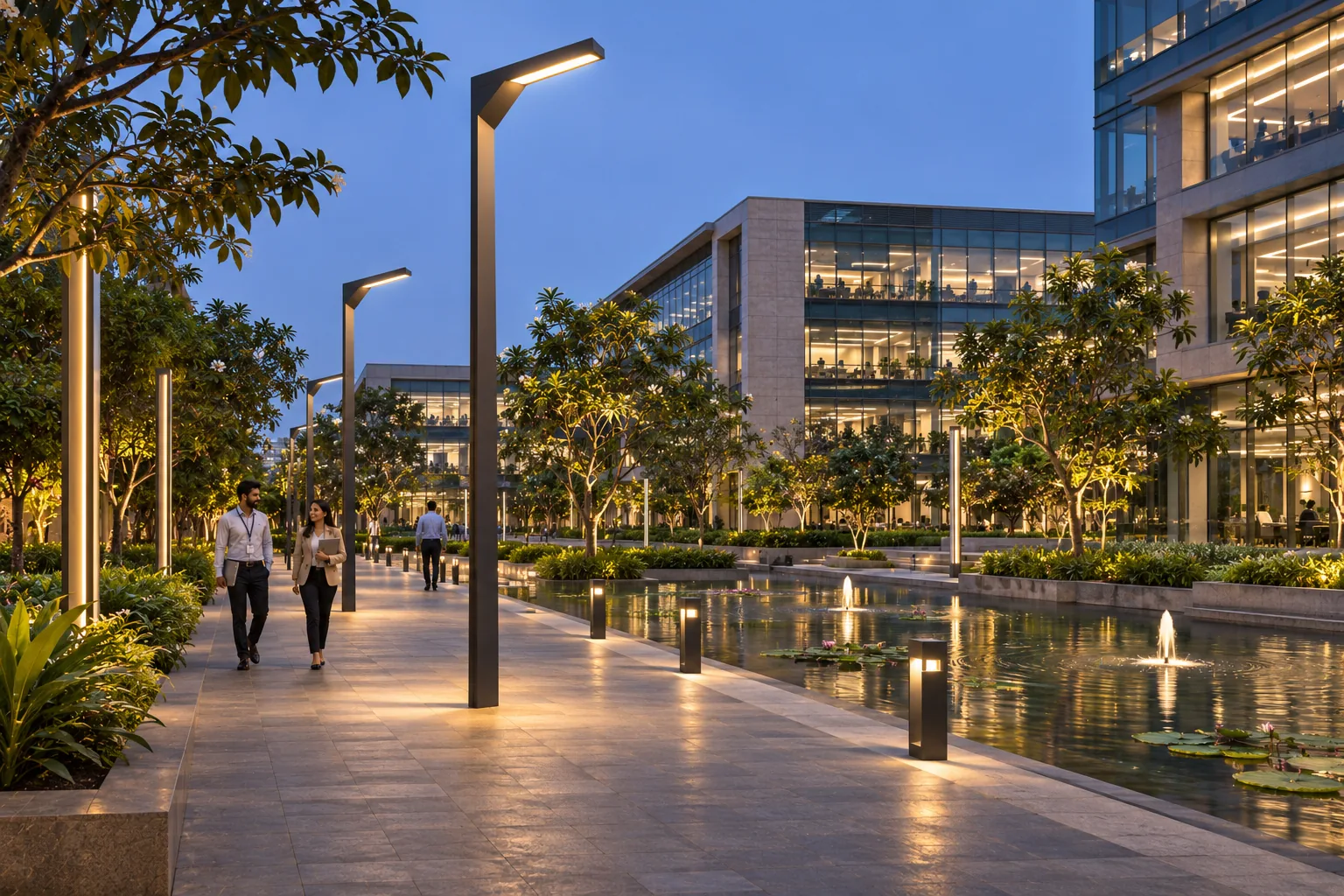
Galvanising vs powder coating is not a choice between equals: hot-dip galvanising protects steel from corrosion, while powder coating mainly gives colour and a first barrier against the weather. For light poles in humid or coastal places such as Gujarat's coast, the longest-lasting answer is usually both together, a duplex system with galvanising underneath and a polyester powder coat on top.
How each coating protects steel
Hot-dip galvanising bonds zinc to steel. The finished pole is dipped in molten zinc, which reacts with the steel surface to form layers of zinc-iron alloy topped with pure zinc, inside and outside the shaft. Zinc protects in two ways: it shields the steel as a barrier, and where the coating is scratched it corrodes in preference to the steel, so the exposed steel next to the damage does not rust.
Powder coating is a barrier only. A dry polyester powder is sprayed on electrostatically and baked into a tough, even film in the chosen RAL shade. It looks far better than bare zinc and resists sunlight well, but it cannot protect steel where it is broken. On bare steel, rust starts at a chip or scratch and then creeps sideways under the paint film, lifting it.
Our comparison of GI, MS and aluminium poles covers the Indian galvanising standards and minimum zinc coating masses; this article looks at the coatings themselves.
Galvanising vs powder coating compared
| Hot-dip galvanising | Powder coating on steel | Duplex: both | |
|---|---|---|---|
| How it protects | Zinc barrier plus sacrificial protection | Barrier only | Both, each protecting the other |
| Inside of the shaft | Coated | Usually not coated | Coated by the zinc |
| At scratches and chips | Zinc protects the exposed steel | Rust starts and creeps under the film | Zinc stops rust creeping under the powder |
| Appearance | Silver-grey, dulls over time | Any RAL colour, smooth finish | Any RAL colour, smooth finish |
| Coastal and humid sites | Good, better with a heavier coat | Weak on its own | Best of the three |
| Upkeep | Low | Touch-ups and repainting | Low, with occasional touch-ups |
Plain galvanising suits industrial, utility and budget work where colour does not matter. Powder coating directly on mild steel suits sheltered or indoor positions. For decorative poles outdoors, the duplex system is the one to specify.
Why a duplex system lasts longer
The two coatings protect each other. The powder coat shields the zinc from rain, salt and pollution, so the zinc is used up far more slowly. The zinc, in turn, stops rust from creeping under the powder coat at any damage, so the colour coat stays attached and intact for longer.
Galvanising industry bodies put the life of a duplex system at roughly 1.5 to 2.3 times the sum of the two coatings' separate lives, depending on how harsh the environment is. In Europe, EN 15773 covers the industrial application of powder coatings to hot-dip galvanised steel.
Getting a duplex coating right
A duplex coat is only as good as the bond between the zinc and the powder. Fresh galvanising is smooth and chemically active, so it needs preparation.
- Tell the galvaniser that the work will be powder coated, so the surface is not given a treatment that blocks adhesion.
- Prepare the zinc by light sweep blasting or a chemical pretreatment, which gives the powder a surface to grip.
- Prevent outgassing: galvanised steel can release trapped gas while the powder cures, leaving pinholes and blisters. Preheating the parts or using a powder made for galvanised steel avoids this.
- Use an outdoor polyester powder, never an epoxy-based one, which chalks and fades in sunlight.
- Measure both layers with a coating thickness gauge, in microns, and check adhesion on a sample.
Choosing for the environment
ISO 9223 grades the corrosivity of outdoor atmospheres in six categories, from C1, very low, to CX, extreme, which includes severe marine sites. Salt, humidity, pollution and how long surfaces stay wet all push a site up the scale.
| Site | Main corrosion risk | Suggested system |
|---|---|---|
| Dry inland towns and campuses | Dust, monsoon wetting | Galvanised, or duplex where colour is wanted |
| Humid cities and irrigated landscapes | Long periods of wetness | Duplex |
| Industrial areas | Polluted air attacks zinc faster | Duplex |
| Coastal towns, ports and promenades | Salt carried on the wind | Duplex with a heavier zinc coat, stainless fixings |
| Splash zones on piers and sea walls | Constant salt spray | Duplex, or aluminium where the design allows |
Gujarat has the longest coastline of any Indian state, and towns along it combine salt-laden sea breezes, high humidity and a heavy monsoon. On sites like these, specify the duplex system, ask for a heavier zinc coat, use stainless steel fixings, and look closely at the pole base and door, where moisture lingers. Our guide to riverfront and promenade lighting covers waterside design in more detail.
Inspection, repair and upkeep
- On delivery: check for transport damage before poles are erected, and touch up chips at once.
- Repairs: damaged galvanising is repaired with a zinc-rich paint; the colour coat is then touched up in the matching shade.
- On site: avoid drilling or cutting coated poles. If it cannot be avoided, treat the bare edges the same day.
- Coastal washing: salt builds up most on surfaces the rain does not reach, such as the underside of arms and lanterns. A periodic fresh-water wash slows corrosion.
- The base: keep soil, mulch and standing water away from the base plate, and inspect it every year.
Frequently asked questions
Is galvanising better than powder coating?
They do different jobs. Galvanising protects steel from corrosion inside and out and keeps protecting it at scratches, while powder coating gives colour and a barrier. For decorative poles outdoors, the best result comes from using both together as a duplex system.
Can you powder coat over galvanised steel?
Yes, and it is the recommended system for decorative poles in humid and coastal places. The zinc must be prepared by sweep blasting or chemical pretreatment, and preheating or a powder made for galvanised steel prevents pinholes from outgassing.
How long does a duplex coating last?
Galvanising industry bodies put the life of a duplex system at roughly 1.5 to 2.3 times the sum of the separate lives of the galvanising and the powder coat, depending on how harsh the environment is.
What coating is best for light poles near the sea?
Use a duplex system: hot-dip galvanising with a heavier zinc coat, under an outdoor polyester powder coat, with stainless steel fixings. Wash salt off sheltered surfaces periodically and inspect the base every year. Aluminium is an alternative where the design allows.
Finishes on Luminex poles
Galvanising protects, powder coating colours, and together they last longest, provided the zinc is prepared well and the coating is checked. Luminex poles are made in GI, MS or aluminium, PP powder coated or PU painted in any RAL colour, and our round poles and square poles are available in GI or aluminium under a powder coat. For a timber look without rot or rust, see our wooden bollards on aluminium bodies. Tell us where your site is and request a quote.