Lighting basics5 min read
Post top lantern styles: globe, cone, lantern and handi
Lantern, globe, cone or handi? How each post top head spreads its light, how much glare and up-light it gives, and how to match it to the pole height.
By the Luminex Electronics design team, Ahmedabad
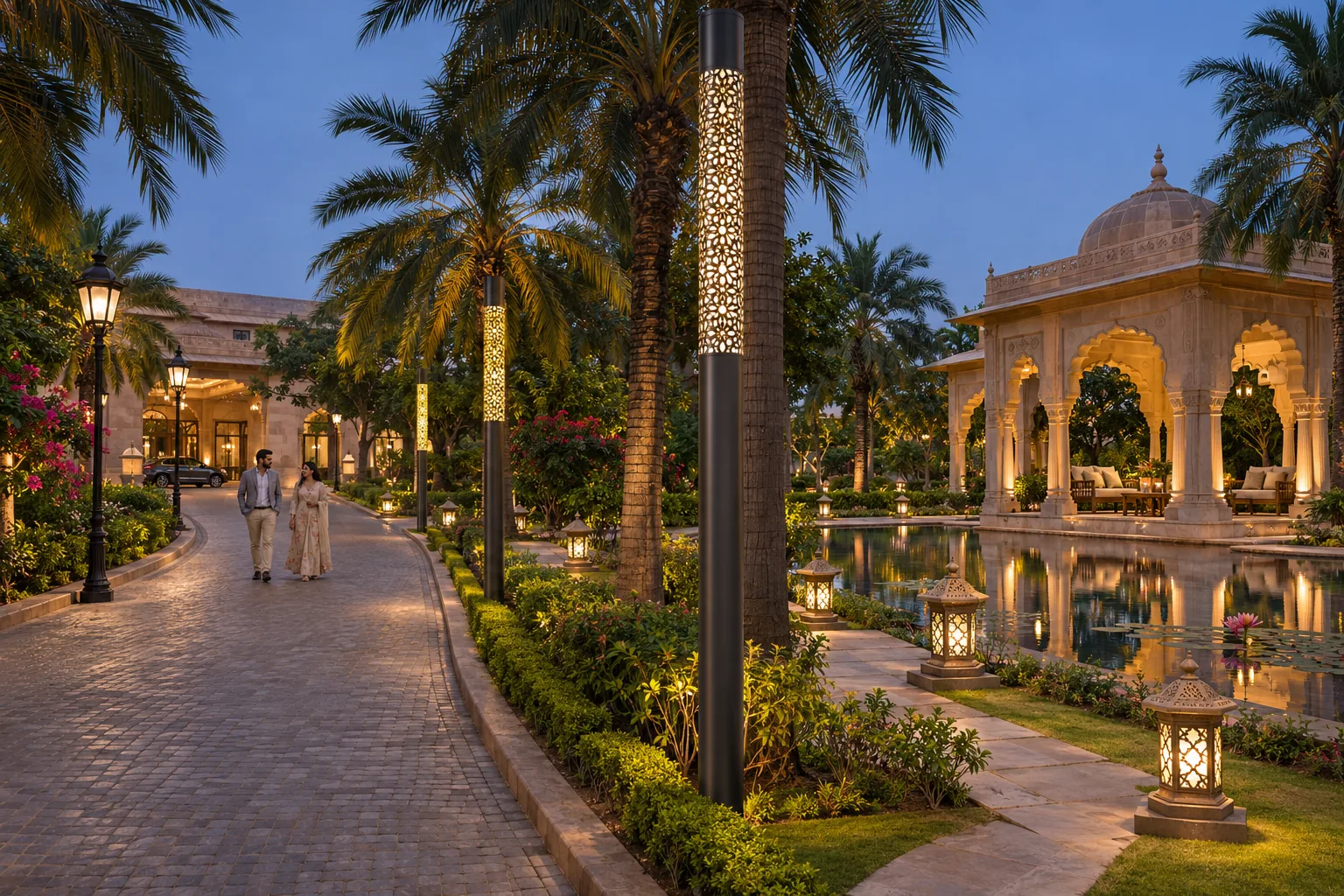
A post top lantern sits directly on top of the pole, with no arm, and lights the space all round it. The main head styles are the classic lantern, the globe, the cone or mushroom, and the Indian handi, and each spreads light in its own way. The right choice depends on the setting, the height of the pole, and how much glare and upward light the site can accept.
What a post top does
A post top slides onto a spigot at the top of the shaft and sends light out in a circle around the pole, the symmetric pattern known as Type V. That makes it the natural choice for spaces people move around in every direction: gardens, plazas, courtyards, society paths, temple forecourts and promenades.
What a post top does not do well is reach across a road. It lights the area around its own pole, so for roads lit from one edge an arm with a road optic is the better tool. Our article on single, double and multi-arm poles covers that side of the choice.
The main post top lantern styles
| Style | Look | How it spreads light | Glare and up-light | Suits |
|---|---|---|---|---|
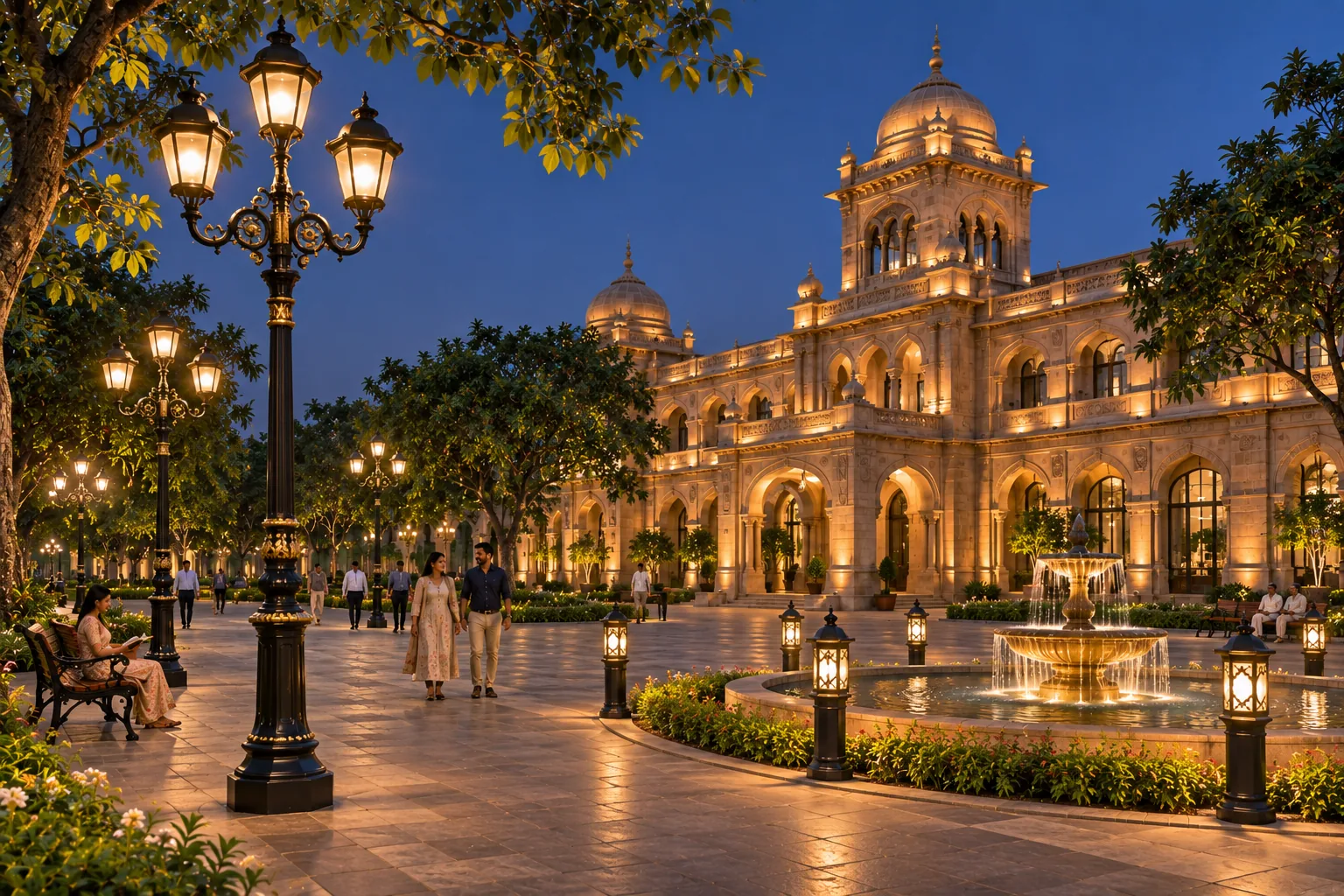
| Classic lantern | Four or six glazed sides under a roof, often with a finial | Out through the glazing on all sides | Low if the LED is in the roof shining down; high with a bare source in clear glass | Heritage streets, gardens, hotel drives |
| Globe | Opal, frosted or clear sphere | Evenly in every direction, including upwards | The most up-light, unless it has a top cap or internal reflector | Parks, promenades, retro schemes |
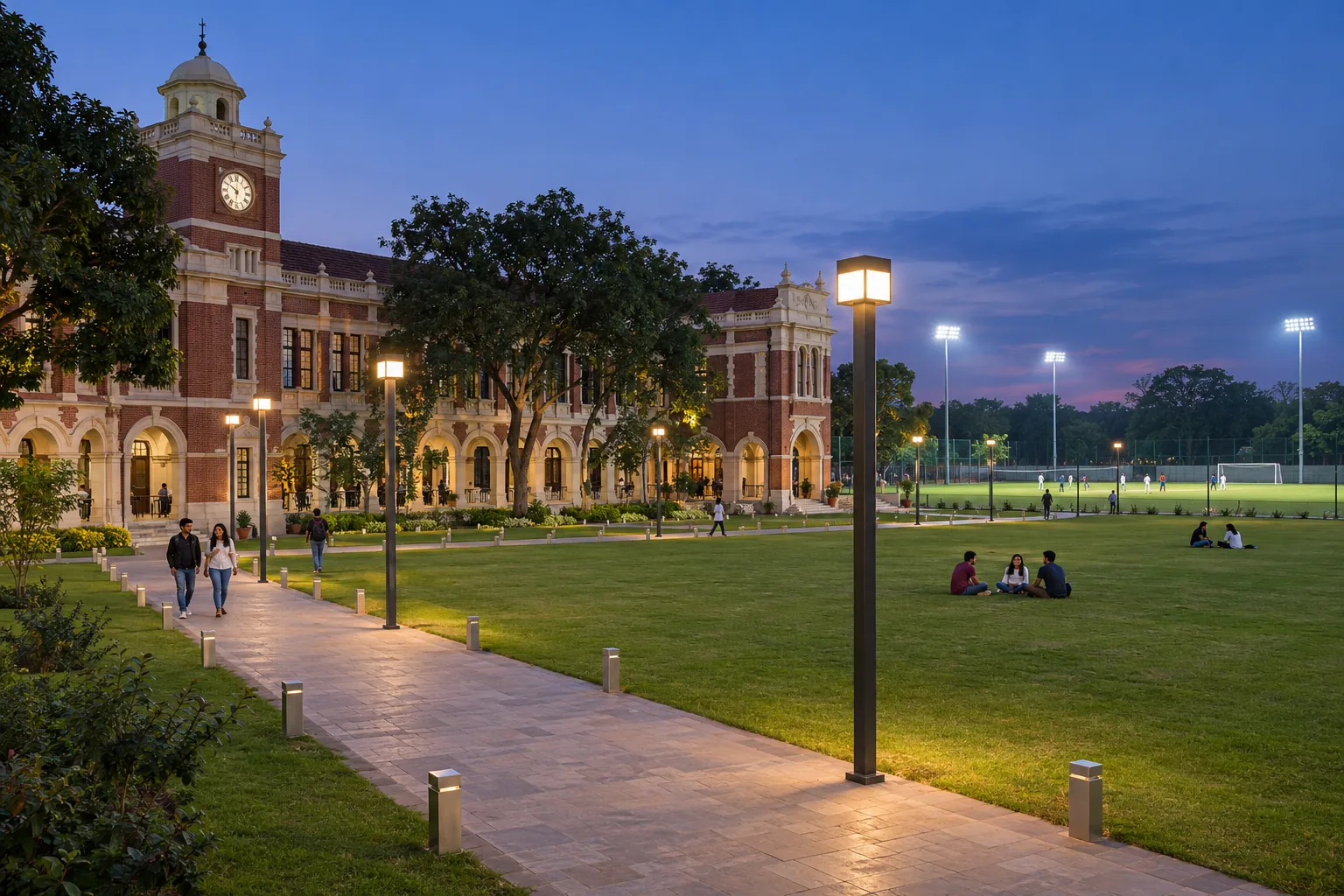
| Cone, mushroom or disc | Modern shade or disc over the light source | Downwards, shielded by the head | The lowest of all styles | Societies, campuses, contemporary plazas |
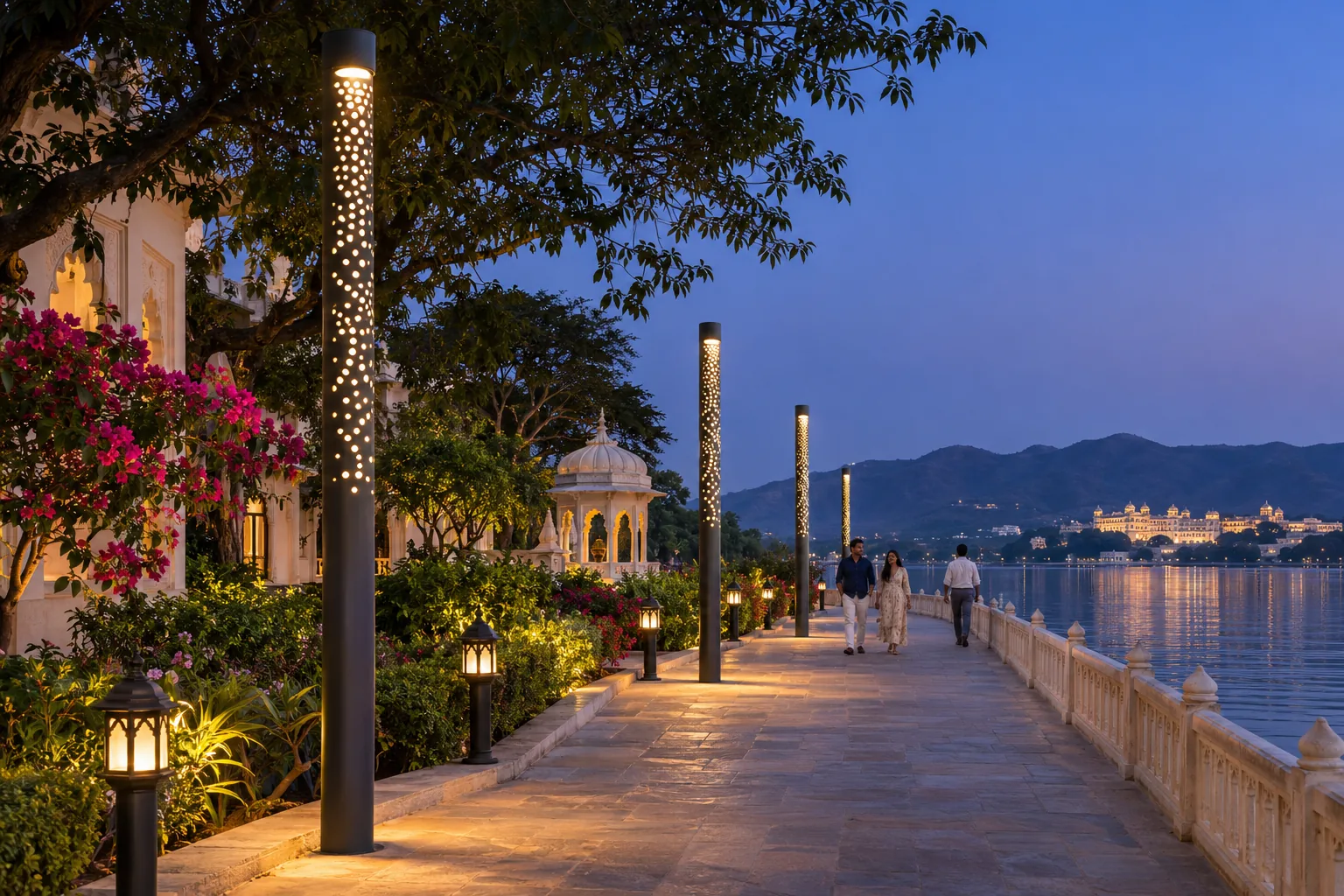
| Handi | Rounded, pot-shaped head, often perforated or patterned | Through cut patterns, with a soft glow | Moderate; depends on the cut-outs and the shield inside | Temples, resorts, heritage markets |
| Sculpted or laser-cut | Crowns, leaves, motifs and frames | Patterned light and shadow | Varies with design | Feature spaces, entrances, gardens |
The style should follow the setting. Lanterns and handis carry period and Indian character; cones and discs suit modern buildings; globes sit between the two and work best where some glow and up-light are acceptable.
Glare, up-light and the night sky
Post tops sit close to eye level, so glare control matters more than on a tall road pole.
- Hide the light source: an LED module mounted in the lantern roof and shining down, or behind frosted or opal glazing, glows softly instead of sparkling.
- Cap the globe: a plain globe sends a large share of its light into the sky. A top cap, an internal reflector or a half-opal globe keeps most of it on the ground.
- Choose shielded heads near homes: cones, discs and mushroom heads give the least glare and spill into windows.
- Keep it warm: 2700 K to 3000 K suits almost every post top setting.
Matching light output to pole height
The lower the head, the closer its light source is to people's eyes, so low post tops should be gentler and more diffused, and spaced closer together. Taller post tops can carry more output with a controlled optic and stand further apart.
| Pole height | Typical setting | Light output and optics | Typical spacing |
|---|---|---|---|
| 2.5 – 3.5 m | Gardens, villa grounds, courtyards | Low output, diffused or frosted | 10 – 15 m |
| 3 – 5 m | Heritage streets, plazas, temple forecourts | Moderate output, LED shielded in the lantern | 12 – 20 m |
| 4 – 6 m | Society roads, campus paths | Higher output with a controlled optic, often a cone or disc | 15 – 25 m |
| Above 6 m | Avenues and roads | An arm-mounted road luminaire usually works better | Set by layout |
These are commonly used starting points. Confirm the layout with a lighting calculation using the photometric file of the actual head, because two lanterns that look alike can spread light very differently.
Practical details worth checking
- Glazing: polycarbonate resists impact better than glass, which suits public spaces; glass does not yellow in the sun. If polycarbonate is used, ask for a UV-stabilised grade.
- Sealing: an IP65 optical chamber keeps out dust, rain and insects, which otherwise collect inside lantern glazing and dim the light.
- Access: a hinged roof or removable top makes cleaning and driver replacement quick.
- Spigot fit: check that the head's spigot size matches the pole top, especially when replacing heads on existing poles.
- Matching bollards: lantern and globe bollards in the same style continue the design down to path level.
Frequently asked questions
What is a post top lantern?
A post top lantern is a light head that sits directly on top of the pole, with no arm, and lights the area all round it. It suits gardens, plazas, courtyards, society paths, temple forecourts and promenades rather than roads lit from one edge.
Which post top style gives the least glare?
Cone, disc and mushroom heads give the least glare and up-light, because the head shields the light source and sends light downwards. Lanterns can be almost as comfortable if the LED is mounted in the roof shining down or sits behind frosted glazing.
Do globe lights cause light pollution?
A plain globe sends light evenly in every direction, including a large share into the sky. A top cap, an internal reflector or a half-opal globe keeps most of the light on the ground, and warm white of 2700 K to 3000 K helps further.
What height should a post top light be?
Commonly used starting points are 2.5 to 3.5 m in gardens and courtyards, 3 to 5 m on heritage streets and plazas, and 4 to 6 m on society roads and campus paths. Above about 6 m, an arm-mounted luminaire usually works better.
Post top lanterns from Luminex
Choose the head style for the setting, control glare and up-light, and match output and spacing to the pole height. Luminex garden poles carry single to triple lanterns with clear or frosted glazing, our cast iron poles carry traditional lantern and globe heads, and aluminium heritage bollards continue the style at path level. Browse our post top lanterns, then request a quote.